

GIVE THE PERFECT GIFT
Erin Mills Town Centre Gift Cards are the perfect choice for your gift giving needs.Purchase gift cards at kiosks near the food court or centre court, at Guest Services, or click below to purchase online.PURCHASE HEREHome
Ruling Bodies: A Study of Coercion and Punishment Plato's Republic, Laws, Gorgias
Indigo
Loading Inventory...
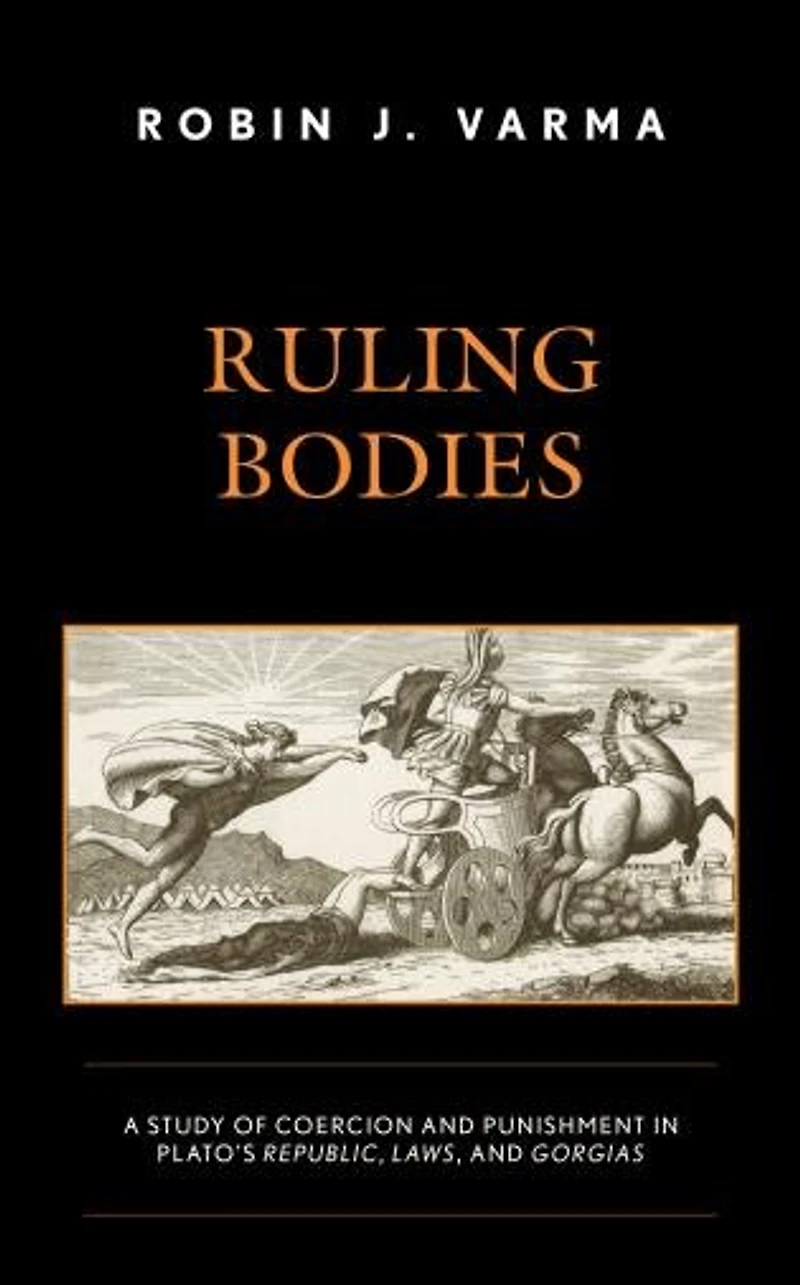
Ruling Bodies: A Study of Coercion and Punishment Plato's Republic, Laws, Gorgias
Current price: $160.95

Ruling Bodies: A Study of Coercion and Punishment Plato's Republic, Laws, Gorgias
Current price: $160.95
Loading Inventory...
Size: Hardcover
*Product information may vary - to confirm product availability, pricing, shipping and return information please contact Indigo
This book is about an epochal shift in ideas that changed the nature and meaning of coercion in modern political thought. It begins with a review of Foucault, Arendt, and Habermas, and points out a discrepancy in the way each thinker understood coercion in modern politics. From here, Varma examines Plato's Republic, Laws, and Gorgias to provide a framework and context for thinking about this. As the author shows, each work demonstrates a particular style of Platonic statecraft that corresponds to the amount of power the philosopher holds in a city. The Republic demonstrates the philosopher's rule as a monarch; the Laws demonstrates his rule when he must share power with a few spirited statesmen; and the Gorgias demonstrates his rule in a democracy where power belongs to the people. Ultimately, Varma argues that the philosopher used coercion as a supplementary tool to help harmonize man's soul with the heavens. When Hobbes recast the cosmos as matter in motion, however, power became the highest ordering principle for political life.
This book is about an epochal shift in ideas that changed the nature and meaning of coercion in modern political thought. It begins with a review of Foucault, Arendt, and Habermas, and points out a discrepancy in the way each thinker understood coercion in modern politics. From here, Varma examines Plato's Republic, Laws, and Gorgias to provide a framework and context for thinking about this. As the author shows, each work demonstrates a particular style of Platonic statecraft that corresponds to the amount of power the philosopher holds in a city. The Republic demonstrates the philosopher's rule as a monarch; the Laws demonstrates his rule when he must share power with a few spirited statesmen; and the Gorgias demonstrates his rule in a democracy where power belongs to the people. Ultimately, Varma argues that the philosopher used coercion as a supplementary tool to help harmonize man's soul with the heavens. When Hobbes recast the cosmos as matter in motion, however, power became the highest ordering principle for political life.
You May Also Like







More About Indigo at Erin Mills Town Centre
The largest book retailer in Canada also offers toys, music, home décor, gifts and lifestyle products. What's Inside...Books, Magazines, CD’s and DVD’s, Toys and Gifts, Home Accents, Electronics, Baby’s and Children’s Section, Bath and Body, Kitchen and Bedroom, Stationary Located outside in the exterior plaza.
5015 Glen Erin Dr, Mississauga, ON L5M 0R7, Canada
Find Indigo at Erin Mills Town Centre in Mississauga ON
Visit Indigo at Erin Mills Town Centre in Mississauga ON