

GIVE THE PERFECT GIFT
Erin Mills Town Centre Gift Cards are the perfect choice for your gift giving needs.Purchase gift cards at kiosks near the food court or centre court, at Guest Services, or click below to purchase online.PURCHASE HEREHome
Screen Light at Midnight: Driving Teen Mental Health Crises with Phone Childhoods
Indigo
Loading Inventory...
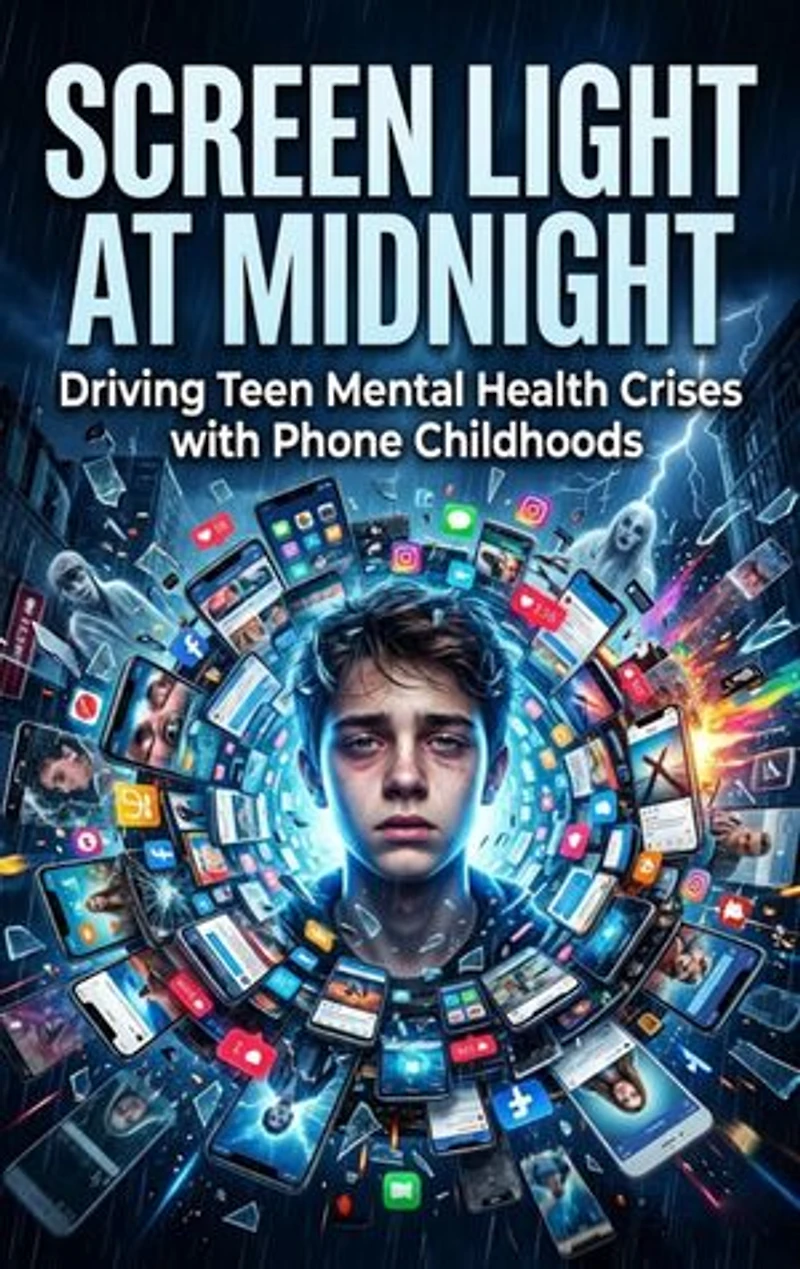
Screen Light at Midnight: Driving Teen Mental Health Crises with Phone Childhoods
Current price: $15.99

Screen Light at Midnight: Driving Teen Mental Health Crises with Phone Childhoods
Current price: $15.99
Loading Inventory...
Size: Kobo eBook
*Product information may vary - to confirm product availability, pricing, shipping and return information please contact Indigo
Something measurable began to break in Western adolescence around 2012. From 2009 to 2017, rates of depression among teenagers aged 14 to 17 in the United States jumped more than 60%, and emergency-room visits for self-harm and suicidal ideation in this age group rose sharply alongside that curve. The year 2012 was not arbitrary — it marked the moment when smartphone ownership among American teenagers crossed 50%, and social media became a daily, ambient environment rather than an occasional destination. Psychologist Jean Twenge, studying the iGen cohort born between 1995 and 2005, argued that much of this deterioration "can be traced to their phones" — and the decade of research that followed has assembled a case that is difficult to dismiss. The mechanism is not simply time. It is architecture. Longitudinal cohort studies tracking children aged 9 to 12 found that within-person increases in social media use were prospectively associated with greater depressive symptoms one year later — a temporal ordering that suggests causation rather than mere correlation, and not merely a pattern in which depressed children seek out screens. The effects are sharpest among girls, for whom social media introduces a particular compound of social comparison, appearance anxiety, cyberbullying, and the chronic performance of an identity assembled for an audience that never sleeps. Evidence from cross-sectional, longitudinal, and empirical studies consistently implicates smartphone and social media use in the rise of mental distress, self-injurious behaviour, and suicidality among youth — with a dose-response relationship: more use, more damage.
Something measurable began to break in Western adolescence around 2012. From 2009 to 2017, rates of depression among teenagers aged 14 to 17 in the United States jumped more than 60%, and emergency-room visits for self-harm and suicidal ideation in this age group rose sharply alongside that curve. The year 2012 was not arbitrary — it marked the moment when smartphone ownership among American teenagers crossed 50%, and social media became a daily, ambient environment rather than an occasional destination. Psychologist Jean Twenge, studying the iGen cohort born between 1995 and 2005, argued that much of this deterioration "can be traced to their phones" — and the decade of research that followed has assembled a case that is difficult to dismiss. The mechanism is not simply time. It is architecture. Longitudinal cohort studies tracking children aged 9 to 12 found that within-person increases in social media use were prospectively associated with greater depressive symptoms one year later — a temporal ordering that suggests causation rather than mere correlation, and not merely a pattern in which depressed children seek out screens. The effects are sharpest among girls, for whom social media introduces a particular compound of social comparison, appearance anxiety, cyberbullying, and the chronic performance of an identity assembled for an audience that never sleeps. Evidence from cross-sectional, longitudinal, and empirical studies consistently implicates smartphone and social media use in the rise of mental distress, self-injurious behaviour, and suicidality among youth — with a dose-response relationship: more use, more damage.
You May Also Like
















More About Indigo at Erin Mills Town Centre
The largest book retailer in Canada also offers toys, music, home décor, gifts and lifestyle products. What's Inside...Books, Magazines, CD’s and DVD’s, Toys and Gifts, Home Accents, Electronics, Baby’s and Children’s Section, Bath and Body, Kitchen and Bedroom, Stationary Located outside in the exterior plaza.
5015 Glen Erin Dr, Mississauga, ON L5M 0R7, Canada
Find Indigo at Erin Mills Town Centre in Mississauga ON
Visit Indigo at Erin Mills Town Centre in Mississauga ON