

GIVE THE PERFECT GIFT
Erin Mills Town Centre Gift Cards are the perfect choice for your gift giving needs.Purchase gift cards at kiosks near the food court or centre court, at Guest Services, or click below to purchase online.PURCHASE HEREHome
Seas of Gold, Seas of Cotton: Christophe Poulain DuBignon of Jekyll Island
Indigo
Loading Inventory...
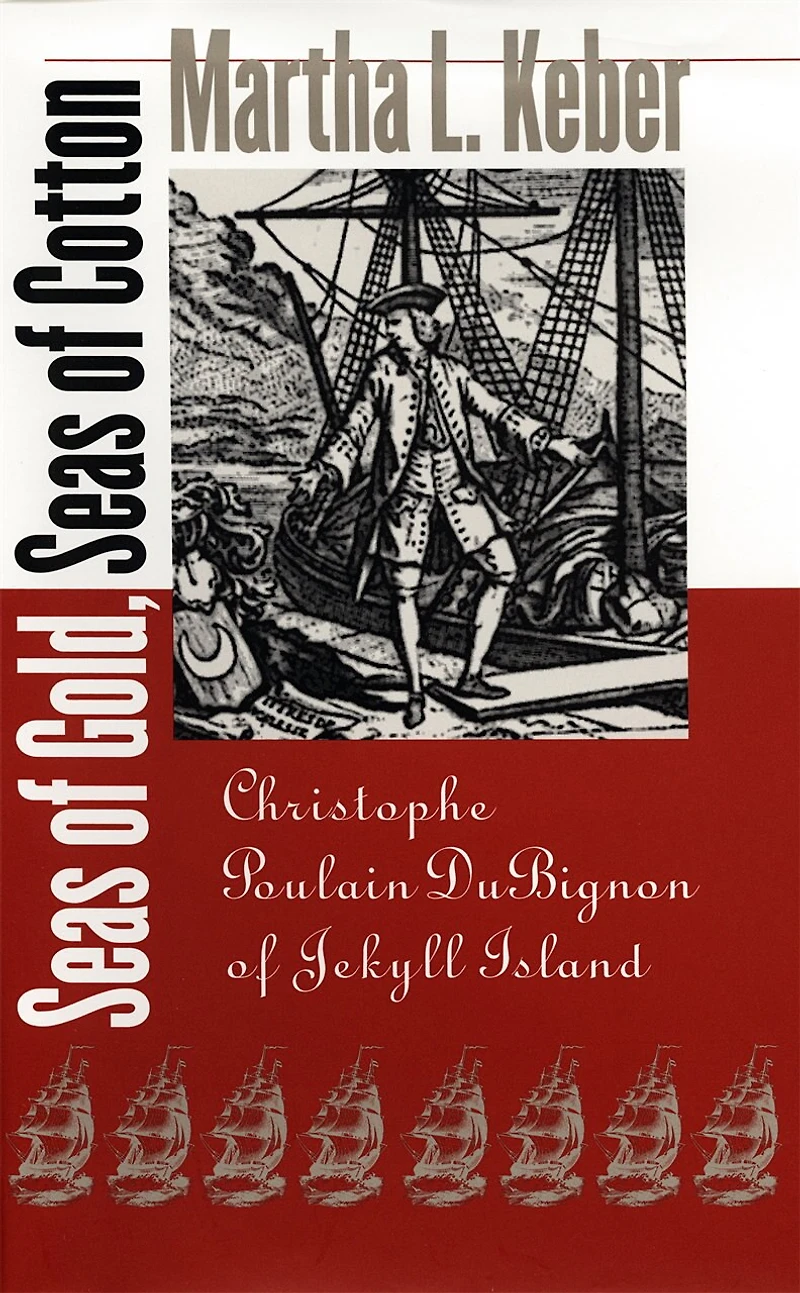
Seas of Gold, Seas of Cotton: Christophe Poulain DuBignon of Jekyll Island
Current price: $49.95

Seas of Gold, Seas of Cotton: Christophe Poulain DuBignon of Jekyll Island
Current price: $49.95
Loading Inventory...
Size: Paperback
*Product information may vary - to confirm product availability, pricing, shipping and return information please contact Indigo
This detailed biography of a man who flourished in two very different worlds opens a new doorway into the societies of prerevolutionary France and postrevolutionary Georgia. Christophe Poulain DuBignon (1739-1825) was the son of an impoverished Bréton aristocrat. Breaking social convention to engage in trade, he began his long career first as a cabin boy in the navy of the French India Company and later as a sea captain and privateer. After retiring from the sea, DuBignon lived in France as a "bourgeois noble" with income from land, moneylending, and manufacturing.
Uprooted by the French Revolution, DuBignon fled to Georgia late in 1790, settling among other refugees from France and the Caribbean. A community long overlooked by historians of the American South, this circle of planters, nobles, and bourgeois was bound together by language, a shared faith, and the émigré experience.
On his Jekyll Island slave plantation, DuBignon learned to cultivate cotton. However, he underwrote his new life through investments on both sides of the Atlantic, extending his business ties to Charleston, Liverpool, and Nantes. None of his ventures, Martha L. Keber notes, compelled DuBignon to dwell long on the inconsistencies between his entrepreneurial drive and his noble heritage. His worldview always remained aristocratic, patriarchal, and conservative.
DuBignon's passage of eighty-six years took him from a tradition-bound Europe to the entrepôts of the Indian Ocean to the plantation culture of a Georgia barrier island. Wherever he went, commerce was the constant. Based on Keber's exhaustive research in European, African, and American archives, Seas of Gold, Seas of Cotton portrays a resilient nobleman so well schooled in the principles of the marketplace that he prospered in the Old World and the New.
This detailed biography of a man who flourished in two very different worlds opens a new doorway into the societies of prerevolutionary France and postrevolutionary Georgia. Christophe Poulain DuBignon (1739-1825) was the son of an impoverished Bréton aristocrat. Breaking social convention to engage in trade, he began his long career first as a cabin boy in the navy of the French India Company and later as a sea captain and privateer. After retiring from the sea, DuBignon lived in France as a "bourgeois noble" with income from land, moneylending, and manufacturing.
Uprooted by the French Revolution, DuBignon fled to Georgia late in 1790, settling among other refugees from France and the Caribbean. A community long overlooked by historians of the American South, this circle of planters, nobles, and bourgeois was bound together by language, a shared faith, and the émigré experience.
On his Jekyll Island slave plantation, DuBignon learned to cultivate cotton. However, he underwrote his new life through investments on both sides of the Atlantic, extending his business ties to Charleston, Liverpool, and Nantes. None of his ventures, Martha L. Keber notes, compelled DuBignon to dwell long on the inconsistencies between his entrepreneurial drive and his noble heritage. His worldview always remained aristocratic, patriarchal, and conservative.
DuBignon's passage of eighty-six years took him from a tradition-bound Europe to the entrepôts of the Indian Ocean to the plantation culture of a Georgia barrier island. Wherever he went, commerce was the constant. Based on Keber's exhaustive research in European, African, and American archives, Seas of Gold, Seas of Cotton portrays a resilient nobleman so well schooled in the principles of the marketplace that he prospered in the Old World and the New.
You May Also Like














More About Indigo at Erin Mills Town Centre
The largest book retailer in Canada also offers toys, music, home décor, gifts and lifestyle products. What's Inside...Books, Magazines, CD’s and DVD’s, Toys and Gifts, Home Accents, Electronics, Baby’s and Children’s Section, Bath and Body, Kitchen and Bedroom, Stationary Located outside in the exterior plaza.
5015 Glen Erin Dr, Mississauga, ON L5M 0R7, Canada
Find Indigo at Erin Mills Town Centre in Mississauga ON
Visit Indigo at Erin Mills Town Centre in Mississauga ON