

GIVE THE PERFECT GIFT
Erin Mills Town Centre Gift Cards are the perfect choice for your gift giving needs.Purchase gift cards at kiosks near the food court or centre court, at Guest Services, or click below to purchase online.PURCHASE HEREHome
Selves as Solutions to Social Inequalities: Why Engaging the Full Complexity of Social Identities is Critical to Addressing Disparities
Indigo
Loading Inventory...
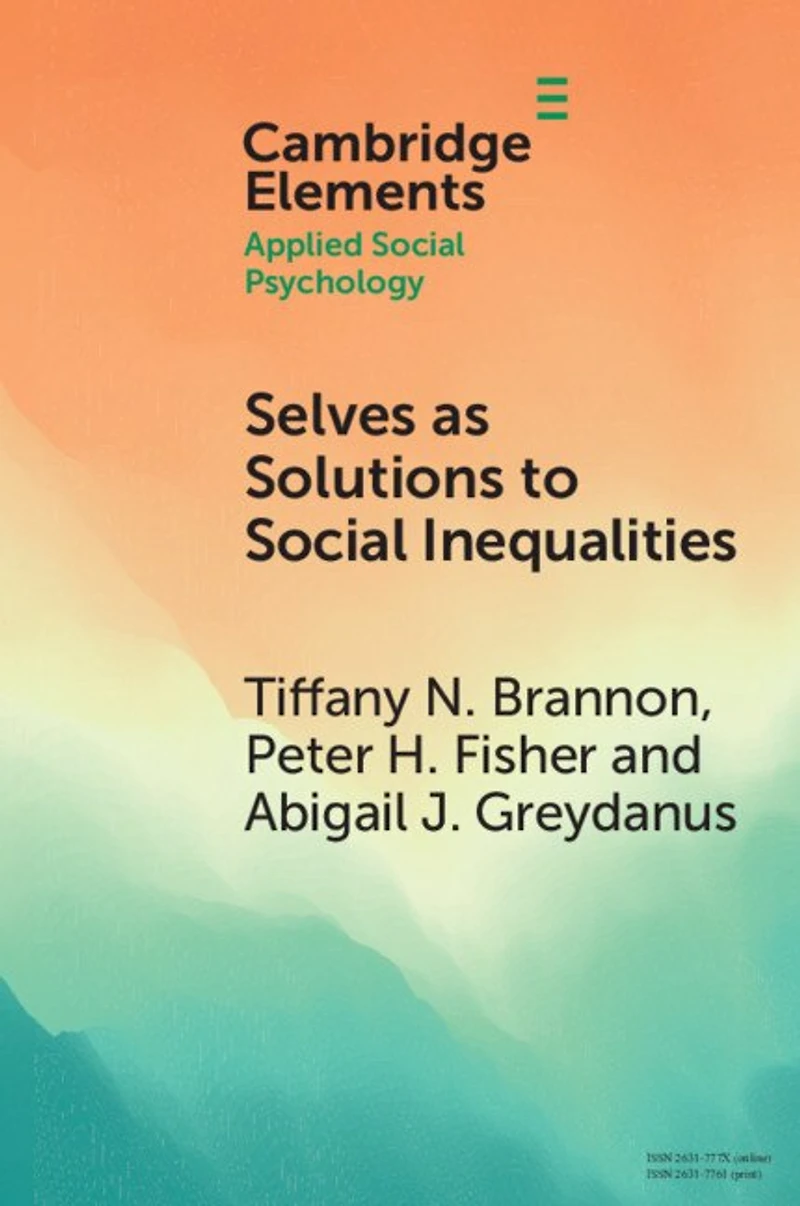
Selves as Solutions to Social Inequalities: Why Engaging the Full Complexity of Social Identities is Critical to Addressing Disparities
Current price: $29.54

Selves as Solutions to Social Inequalities: Why Engaging the Full Complexity of Social Identities is Critical to Addressing Disparities
Current price: $29.54
Loading Inventory...
Size: Paperback
*Product information may vary - to confirm product availability, pricing, shipping and return information please contact Indigo
Social disparities tied to social group membership(s) are prevalent and persistent within mainstream institutions (e.g., schools/workplaces). Accordingly, psychological science has harnessed selves - which are malleable and meaningfully shaped by social group membership(s) - as solutions to inequality. We propose and review evidence that theoretical and applied impacts of leveraging 'selves as solutions' can be furthered through the use of a stigma and strengths framework. Specifically, this framework conceptualizes selves in their fuller complexity, allowing the same social group membership to be associated with stigma, risk, and devaluation as well as strengths, resilience, and pride. We provide evidence that by enacting policies and practices that (a) reduce/minimize stigma and (b) recognize/include strengths, mainstream institutions can more fully mitigate social disparities tied to inclusion, achievement and well-being. Using social groups that vary in status/power we examine implications of this framework including the potential to foster positive, recursive, and intergroup impacts on social inequalities.
Social disparities tied to social group membership(s) are prevalent and persistent within mainstream institutions (e.g., schools/workplaces). Accordingly, psychological science has harnessed selves - which are malleable and meaningfully shaped by social group membership(s) - as solutions to inequality. We propose and review evidence that theoretical and applied impacts of leveraging 'selves as solutions' can be furthered through the use of a stigma and strengths framework. Specifically, this framework conceptualizes selves in their fuller complexity, allowing the same social group membership to be associated with stigma, risk, and devaluation as well as strengths, resilience, and pride. We provide evidence that by enacting policies and practices that (a) reduce/minimize stigma and (b) recognize/include strengths, mainstream institutions can more fully mitigate social disparities tied to inclusion, achievement and well-being. Using social groups that vary in status/power we examine implications of this framework including the potential to foster positive, recursive, and intergroup impacts on social inequalities.
You May Also Like















More About Indigo at Erin Mills Town Centre
The largest book retailer in Canada also offers toys, music, home décor, gifts and lifestyle products. What's Inside...Books, Magazines, CD’s and DVD’s, Toys and Gifts, Home Accents, Electronics, Baby’s and Children’s Section, Bath and Body, Kitchen and Bedroom, Stationary Located outside in the exterior plaza.
5015 Glen Erin Dr, Mississauga, ON L5M 0R7, Canada
Find Indigo at Erin Mills Town Centre in Mississauga ON
Visit Indigo at Erin Mills Town Centre in Mississauga ON