

GIVE THE PERFECT GIFT
Erin Mills Town Centre Gift Cards are the perfect choice for your gift giving needs.Purchase gift cards at kiosks near the food court or centre court, at Guest Services, or click below to purchase online.PURCHASE HEREHome
Similar Languages, Varieties, and Dialects: A Computational Perspective
Indigo
Loading Inventory...
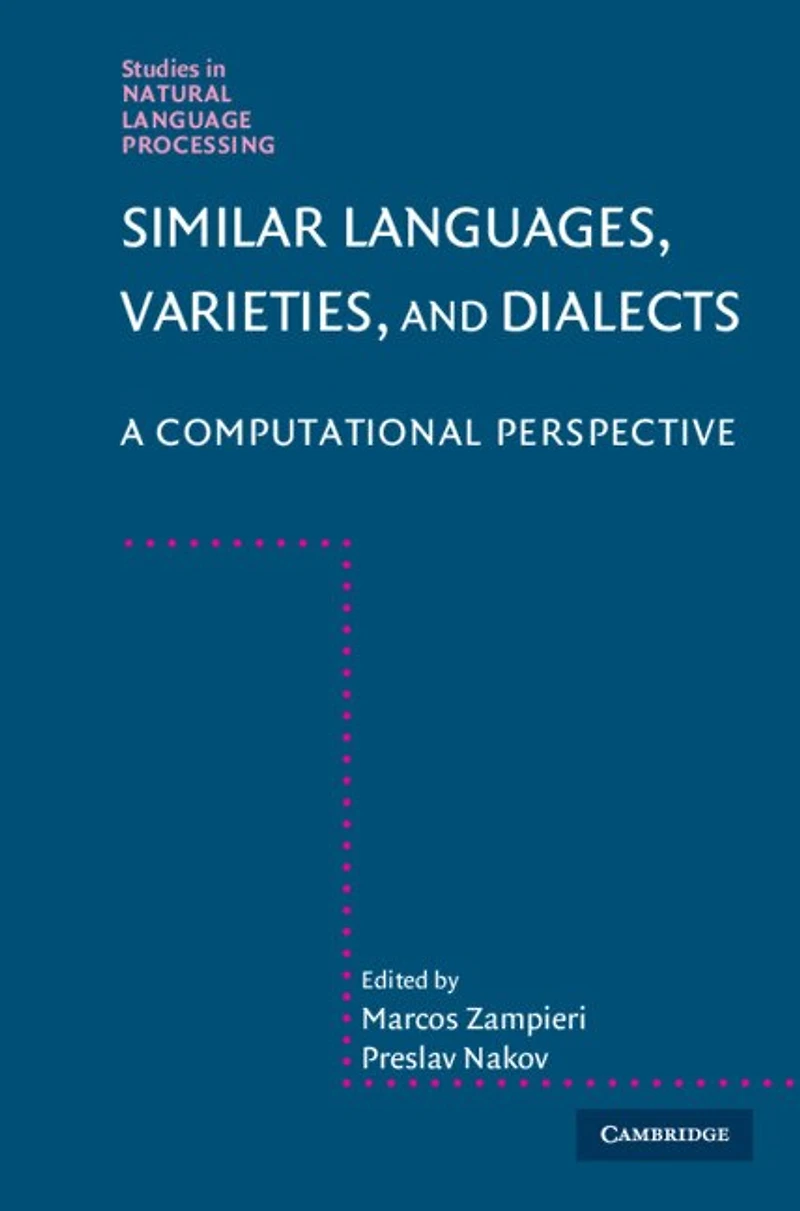
Similar Languages, Varieties, and Dialects: A Computational Perspective
Current price: $106.95

Similar Languages, Varieties, and Dialects: A Computational Perspective
Current price: $106.95
Loading Inventory...
Size: Hardcover
*Product information may vary - to confirm product availability, pricing, shipping and return information please contact Indigo
Language resources and computational models are becoming increasingly important for the study of language variation. A main challenge of this interdisciplinary field is that linguistics researchers may not be familiar with these helpful computational tools and many NLP researchers are often not familiar with language variation phenomena. This essential reference introduces researchers to the necessary computational models for processing similar languages, varieties, and dialects. In this book, leading experts tackle the inherent challenges of the field by balancing a thorough discussion of the theoretical background with a meaningful overview of state-of-the-art language technology. The book can be used in a graduate course, or as a supplementary text for courses on language variation, dialectology, and sociolinguistics or on computational linguistics and NLP. Part 1 covers the linguistic fundamentals of the field such as the question of status and language variation. Part 2 discusses data collection and pre-processing methods. Finally, Part 3 presents NLP applications such as speech processing, machine translation, and language-specific issues in Arabic and Chinese.
Language resources and computational models are becoming increasingly important for the study of language variation. A main challenge of this interdisciplinary field is that linguistics researchers may not be familiar with these helpful computational tools and many NLP researchers are often not familiar with language variation phenomena. This essential reference introduces researchers to the necessary computational models for processing similar languages, varieties, and dialects. In this book, leading experts tackle the inherent challenges of the field by balancing a thorough discussion of the theoretical background with a meaningful overview of state-of-the-art language technology. The book can be used in a graduate course, or as a supplementary text for courses on language variation, dialectology, and sociolinguistics or on computational linguistics and NLP. Part 1 covers the linguistic fundamentals of the field such as the question of status and language variation. Part 2 discusses data collection and pre-processing methods. Finally, Part 3 presents NLP applications such as speech processing, machine translation, and language-specific issues in Arabic and Chinese.
You May Also Like







More About Indigo at Erin Mills Town Centre
The largest book retailer in Canada also offers toys, music, home décor, gifts and lifestyle products. What's Inside...Books, Magazines, CD’s and DVD’s, Toys and Gifts, Home Accents, Electronics, Baby’s and Children’s Section, Bath and Body, Kitchen and Bedroom, Stationary Located outside in the exterior plaza.
5015 Glen Erin Dr, Mississauga, ON L5M 0R7, Canada
Find Indigo at Erin Mills Town Centre in Mississauga ON
Visit Indigo at Erin Mills Town Centre in Mississauga ON