

GIVE THE PERFECT GIFT
Erin Mills Town Centre Gift Cards are the perfect choice for your gift giving needs.Purchase gift cards at kiosks near the food court or centre court, at Guest Services, or click below to purchase online.PURCHASE HEREHome
Skill Training Multimodal Virtual Environments
Indigo
Loading Inventory...
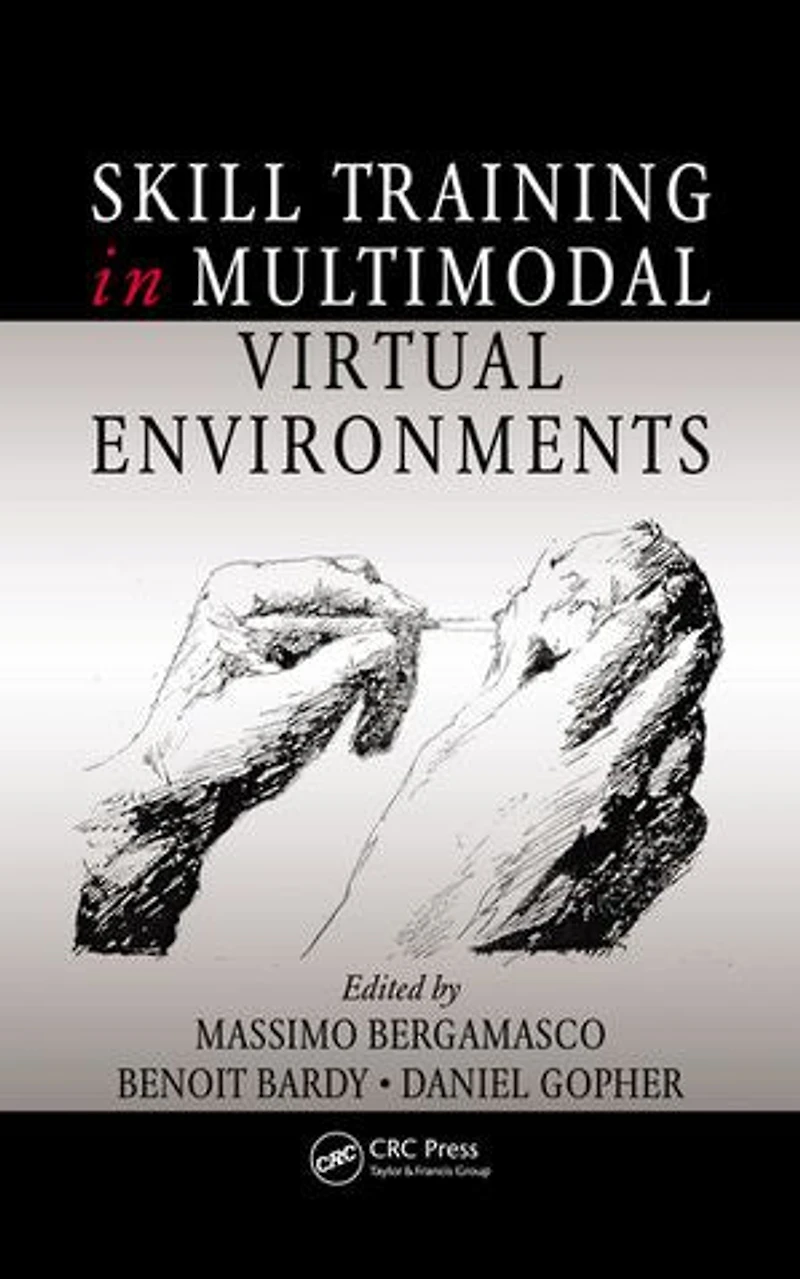
Skill Training Multimodal Virtual Environments
Current price: $109.92

Skill Training Multimodal Virtual Environments
Current price: $109.92
Loading Inventory...
Size: Kobo eBook
*Product information may vary - to confirm product availability, pricing, shipping and return information please contact Indigo
The advent of augmented reality technologies used to assist human operators in complex manipulative operations-has brought an urgency to research into the modeling and training of human skills in Virtual Environments. However, modeling a specific act still represents a challenge in cognitive science. The same applies for the control of humanoid robots and the replication of skilled behavior of avatars in Virtual Environments. Skill Training in Multimodal Virtual Environments presents the scientific background, research outcomes, engineering developments, and evaluation studies conducted during the five years (2006-2011) of the project SKILLS-Multimodal Interfaces for Capturing and Transfer of Skill, funded by the European Commission under its 6 th Framework Programme for Research and Technological Development. The SKILLS project evaluated how to exploit robotics and virtual environment technologies for the training of specific skills. This book details the novel approach used in the study to cope with skill acquisition, setting aside the mainstream assumptions of common computer-assisted training simulators. It explores how the SKILLS approach generated new training scenarios that allow users to practice new experiences in the performance of the devised task. Using a carefully designed approach that balances science with practicality, the book explores how virtual and augmented reality systems can be designed to address the skill transfer and training in different application contexts. The application of the same roadmap to skills originating from domains such as sports, rehabilitation, industrial environment, and surgery sets this book apart. It demonstrates how technology-oriented training conditions can yield better results than more traditional training conditions.
The advent of augmented reality technologies used to assist human operators in complex manipulative operations-has brought an urgency to research into the modeling and training of human skills in Virtual Environments. However, modeling a specific act still represents a challenge in cognitive science. The same applies for the control of humanoid robots and the replication of skilled behavior of avatars in Virtual Environments. Skill Training in Multimodal Virtual Environments presents the scientific background, research outcomes, engineering developments, and evaluation studies conducted during the five years (2006-2011) of the project SKILLS-Multimodal Interfaces for Capturing and Transfer of Skill, funded by the European Commission under its 6 th Framework Programme for Research and Technological Development. The SKILLS project evaluated how to exploit robotics and virtual environment technologies for the training of specific skills. This book details the novel approach used in the study to cope with skill acquisition, setting aside the mainstream assumptions of common computer-assisted training simulators. It explores how the SKILLS approach generated new training scenarios that allow users to practice new experiences in the performance of the devised task. Using a carefully designed approach that balances science with practicality, the book explores how virtual and augmented reality systems can be designed to address the skill transfer and training in different application contexts. The application of the same roadmap to skills originating from domains such as sports, rehabilitation, industrial environment, and surgery sets this book apart. It demonstrates how technology-oriented training conditions can yield better results than more traditional training conditions.
You May Also Like











More About Indigo at Erin Mills Town Centre
The largest book retailer in Canada also offers toys, music, home décor, gifts and lifestyle products. What's Inside...Books, Magazines, CD’s and DVD’s, Toys and Gifts, Home Accents, Electronics, Baby’s and Children’s Section, Bath and Body, Kitchen and Bedroom, Stationary Located outside in the exterior plaza.
5015 Glen Erin Dr, Mississauga, ON L5M 0R7, Canada
Find Indigo at Erin Mills Town Centre in Mississauga ON
Visit Indigo at Erin Mills Town Centre in Mississauga ON