

GIVE THE PERFECT GIFT
Erin Mills Town Centre Gift Cards are the perfect choice for your gift giving needs.Purchase gift cards at kiosks near the food court or centre court, at Guest Services, or click below to purchase online.PURCHASE HEREHome
Socially Intelligent Agents: Creating Relationships with Computers and Robots
Indigo
Loading Inventory...
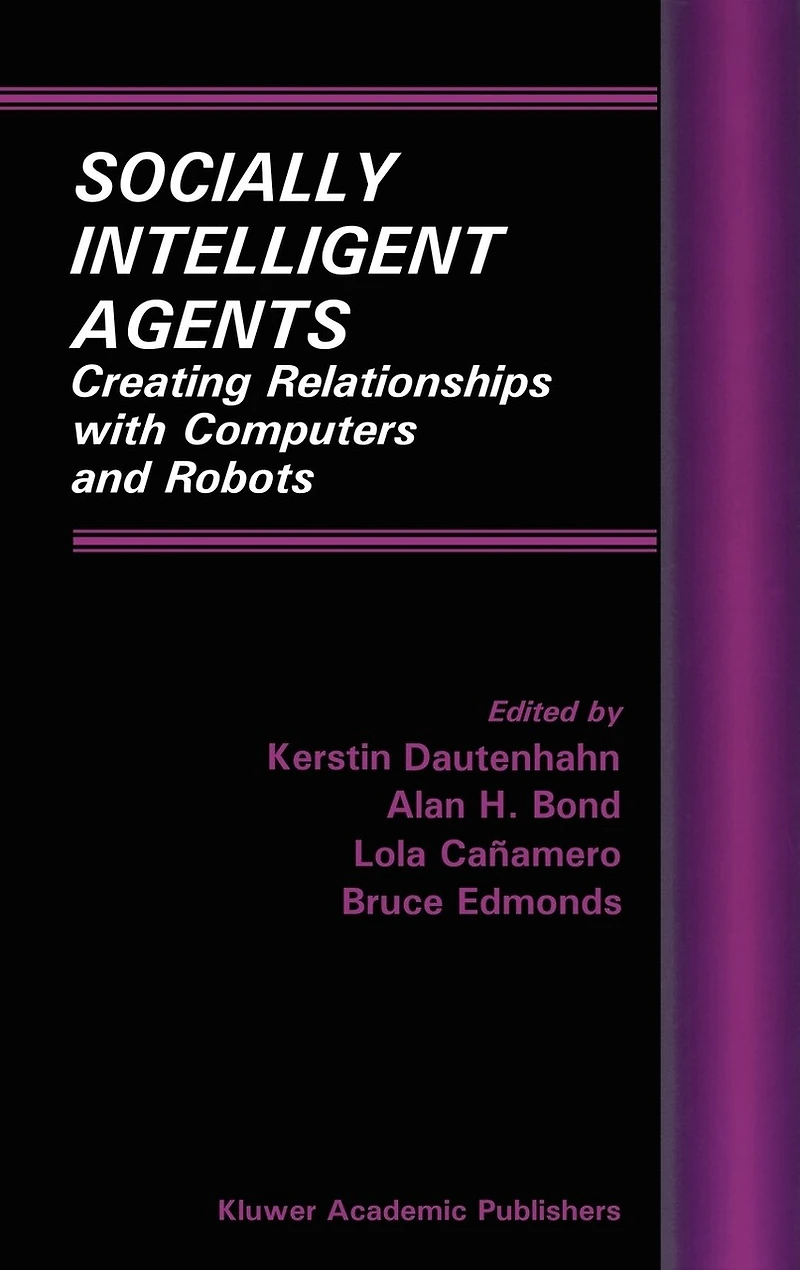
Socially Intelligent Agents: Creating Relationships with Computers and Robots
Current price: $261.50

Socially Intelligent Agents: Creating Relationships with Computers and Robots
Current price: $261.50
Loading Inventory...
Size: Hardcover
*Product information may vary - to confirm product availability, pricing, shipping and return information please contact Indigo
Socially situated planning provides one mechanism for improving the social awareness ofagents. Obviously this work isin the preliminary stages and many of the limitation and the relationship to other work could not be addressed in such a short chapter. The chief limitation, of course, is the strong commitment to de?ning social reasoning solely atthe meta-level, which restricts the subtlety of social behavior. Nonetheless, our experience in some real-world military simulation applications suggest that the approach, even in its preliminary state, is adequate to model some social interactions, and certainly extends the sta- of-the art found in traditional training simulation systems. Acknowledgments This research was funded by the Army Research Institute under contract TAPC-ARI-BR References [1] J. Gratch. Emile: Marshalling passions in training and education. In Proceedings of the Fourth International Conference on Autonomous Agents, pages 325-332, New York, 2000. ACM Press. [2] J. Gratch and R. Hill. Continous planning and collaboration for command and control in joint synthetic battlespaces. In Proceedings of the 8th Conference on Computer Generated Forces and Behavioral Representation, Orlando, FL, 1999. [3] B. Grosz and S. Kraus. Collaborative plans for complex group action. Arti?cial Intelli gence, 86(2):269-357, 1996. [4] A. Ortony, G. L. Clore, and A. Collins. The Cognitive Structure of Emotions. Cambridge University Press, 1988. [5] R.W.PewandA.S.Mavor,editors. Modeling Human and Organizational Behavior. National Academy Press, Washington D.C., 1998.
Socially situated planning provides one mechanism for improving the social awareness ofagents. Obviously this work isin the preliminary stages and many of the limitation and the relationship to other work could not be addressed in such a short chapter. The chief limitation, of course, is the strong commitment to de?ning social reasoning solely atthe meta-level, which restricts the subtlety of social behavior. Nonetheless, our experience in some real-world military simulation applications suggest that the approach, even in its preliminary state, is adequate to model some social interactions, and certainly extends the sta- of-the art found in traditional training simulation systems. Acknowledgments This research was funded by the Army Research Institute under contract TAPC-ARI-BR References [1] J. Gratch. Emile: Marshalling passions in training and education. In Proceedings of the Fourth International Conference on Autonomous Agents, pages 325-332, New York, 2000. ACM Press. [2] J. Gratch and R. Hill. Continous planning and collaboration for command and control in joint synthetic battlespaces. In Proceedings of the 8th Conference on Computer Generated Forces and Behavioral Representation, Orlando, FL, 1999. [3] B. Grosz and S. Kraus. Collaborative plans for complex group action. Arti?cial Intelli gence, 86(2):269-357, 1996. [4] A. Ortony, G. L. Clore, and A. Collins. The Cognitive Structure of Emotions. Cambridge University Press, 1988. [5] R.W.PewandA.S.Mavor,editors. Modeling Human and Organizational Behavior. National Academy Press, Washington D.C., 1998.
You May Also Like















More About Indigo at Erin Mills Town Centre
The largest book retailer in Canada also offers toys, music, home décor, gifts and lifestyle products. What's Inside...Books, Magazines, CD’s and DVD’s, Toys and Gifts, Home Accents, Electronics, Baby’s and Children’s Section, Bath and Body, Kitchen and Bedroom, Stationary Located outside in the exterior plaza.
5015 Glen Erin Dr, Mississauga, ON L5M 0R7, Canada
Find Indigo at Erin Mills Town Centre in Mississauga ON
Visit Indigo at Erin Mills Town Centre in Mississauga ON