

GIVE THE PERFECT GIFT
Erin Mills Town Centre Gift Cards are the perfect choice for your gift giving needs.Purchase gift cards at kiosks near the food court or centre court, at Guest Services, or click below to purchase online.PURCHASE HEREHome
Soft Computing Condition Monitoring and Diagnostics of Electrical Mechanical Systems: Novel Methods for
Indigo
Loading Inventory...
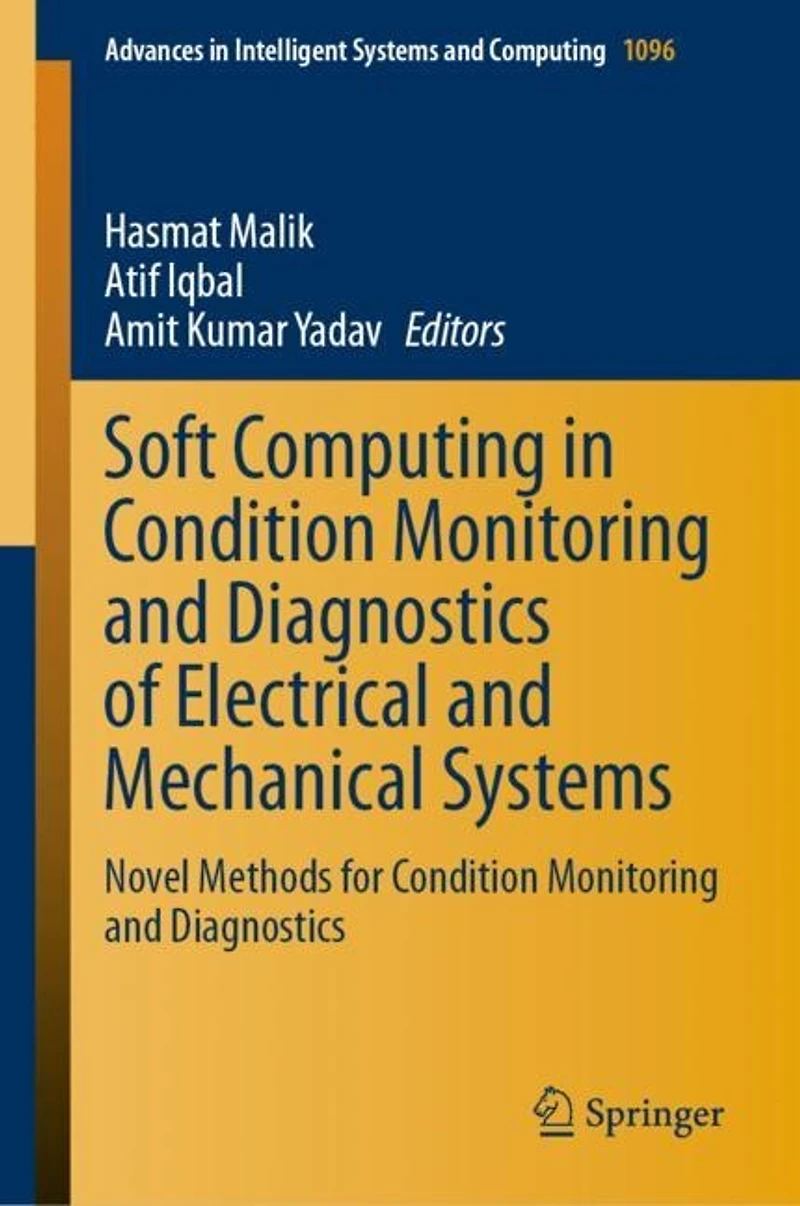
Soft Computing Condition Monitoring and Diagnostics of Electrical Mechanical Systems: Novel Methods for
Current price: $160.95

Soft Computing Condition Monitoring and Diagnostics of Electrical Mechanical Systems: Novel Methods for
Current price: $160.95
Loading Inventory...
Size: Hardcover
*Product information may vary - to confirm product availability, pricing, shipping and return information please contact Indigo
This book addresses a range of complex issues associated with condition monitoring (CM), fault diagnosis and detection (FDD) in smart buildings, wide area monitoring (WAM), wind energy conversion systems (WECSs), photovoltaic (PV) systems, structures, electrical systems, mechanical systems, smart grids, etc. The book's goal is to develop and combine all advanced nonintrusive CMFD approaches on a common platform. To do so, it explores the main components of various systems used for CMFD purposes. The content is divided into three main parts, the first of which provides a brief introduction, before focusing on the state of the art and major research gaps in the area of CMFD. The second part covers the step-by-step implementation of novel soft computing applications in CMFD for electrical and mechanical systems. In the third and final part, the simulation codes for each chapter are included in an extensive appendix to support newcomers to the field.
This book addresses a range of complex issues associated with condition monitoring (CM), fault diagnosis and detection (FDD) in smart buildings, wide area monitoring (WAM), wind energy conversion systems (WECSs), photovoltaic (PV) systems, structures, electrical systems, mechanical systems, smart grids, etc. The book's goal is to develop and combine all advanced nonintrusive CMFD approaches on a common platform. To do so, it explores the main components of various systems used for CMFD purposes. The content is divided into three main parts, the first of which provides a brief introduction, before focusing on the state of the art and major research gaps in the area of CMFD. The second part covers the step-by-step implementation of novel soft computing applications in CMFD for electrical and mechanical systems. In the third and final part, the simulation codes for each chapter are included in an extensive appendix to support newcomers to the field.
You May Also Like















More About Indigo at Erin Mills Town Centre
The largest book retailer in Canada also offers toys, music, home décor, gifts and lifestyle products. What's Inside...Books, Magazines, CD’s and DVD’s, Toys and Gifts, Home Accents, Electronics, Baby’s and Children’s Section, Bath and Body, Kitchen and Bedroom, Stationary Located outside in the exterior plaza.
5015 Glen Erin Dr, Mississauga, ON L5M 0R7, Canada
Find Indigo at Erin Mills Town Centre in Mississauga ON
Visit Indigo at Erin Mills Town Centre in Mississauga ON