

GIVE THE PERFECT GIFT
Erin Mills Town Centre Gift Cards are the perfect choice for your gift giving needs.Purchase gift cards at kiosks near the food court or centre court, at Guest Services, or click below to purchase online.PURCHASE HEREHome
Spatial Economics
Indigo
Loading Inventory...
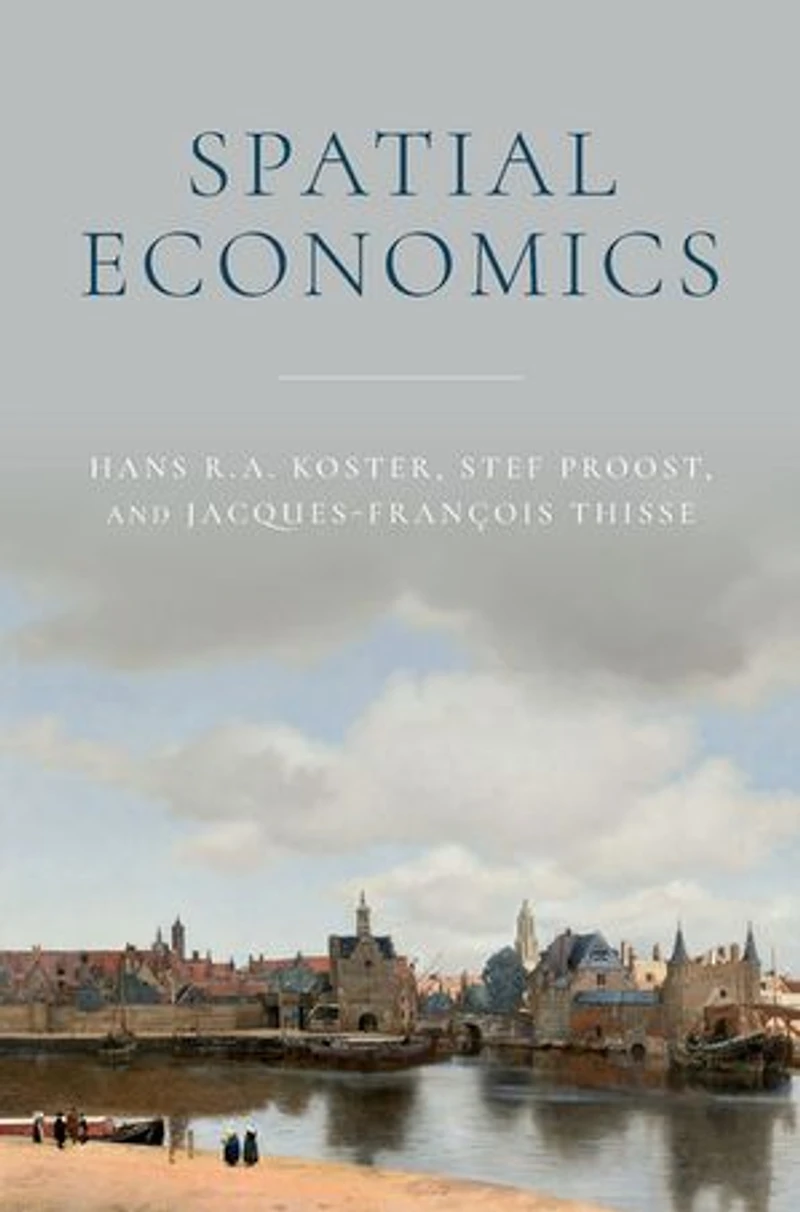
Spatial Economics
Current price: $44.79
Original price: $55.99

Spatial Economics
Current price: $44.79
Original price: $55.99
Loading Inventory...
Size: Kobo eBook
*Product information may vary - to confirm product availability, pricing, shipping and return information please contact Indigo
An authoritative and cutting-edge exploration of how land, transportation, and economic forces shape cities, regions, and the distribution of economic activities from a local to a global scale. Land, by its very nature, is immobile and unproduced, creating competition for prime locations that drives disparities in economic outcomes. Transportation, meanwhile, serves as the mechanism for overcoming spatial frictions but imposes costs that influence where firms and individuals choose to locate. Together, these factors explain the emergence and persistence of cities, regional disparities, and even global patterns of economic concentration. In Spatial Economics , Hans R.A. Koster, Stef Proost, and Jacques-François Thisse explore how cities, regions, and the global economy are shaped by the interplay between location, land use, and transportation. The authors examine why economic activities are clustered in large metropolitan areas and dispersed in vast areas, driven by the balance between the gains from concentration and various congestion and pollution costs. Blending classical theories with modern data and modeling approaches, the book addresses urbanization, spatial inequality, and the effects of policies like infrastructure investments and land regulations. Accessible yet rigorous, it offers valuable insights for understanding the geographic organization of economic activity in today's interconnected world.
An authoritative and cutting-edge exploration of how land, transportation, and economic forces shape cities, regions, and the distribution of economic activities from a local to a global scale. Land, by its very nature, is immobile and unproduced, creating competition for prime locations that drives disparities in economic outcomes. Transportation, meanwhile, serves as the mechanism for overcoming spatial frictions but imposes costs that influence where firms and individuals choose to locate. Together, these factors explain the emergence and persistence of cities, regional disparities, and even global patterns of economic concentration. In Spatial Economics , Hans R.A. Koster, Stef Proost, and Jacques-François Thisse explore how cities, regions, and the global economy are shaped by the interplay between location, land use, and transportation. The authors examine why economic activities are clustered in large metropolitan areas and dispersed in vast areas, driven by the balance between the gains from concentration and various congestion and pollution costs. Blending classical theories with modern data and modeling approaches, the book addresses urbanization, spatial inequality, and the effects of policies like infrastructure investments and land regulations. Accessible yet rigorous, it offers valuable insights for understanding the geographic organization of economic activity in today's interconnected world.
You May Also Like










More About Indigo at Erin Mills Town Centre
The largest book retailer in Canada also offers toys, music, home décor, gifts and lifestyle products. What's Inside...Books, Magazines, CD’s and DVD’s, Toys and Gifts, Home Accents, Electronics, Baby’s and Children’s Section, Bath and Body, Kitchen and Bedroom, Stationary Located outside in the exterior plaza.
5015 Glen Erin Dr, Mississauga, ON L5M 0R7, Canada
Find Indigo at Erin Mills Town Centre in Mississauga ON
Visit Indigo at Erin Mills Town Centre in Mississauga ON