

GIVE THE PERFECT GIFT
Erin Mills Town Centre Gift Cards are the perfect choice for your gift giving needs.Purchase gift cards at kiosks near the food court or centre court, at Guest Services, or click below to purchase online.PURCHASE HEREHome
Startup Graveyard: 50 Companies That Should Have Never Died
Indigo
Loading Inventory...
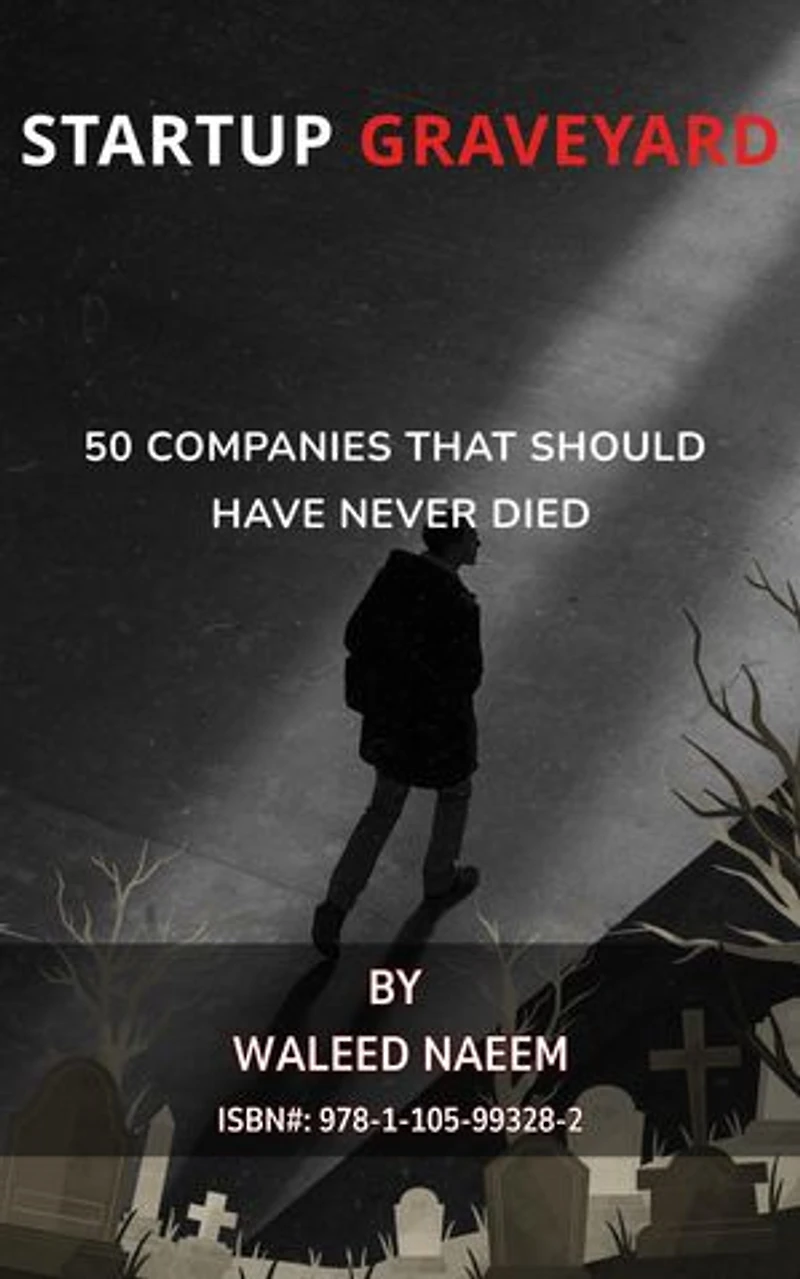
Startup Graveyard: 50 Companies That Should Have Never Died
Current price: $52.39
Original price: $65.48

Startup Graveyard: 50 Companies That Should Have Never Died
Current price: $52.39
Original price: $65.48
Loading Inventory...
Size: Kobo eBook
*Product information may vary - to confirm product availability, pricing, shipping and return information please contact Indigo
Startup Graveyard: 50 Companies That Should Have Never Died is a deeply researched, respectful, and forward-looking exploration of innovation, ambition, and impermanence in the modern business world. This book examines fifty once-promising companies—startups that captured imagination, disrupted industries, inspired loyalty, and, in many cases, changed how people lived, worked, or thought—yet ultimately disappeared. Not as cautionary tales of failure, but as unfinished stories of potential. Rather than asking “Who messed up?”, this book asks a more meaningful question: “What can we still learn?” Drawing from economics, psychology, leadership theory, organizational behavior, and historical context, the book reframes startup deaths as moments of insight rather than endings of shame. It treats founders with dignity, markets with nuance, and failure with intellectual honesty. Each chapter blends storytelling with analysis—placing companies within their cultural moment, technological constraints, and economic realities. From timing mismatches and capital misalignment to leadership transitions and market overcorrection, the book highlights how even brilliant ideas can falter when ecosystems shift faster than organizations can adapt. As historian Yuval Noah Harari reminds us, “History is not a study of the past, but a study of change.” This book takes that philosophy seriously. The narrative is enriched with reflections from thinkers such as Peter Drucker, Clayton Christensen, Maya Angelou, Jeff Bezos, Reid Hoffman, and Daniel Kahneman—voices that illuminate why progress is rarely linear and why intelligent people often make reasonable decisions that lead to unexpected outcomes. The tone remains optimistic throughout, emphasizing that innovation rarely dies; it migrates, evolves, and resurfaces in new forms.
Startup Graveyard: 50 Companies That Should Have Never Died is a deeply researched, respectful, and forward-looking exploration of innovation, ambition, and impermanence in the modern business world. This book examines fifty once-promising companies—startups that captured imagination, disrupted industries, inspired loyalty, and, in many cases, changed how people lived, worked, or thought—yet ultimately disappeared. Not as cautionary tales of failure, but as unfinished stories of potential. Rather than asking “Who messed up?”, this book asks a more meaningful question: “What can we still learn?” Drawing from economics, psychology, leadership theory, organizational behavior, and historical context, the book reframes startup deaths as moments of insight rather than endings of shame. It treats founders with dignity, markets with nuance, and failure with intellectual honesty. Each chapter blends storytelling with analysis—placing companies within their cultural moment, technological constraints, and economic realities. From timing mismatches and capital misalignment to leadership transitions and market overcorrection, the book highlights how even brilliant ideas can falter when ecosystems shift faster than organizations can adapt. As historian Yuval Noah Harari reminds us, “History is not a study of the past, but a study of change.” This book takes that philosophy seriously. The narrative is enriched with reflections from thinkers such as Peter Drucker, Clayton Christensen, Maya Angelou, Jeff Bezos, Reid Hoffman, and Daniel Kahneman—voices that illuminate why progress is rarely linear and why intelligent people often make reasonable decisions that lead to unexpected outcomes. The tone remains optimistic throughout, emphasizing that innovation rarely dies; it migrates, evolves, and resurfaces in new forms.
You May Also Like


















More About Indigo at Erin Mills Town Centre
The largest book retailer in Canada also offers toys, music, home décor, gifts and lifestyle products. What's Inside...Books, Magazines, CD’s and DVD’s, Toys and Gifts, Home Accents, Electronics, Baby’s and Children’s Section, Bath and Body, Kitchen and Bedroom, Stationary Located outside in the exterior plaza.
5015 Glen Erin Dr, Mississauga, ON L5M 0R7, Canada
Find Indigo at Erin Mills Town Centre in Mississauga ON
Visit Indigo at Erin Mills Town Centre in Mississauga ON