

GIVE THE PERFECT GIFT
Erin Mills Town Centre Gift Cards are the perfect choice for your gift giving needs.Purchase gift cards at kiosks near the food court or centre court, at Guest Services, or click below to purchase online.PURCHASE HEREHome
Stephen Langton, Quaestiones Theologiae: Liber III, Volume 3
Indigo
Loading Inventory...
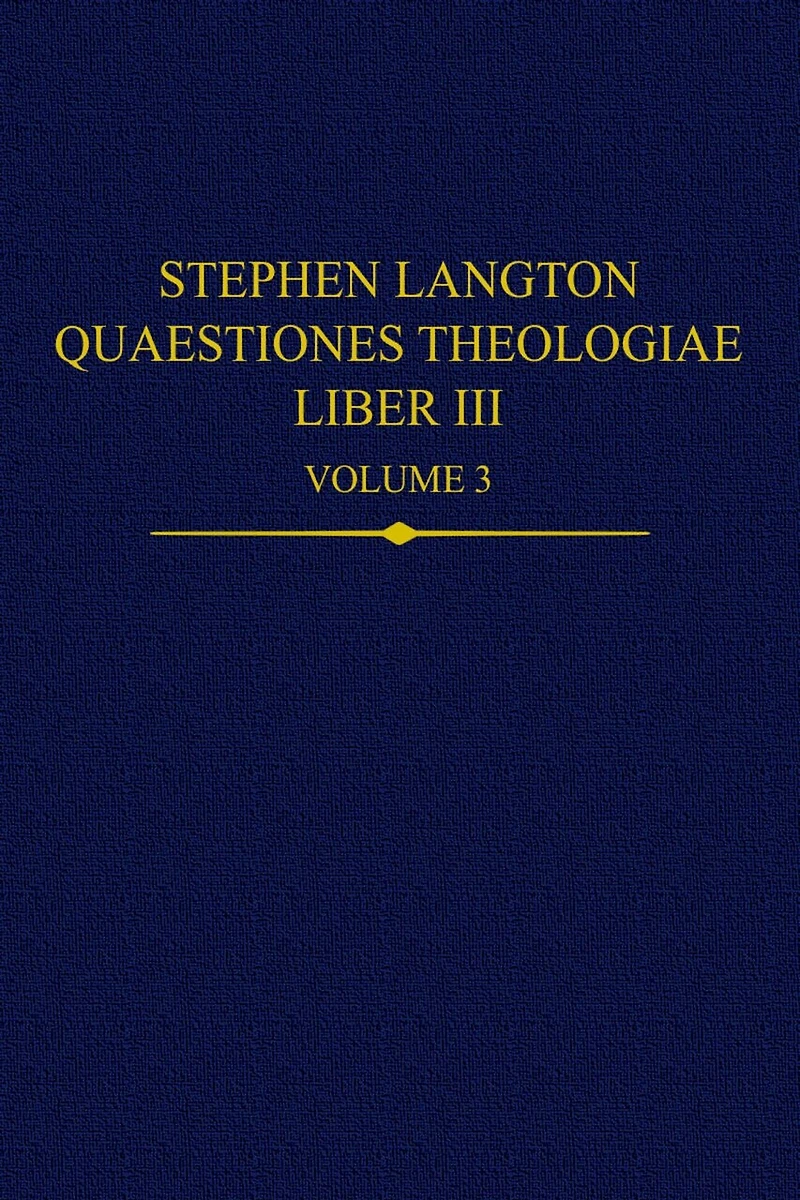
Stephen Langton, Quaestiones Theologiae: Liber III, Volume 3
Current price: $229.95

Stephen Langton, Quaestiones Theologiae: Liber III, Volume 3
Current price: $229.95
Loading Inventory...
Size: Hardcover
*Product information may vary - to confirm product availability, pricing, shipping and return information please contact Indigo
Stephen Langton, later Archbishop of Canterbury and the famous signatory of Magna Carta, was a prominent intellectual, belonging to the first generation of scholars working at the faculty of theology of the nascent University of Paris. The I^ Quaestiones Theologiae constitute his chief speculative work. Book III, volume 3, offers a critical edition of 42 disputed questions about ethics. A critical apparatus and rich source notes accompany each text. The edition is preceded by an extensive analysis of Langton's selected ethical theories, concerning, among other issues, mendacity (lying, perjury, hypocrisy, fraud), moral dilemmas (double bind), obedience, and avoiding suffering. In addition, the introduction analyses Langton's discussion of some logical issues, such as I^propositio implicita and ampliatio .
Stephen Langton, later Archbishop of Canterbury and the famous signatory of Magna Carta, was a prominent intellectual, belonging to the first generation of scholars working at the faculty of theology of the nascent University of Paris. The I^ Quaestiones Theologiae constitute his chief speculative work. Book III, volume 3, offers a critical edition of 42 disputed questions about ethics. A critical apparatus and rich source notes accompany each text. The edition is preceded by an extensive analysis of Langton's selected ethical theories, concerning, among other issues, mendacity (lying, perjury, hypocrisy, fraud), moral dilemmas (double bind), obedience, and avoiding suffering. In addition, the introduction analyses Langton's discussion of some logical issues, such as I^propositio implicita and ampliatio .
You May Also Like







More About Indigo at Erin Mills Town Centre
The largest book retailer in Canada also offers toys, music, home décor, gifts and lifestyle products. What's Inside...Books, Magazines, CD’s and DVD’s, Toys and Gifts, Home Accents, Electronics, Baby’s and Children’s Section, Bath and Body, Kitchen and Bedroom, Stationary Located outside in the exterior plaza.
5015 Glen Erin Dr, Mississauga, ON L5M 0R7, Canada
Find Indigo at Erin Mills Town Centre in Mississauga ON
Visit Indigo at Erin Mills Town Centre in Mississauga ON