

GIVE THE PERFECT GIFT
Erin Mills Town Centre Gift Cards are the perfect choice for your gift giving needs.Purchase gift cards at kiosks near the food court or centre court, at Guest Services, or click below to purchase online.PURCHASE HEREHome
Strict Negative Concord in Slavic and Finno-Ugric: Licensing, Structure and Interpretation
Indigo
Loading Inventory...
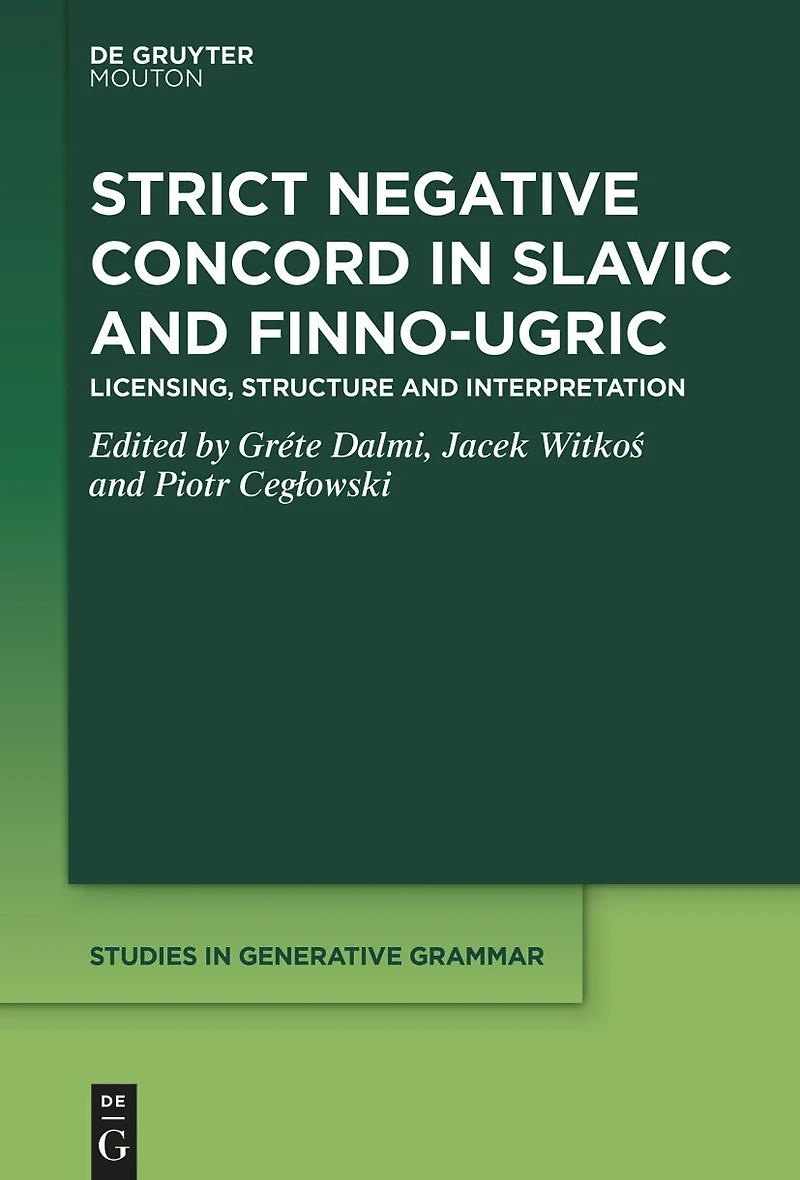
Strict Negative Concord in Slavic and Finno-Ugric: Licensing, Structure and Interpretation
Current price: $244.99

Strict Negative Concord in Slavic and Finno-Ugric: Licensing, Structure and Interpretation
Current price: $244.99
Loading Inventory...
Size: Hardcover
*Product information may vary - to confirm product availability, pricing, shipping and return information please contact Indigo
Expressing negation is a universal property of all human languages. There is considerable variation, however, in the exact ways negation materializes cross-linguistically. Strict Negative Concord differs both from the Negative Polarity Item strategy and the Asymmetric Negative Concord strategy in that the sentence becomes negative only if the sentence negator is overtly expressed in it, irrespective of how many negative expressions are used. The central aim of this book is to describe Strict Negative Concord in some Slavic and Finno-Ugric languages. In particular, the volume gives an insight into the forms Strict Negative Concord manifests itself in Russian, Polish, Czech, Slovenian (Slavic), Finnish, Hungarian, Mari (Finno-Ugric) and the closely related Selkup (Samoyedic) to a wide linguistic community. It aims to create a platform for comparison with similar phenomena in well-described European languages.
Expressing negation is a universal property of all human languages. There is considerable variation, however, in the exact ways negation materializes cross-linguistically. Strict Negative Concord differs both from the Negative Polarity Item strategy and the Asymmetric Negative Concord strategy in that the sentence becomes negative only if the sentence negator is overtly expressed in it, irrespective of how many negative expressions are used. The central aim of this book is to describe Strict Negative Concord in some Slavic and Finno-Ugric languages. In particular, the volume gives an insight into the forms Strict Negative Concord manifests itself in Russian, Polish, Czech, Slovenian (Slavic), Finnish, Hungarian, Mari (Finno-Ugric) and the closely related Selkup (Samoyedic) to a wide linguistic community. It aims to create a platform for comparison with similar phenomena in well-described European languages.
You May Also Like















More About Indigo at Erin Mills Town Centre
The largest book retailer in Canada also offers toys, music, home décor, gifts and lifestyle products. What's Inside...Books, Magazines, CD’s and DVD’s, Toys and Gifts, Home Accents, Electronics, Baby’s and Children’s Section, Bath and Body, Kitchen and Bedroom, Stationary Located outside in the exterior plaza.
5015 Glen Erin Dr, Mississauga, ON L5M 0R7, Canada
Find Indigo at Erin Mills Town Centre in Mississauga ON
Visit Indigo at Erin Mills Town Centre in Mississauga ON