

GIVE THE PERFECT GIFT
Erin Mills Town Centre Gift Cards are the perfect choice for your gift giving needs.Purchase gift cards at kiosks near the food court or centre court, at Guest Services, or click below to purchase online.PURCHASE HEREHome
Studies in Linguistic Motivation
Indigo
Loading Inventory...
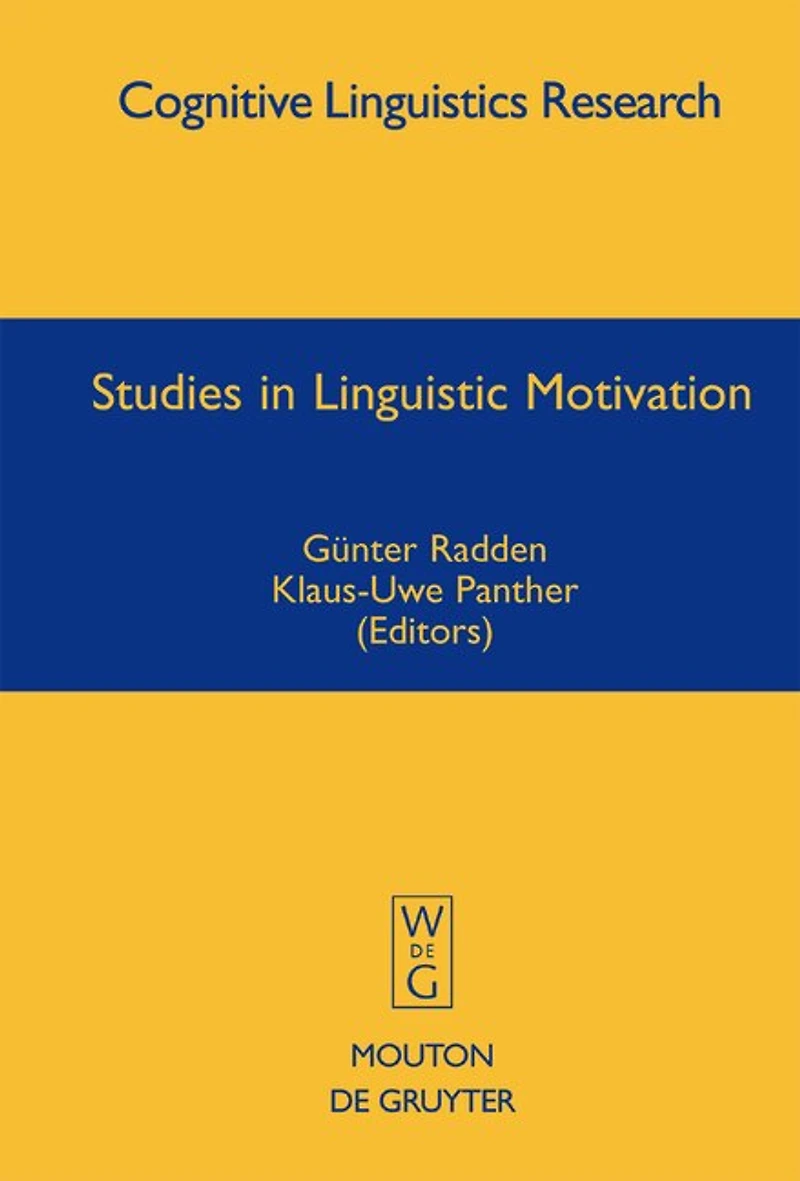
Studies in Linguistic Motivation
Current price: $410.99

Studies in Linguistic Motivation
Current price: $410.99
Loading Inventory...
Size: Hardcover
*Product information may vary - to confirm product availability, pricing, shipping and return information please contact Indigo
How much of language is motivated? Recently, cognitive and functional linguists have proposed new solutions to this intriguing question. The thirteen articles collected in this volume cover various aspects of motivation in grammar and in the lexicon. The phenomena discussed in the contributions can be grouped into four types of motivation, which, along with other types, are explicated in the introductory chapter: ecological motivation, i.e. motivation of a linguistic unit due to its place, or "ecological niche," within a system; genetic motivation, i.e. motivation of present-day linguistic behavior or structure due to historical factors; experiential motivation, i.e. motivation that is based on embodied experience; and cognitive motivation, i.e. motivation that is based on human knowledge and cognitive operations such as metonymy and metaphor. The languages studied in some detail include Afrikaans, Croatian, Dutch, English, French, German, Hausa, and Hungarian. This volume makes a strong case for the pervasiveness of motivation in natural language. It will be of interest to teachers, researchers and students of linguistics, especially of functional and cognitive linguistics.
How much of language is motivated? Recently, cognitive and functional linguists have proposed new solutions to this intriguing question. The thirteen articles collected in this volume cover various aspects of motivation in grammar and in the lexicon. The phenomena discussed in the contributions can be grouped into four types of motivation, which, along with other types, are explicated in the introductory chapter: ecological motivation, i.e. motivation of a linguistic unit due to its place, or "ecological niche," within a system; genetic motivation, i.e. motivation of present-day linguistic behavior or structure due to historical factors; experiential motivation, i.e. motivation that is based on embodied experience; and cognitive motivation, i.e. motivation that is based on human knowledge and cognitive operations such as metonymy and metaphor. The languages studied in some detail include Afrikaans, Croatian, Dutch, English, French, German, Hausa, and Hungarian. This volume makes a strong case for the pervasiveness of motivation in natural language. It will be of interest to teachers, researchers and students of linguistics, especially of functional and cognitive linguistics.
You May Also Like










More About Indigo at Erin Mills Town Centre
The largest book retailer in Canada also offers toys, music, home décor, gifts and lifestyle products. What's Inside...Books, Magazines, CD’s and DVD’s, Toys and Gifts, Home Accents, Electronics, Baby’s and Children’s Section, Bath and Body, Kitchen and Bedroom, Stationary Located outside in the exterior plaza.
5015 Glen Erin Dr, Mississauga, ON L5M 0R7, Canada
Find Indigo at Erin Mills Town Centre in Mississauga ON
Visit Indigo at Erin Mills Town Centre in Mississauga ON