

GIVE THE PERFECT GIFT
Erin Mills Town Centre Gift Cards are the perfect choice for your gift giving needs.Purchase gift cards at kiosks near the food court or centre court, at Guest Services, or click below to purchase online.PURCHASE HEREHome
Symmetrizing Syntax: Merge, Minimality, and Equilibria
Indigo
Loading Inventory...
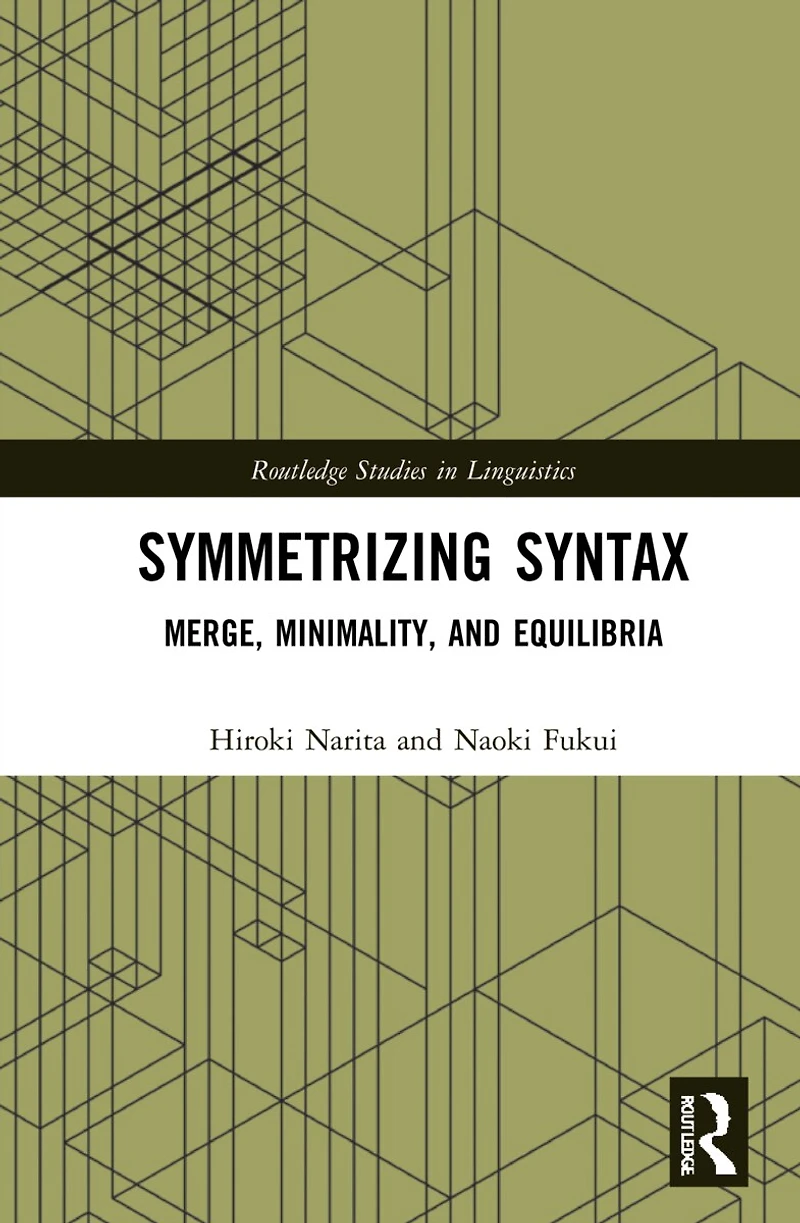
Symmetrizing Syntax: Merge, Minimality, and Equilibria
Current price: $296.50

Symmetrizing Syntax: Merge, Minimality, and Equilibria
Current price: $296.50
Loading Inventory...
Size: Hardcover
*Product information may vary - to confirm product availability, pricing, shipping and return information please contact Indigo
Symmetrizing Syntax seeks to establish a minimal and natural characterization of the structure of human language (syntax), simplifying many facets of it that have been redundantly or asymmetrically formulated. Virtually all past theories of natural language syntax, from the traditional X-bar theory to the contemporary system of Merge and labeling, stipulate that every phrase structure is "asymmetrically" organized, so that one of its elements is always marked as primary/dominant over the others, or each and every phrase is labeled by a designated lexical element. The two authors call this traditional stipulation into question and hypothesize, instead, that linguistic derivations are essentially driven by the need to reduce asymmetry and generate symmetric structures. Various linguistic notions such as Merge, cyclic derivation by phase, feature-checking, morphological agreement, labeling, movement, and criterial freezing, as well as parametric differences among languages like English and Japanese, and so on, are all shown to follow from a particular notion of structural symmetry. These results constitute novel support for the contemporary thesis that human language is essentially an instance of a physical/biological object, and its design is governed by the laws of nature, at the core of which lies the fundamental principle of symmetry. Providing insights into new technical concepts in syntax, the volume is written for academics in linguistics but will also be accessible to linguistics students seeking an introduction to syntax.
Symmetrizing Syntax seeks to establish a minimal and natural characterization of the structure of human language (syntax), simplifying many facets of it that have been redundantly or asymmetrically formulated. Virtually all past theories of natural language syntax, from the traditional X-bar theory to the contemporary system of Merge and labeling, stipulate that every phrase structure is "asymmetrically" organized, so that one of its elements is always marked as primary/dominant over the others, or each and every phrase is labeled by a designated lexical element. The two authors call this traditional stipulation into question and hypothesize, instead, that linguistic derivations are essentially driven by the need to reduce asymmetry and generate symmetric structures. Various linguistic notions such as Merge, cyclic derivation by phase, feature-checking, morphological agreement, labeling, movement, and criterial freezing, as well as parametric differences among languages like English and Japanese, and so on, are all shown to follow from a particular notion of structural symmetry. These results constitute novel support for the contemporary thesis that human language is essentially an instance of a physical/biological object, and its design is governed by the laws of nature, at the core of which lies the fundamental principle of symmetry. Providing insights into new technical concepts in syntax, the volume is written for academics in linguistics but will also be accessible to linguistics students seeking an introduction to syntax.
















More About Indigo at Erin Mills Town Centre
The largest book retailer in Canada also offers toys, music, home décor, gifts and lifestyle products. What's Inside...Books, Magazines, CD’s and DVD’s, Toys and Gifts, Home Accents, Electronics, Baby’s and Children’s Section, Bath and Body, Kitchen and Bedroom, Stationary Located outside in the exterior plaza.
5015 Glen Erin Dr, Mississauga, ON L5M 0R7, Canada
Find Indigo at Erin Mills Town Centre in Mississauga ON
Visit Indigo at Erin Mills Town Centre in Mississauga ON