

GIVE THE PERFECT GIFT
Erin Mills Town Centre Gift Cards are the perfect choice for your gift giving needs.Purchase gift cards at kiosks near the food court or centre court, at Guest Services, or click below to purchase online.PURCHASE HEREHome
The aspect of healing in the poetry of Gregory Scofield, Marilyn Dumont, Roo Borson and Louise Bernice Halfe
Indigo
Loading Inventory...
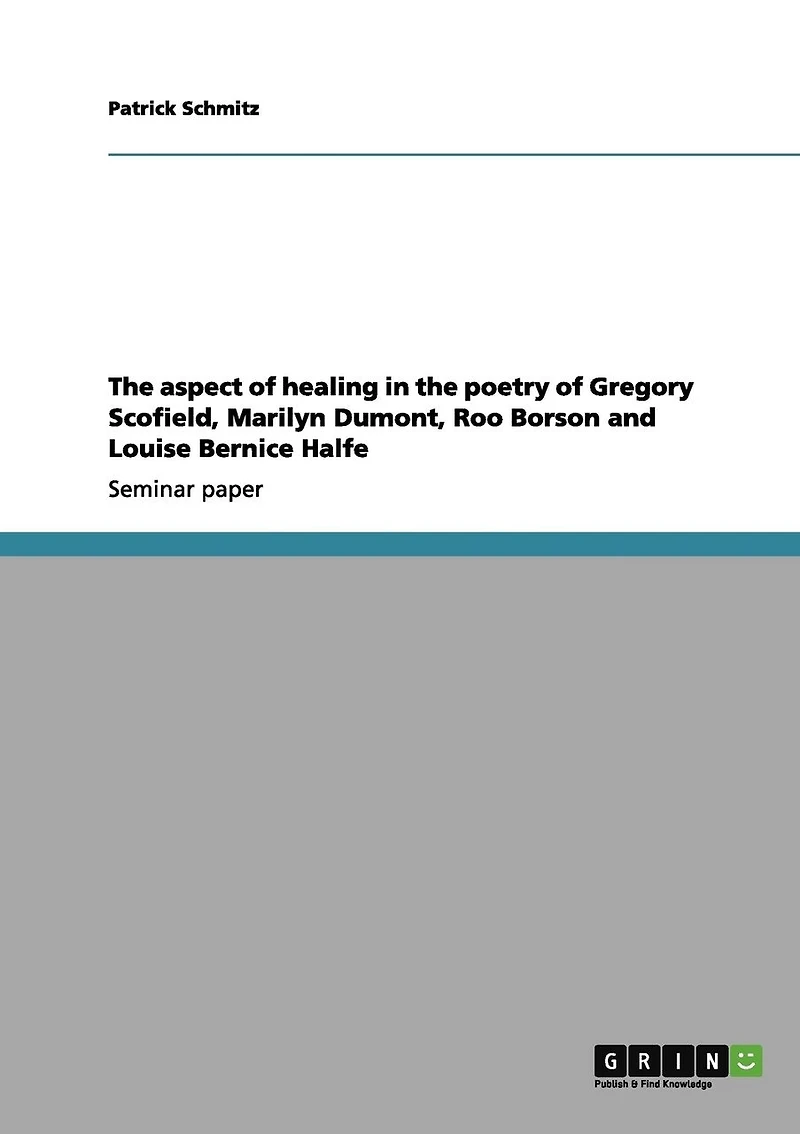
The aspect of healing in the poetry of Gregory Scofield, Marilyn Dumont, Roo Borson and Louise Bernice Halfe
Current price: $34.95

The aspect of healing in the poetry of Gregory Scofield, Marilyn Dumont, Roo Borson and Louise Bernice Halfe
Current price: $34.95
Loading Inventory...
Size: Paperback
*Product information may vary - to confirm product availability, pricing, shipping and return information please contact Indigo
Seminar paper from the year 2009 in the subject Didactics for the subject English - Literature, Works, grade: 1,3, RWTH Aachen University, language: English, abstract: I write to heal" (Scofield Gathering 821), "writing became my medicine" (Halfe Bear 1272), "be healed through creative expression" (Payne 1353), "he writes us weapons and shields, weaves us blankets" (Driskill 2224), "Indigenous writers (...) narrate Indigenous experiences under colonialism in an effort to heal" (Episkenew 15). Native literature - be it a poem, a drama, a novel or research literature - brims over with allusions as to why Native writers mostly intend to write, to compose and to publish: to tell the truth, to spread their culture, to strengthen their identity, to empower and find themselves, to unite, to change, to resist, to reanimate. But nearly every reason and method to do so ultimately starts and ends with an attempt to heal. Many Native and Métis authors for example write about their own lives, experiences and emotions - say about the loss of a beloved person - to cure their own "soul wound[s]" (Episkenew 5). Some process the history or widespread problems of many Natives to treat the wounds of their whole community caused by alcohol, rape and exclusion. They attempt to heal "injuries that colonialism and racism had inflicted" (1) e.g. by telling the Natives' history from their own perspective, a 'history from below' in the manner of speaking. In this term-paper, I will concentrate on this very act of healing and therefore also on the contents of their poems rather than on their form. I want to examine different works with a particular focus on the wounds, which demand to be healed, within them and I want to present the 'patients' that suffer from these injuries - i.e. the people that are to be cured. In doing so, I will analyse the works of Gregory Scofield, Marilyn Dumont, Louise Bernice Halfe and Ruth 'Roo' Borson. Which issues do these poets attempt to process by writing about t
Seminar paper from the year 2009 in the subject Didactics for the subject English - Literature, Works, grade: 1,3, RWTH Aachen University, language: English, abstract: I write to heal" (Scofield Gathering 821), "writing became my medicine" (Halfe Bear 1272), "be healed through creative expression" (Payne 1353), "he writes us weapons and shields, weaves us blankets" (Driskill 2224), "Indigenous writers (...) narrate Indigenous experiences under colonialism in an effort to heal" (Episkenew 15). Native literature - be it a poem, a drama, a novel or research literature - brims over with allusions as to why Native writers mostly intend to write, to compose and to publish: to tell the truth, to spread their culture, to strengthen their identity, to empower and find themselves, to unite, to change, to resist, to reanimate. But nearly every reason and method to do so ultimately starts and ends with an attempt to heal. Many Native and Métis authors for example write about their own lives, experiences and emotions - say about the loss of a beloved person - to cure their own "soul wound[s]" (Episkenew 5). Some process the history or widespread problems of many Natives to treat the wounds of their whole community caused by alcohol, rape and exclusion. They attempt to heal "injuries that colonialism and racism had inflicted" (1) e.g. by telling the Natives' history from their own perspective, a 'history from below' in the manner of speaking. In this term-paper, I will concentrate on this very act of healing and therefore also on the contents of their poems rather than on their form. I want to examine different works with a particular focus on the wounds, which demand to be healed, within them and I want to present the 'patients' that suffer from these injuries - i.e. the people that are to be cured. In doing so, I will analyse the works of Gregory Scofield, Marilyn Dumont, Louise Bernice Halfe and Ruth 'Roo' Borson. Which issues do these poets attempt to process by writing about t
You May Also Like








More About Indigo at Erin Mills Town Centre
The largest book retailer in Canada also offers toys, music, home décor, gifts and lifestyle products. What's Inside...Books, Magazines, CD’s and DVD’s, Toys and Gifts, Home Accents, Electronics, Baby’s and Children’s Section, Bath and Body, Kitchen and Bedroom, Stationary Located outside in the exterior plaza.
5015 Glen Erin Dr, Mississauga, ON L5M 0R7, Canada
Find Indigo at Erin Mills Town Centre in Mississauga ON
Visit Indigo at Erin Mills Town Centre in Mississauga ON