

GIVE THE PERFECT GIFT
Erin Mills Town Centre Gift Cards are the perfect choice for your gift giving needs.Purchase gift cards at kiosks near the food court or centre court, at Guest Services, or click below to purchase online.PURCHASE HEREHome
The Composition of Luke and Rewritten Scripture
Indigo
Loading Inventory...
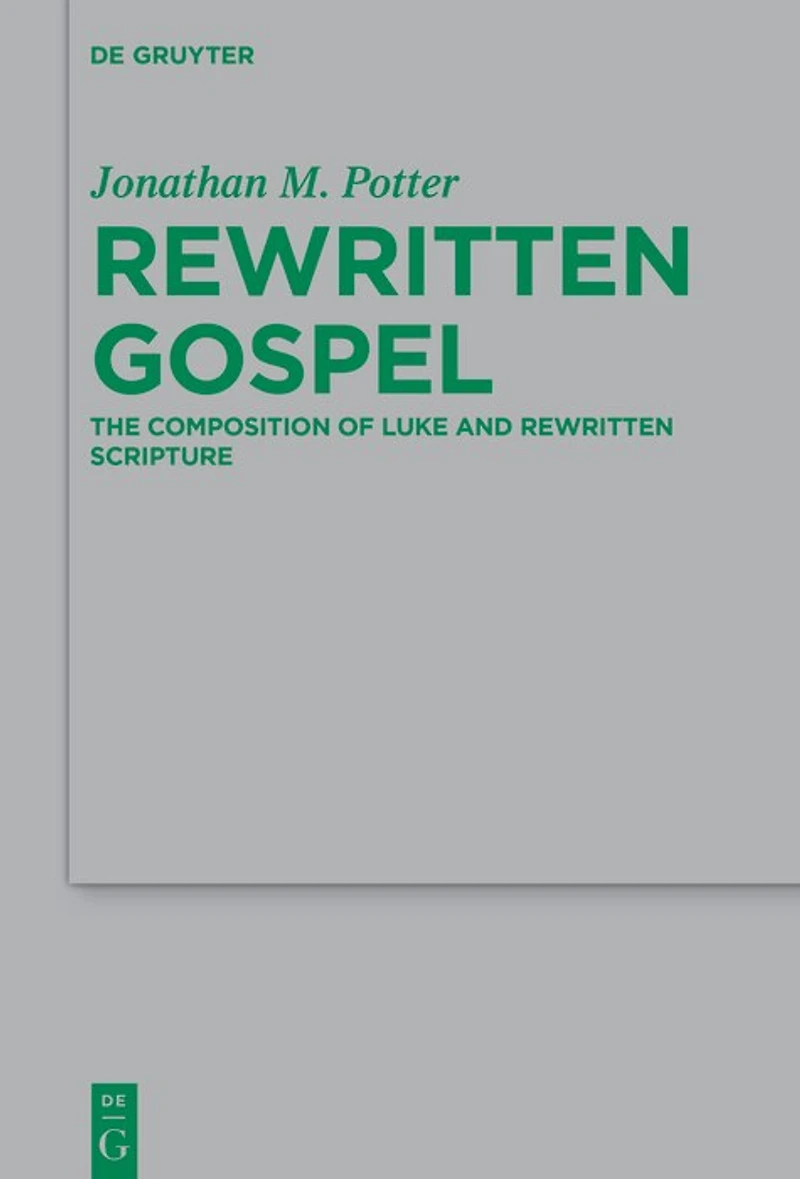
The Composition of Luke and Rewritten Scripture
Current price: $143.49

The Composition of Luke and Rewritten Scripture
Current price: $143.49
Loading Inventory...
Size: Hardcover
*Product information may vary - to confirm product availability, pricing, shipping and return information please contact Indigo
How early Christian gospels were written is an old question that continues to engage scholars. Moving beyond the traditional approach of reading Luke as a "gentile" gospel composed primarily using Greco-Roman methods of history and biography writing, this book argues that Luke’s use of the earlier Gospel of Mark should be understood in the context of contemporaneous early Jewish writings known as "Rewritten Scripture." Texts like the Book of Jubilees and Josephus’s Antiquities interpret Scripture by rewriting it in such a way that ambiguities and contradictions are diminished, while also adapting it to contemporary beliefs and practices. A similar strategy of interpretation through rewriting best explains Luke’s reworking of Mark. Even if Mark is not yet "Scripture," Luke’s manner of rewriting Mark suggests that Luke views the earliest gospel as an authoritative narrative about Jesus that merits interpretive clarification and expansion rather than rejection or critique. This approach offers solutions to various "problems" in the composition of Luke, such as the combination of expansion and omission, verbatim repetition and free paraphrase, and it also places Luke’s compositional process within a plausible ancient literary context.
How early Christian gospels were written is an old question that continues to engage scholars. Moving beyond the traditional approach of reading Luke as a "gentile" gospel composed primarily using Greco-Roman methods of history and biography writing, this book argues that Luke’s use of the earlier Gospel of Mark should be understood in the context of contemporaneous early Jewish writings known as "Rewritten Scripture." Texts like the Book of Jubilees and Josephus’s Antiquities interpret Scripture by rewriting it in such a way that ambiguities and contradictions are diminished, while also adapting it to contemporary beliefs and practices. A similar strategy of interpretation through rewriting best explains Luke’s reworking of Mark. Even if Mark is not yet "Scripture," Luke’s manner of rewriting Mark suggests that Luke views the earliest gospel as an authoritative narrative about Jesus that merits interpretive clarification and expansion rather than rejection or critique. This approach offers solutions to various "problems" in the composition of Luke, such as the combination of expansion and omission, verbatim repetition and free paraphrase, and it also places Luke’s compositional process within a plausible ancient literary context.
You May Also Like










More About Indigo at Erin Mills Town Centre
The largest book retailer in Canada also offers toys, music, home décor, gifts and lifestyle products. What's Inside...Books, Magazines, CD’s and DVD’s, Toys and Gifts, Home Accents, Electronics, Baby’s and Children’s Section, Bath and Body, Kitchen and Bedroom, Stationary Located outside in the exterior plaza.
5015 Glen Erin Dr, Mississauga, ON L5M 0R7, Canada
Find Indigo at Erin Mills Town Centre in Mississauga ON
Visit Indigo at Erin Mills Town Centre in Mississauga ON