

GIVE THE PERFECT GIFT
Erin Mills Town Centre Gift Cards are the perfect choice for your gift giving needs.Purchase gift cards at kiosks near the food court or centre court, at Guest Services, or click below to purchase online.PURCHASE HEREHome
The Economic Impact of the 2014 Ebola Epidemic: Short- and Medium-Term Estimates for West Africa
Indigo
Loading Inventory...
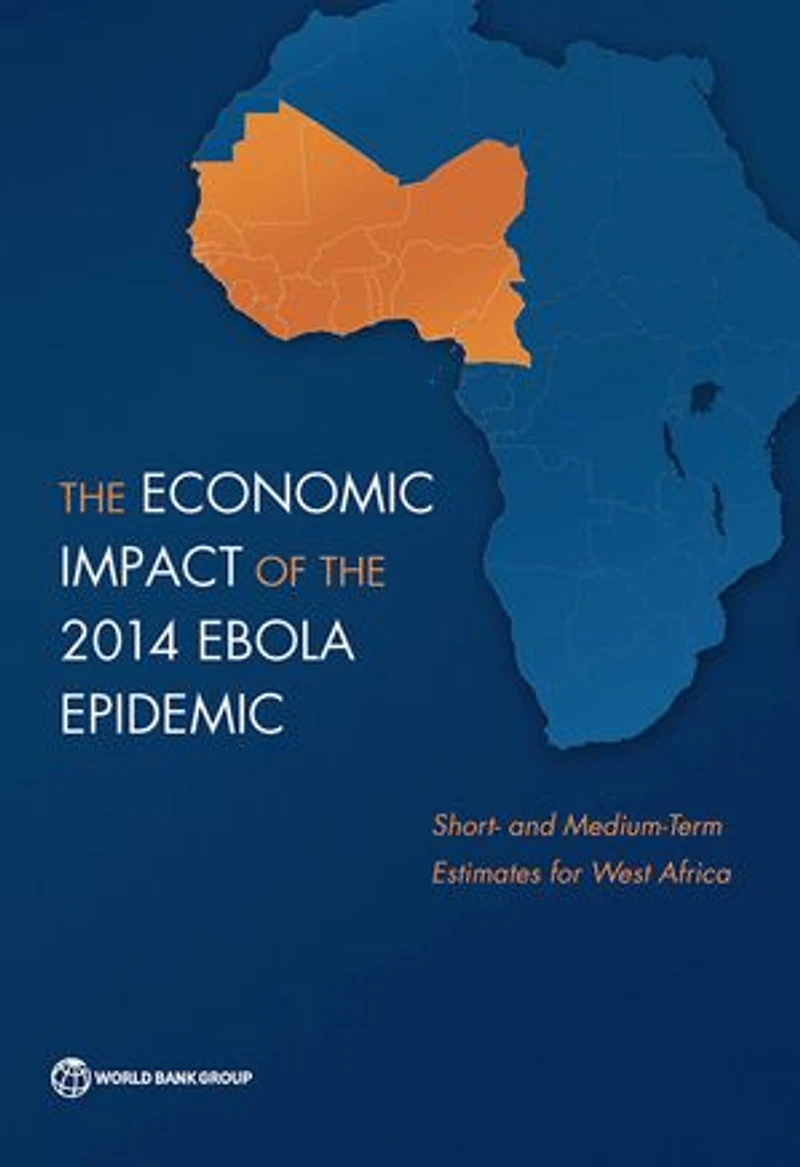
The Economic Impact of the 2014 Ebola Epidemic: Short- and Medium-Term Estimates for West Africa
Current price: $19.99

The Economic Impact of the 2014 Ebola Epidemic: Short- and Medium-Term Estimates for West Africa
Current price: $19.99
Loading Inventory...
Size: Kobo eBook
*Product information may vary - to confirm product availability, pricing, shipping and return information please contact Indigo
Beyond its terrible toll in human lives and suffering, the Ebola epidemic has inflicted a measurable economic impact on West Africa in terms of forgone output, higher fiscal deficits, rising prices, lower real household incomes, and greater poverty. This impact results partly from the health-care costs and forgone productivity associated with being infected, but it is driven principally by the efforts of the uninfected population to avoid exposure ('aversion behavior'). The Economic Impact of the 2014 Ebola Epidemic: Short- and Medium-Term Estimates for West Africa provides a mixed methods analysis of the economic impact, combining theory on the channels of economic impact of the epidemic, economic indicators across sectors in the affected countries, and models of how these economies interact with each other and with the broader world. The result is a quantification of the potential overall magnitude of the economic impact for Guinea, Liberia, and Sierra Leone, as well as for West Africa as a whole. Ebola's short-term economic impact (2014) in the three core countries is on the order of US$359 million in forgone output. That is how much poorer these economies will be than they would have been in the absence of Ebola. Two alternative scenarios are used to estimate the medium-term impact (2015): A Low Ebola scenario corresponds to rapid containment within the three most severely affected countries and limited regional contagion, and a High Ebola scenario corresponds to slower containment in the three core countries with broader regional contagion. The estimates of the output lost as a result of the epidemic in the three core countries for 2015 alone sum to US$97 million under the Low Ebola scenario (implying some recovery from 2014) and US$809 million under the High Ebola scenario.
Beyond its terrible toll in human lives and suffering, the Ebola epidemic has inflicted a measurable economic impact on West Africa in terms of forgone output, higher fiscal deficits, rising prices, lower real household incomes, and greater poverty. This impact results partly from the health-care costs and forgone productivity associated with being infected, but it is driven principally by the efforts of the uninfected population to avoid exposure ('aversion behavior'). The Economic Impact of the 2014 Ebola Epidemic: Short- and Medium-Term Estimates for West Africa provides a mixed methods analysis of the economic impact, combining theory on the channels of economic impact of the epidemic, economic indicators across sectors in the affected countries, and models of how these economies interact with each other and with the broader world. The result is a quantification of the potential overall magnitude of the economic impact for Guinea, Liberia, and Sierra Leone, as well as for West Africa as a whole. Ebola's short-term economic impact (2014) in the three core countries is on the order of US$359 million in forgone output. That is how much poorer these economies will be than they would have been in the absence of Ebola. Two alternative scenarios are used to estimate the medium-term impact (2015): A Low Ebola scenario corresponds to rapid containment within the three most severely affected countries and limited regional contagion, and a High Ebola scenario corresponds to slower containment in the three core countries with broader regional contagion. The estimates of the output lost as a result of the epidemic in the three core countries for 2015 alone sum to US$97 million under the Low Ebola scenario (implying some recovery from 2014) and US$809 million under the High Ebola scenario.
You May Also Like










More About Indigo at Erin Mills Town Centre
The largest book retailer in Canada also offers toys, music, home décor, gifts and lifestyle products. What's Inside...Books, Magazines, CD’s and DVD’s, Toys and Gifts, Home Accents, Electronics, Baby’s and Children’s Section, Bath and Body, Kitchen and Bedroom, Stationary Located outside in the exterior plaza.
5015 Glen Erin Dr, Mississauga, ON L5M 0R7, Canada
Find Indigo at Erin Mills Town Centre in Mississauga ON
Visit Indigo at Erin Mills Town Centre in Mississauga ON