

GIVE THE PERFECT GIFT
Erin Mills Town Centre Gift Cards are the perfect choice for your gift giving needs.Purchase gift cards at kiosks near the food court or centre court, at Guest Services, or click below to purchase online.PURCHASE HEREHome
The Fable of the Bees; Or, Private Vices, Public Benefits
Indigo
Loading Inventory...

The Fable of the Bees; Or, Private Vices, Public Benefits
Current price: $1.29

The Fable of the Bees; Or, Private Vices, Public Benefits
Current price: $1.29
Loading Inventory...
Size: Kobo eBook
*Product information may vary - to confirm product availability, pricing, shipping and return information please contact Indigo
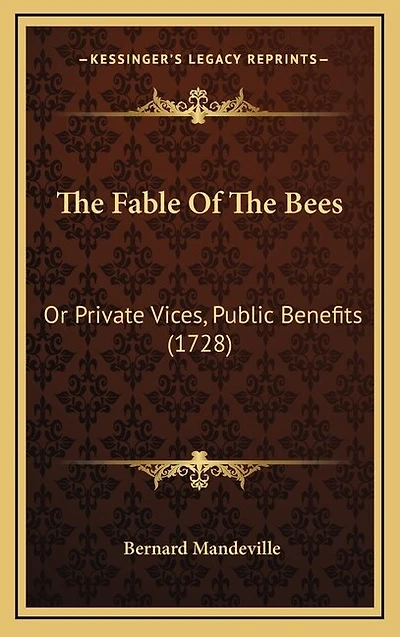
"The Fable of the Bees; Or, Private Vices, Public Benefits" by Bernard Mandeville is a thought-provoking work that explores the relationship between individual self-interest and societal benefit. Mandeville presents a satirical view of human behavior, arguing that private vices, such as greed and selfishness, can lead to public benefits, such as economic prosperity and social progress. Through his fable, he challenges the moralistic views of his time, suggesting that the pursuit of personal gain can inadvertently contribute to the greater good of society.***Mandeville's work is structured around a fictional bee society, where the bees' immoral behaviors lead to a thriving community. This allegorical approach allows Mandeville to critique contemporary social and economic theories, emphasizing the complexity of human motivations. His ideas sparked significant debate and laid the groundwork for later economic thought, particularly in the realm of capitalism. "The Fable of the Bees" remains a significant text in discussions of ethics, economics, and the nature of human society.
"The Fable of the Bees; Or, Private Vices, Public Benefits" by Bernard Mandeville is a thought-provoking work that explores the relationship between individual self-interest and societal benefit. Mandeville presents a satirical view of human behavior, arguing that private vices, such as greed and selfishness, can lead to public benefits, such as economic prosperity and social progress. Through his fable, he challenges the moralistic views of his time, suggesting that the pursuit of personal gain can inadvertently contribute to the greater good of society.***Mandeville's work is structured around a fictional bee society, where the bees' immoral behaviors lead to a thriving community. This allegorical approach allows Mandeville to critique contemporary social and economic theories, emphasizing the complexity of human motivations. His ideas sparked significant debate and laid the groundwork for later economic thought, particularly in the realm of capitalism. "The Fable of the Bees" remains a significant text in discussions of ethics, economics, and the nature of human society.
You May Also Like












More About Indigo at Erin Mills Town Centre
The largest book retailer in Canada also offers toys, music, home décor, gifts and lifestyle products. What's Inside...Books, Magazines, CD’s and DVD’s, Toys and Gifts, Home Accents, Electronics, Baby’s and Children’s Section, Bath and Body, Kitchen and Bedroom, Stationary Located outside in the exterior plaza.
5015 Glen Erin Dr, Mississauga, ON L5M 0R7, Canada
Find Indigo at Erin Mills Town Centre in Mississauga ON
Visit Indigo at Erin Mills Town Centre in Mississauga ON