

GIVE THE PERFECT GIFT
Erin Mills Town Centre Gift Cards are the perfect choice for your gift giving needs.Purchase gift cards at kiosks near the food court or centre court, at Guest Services, or click below to purchase online.PURCHASE HEREHome
The Fall of Constantinople (1453): A City at the Crossroads of Empire, Faith, and Power
Indigo
Loading Inventory...
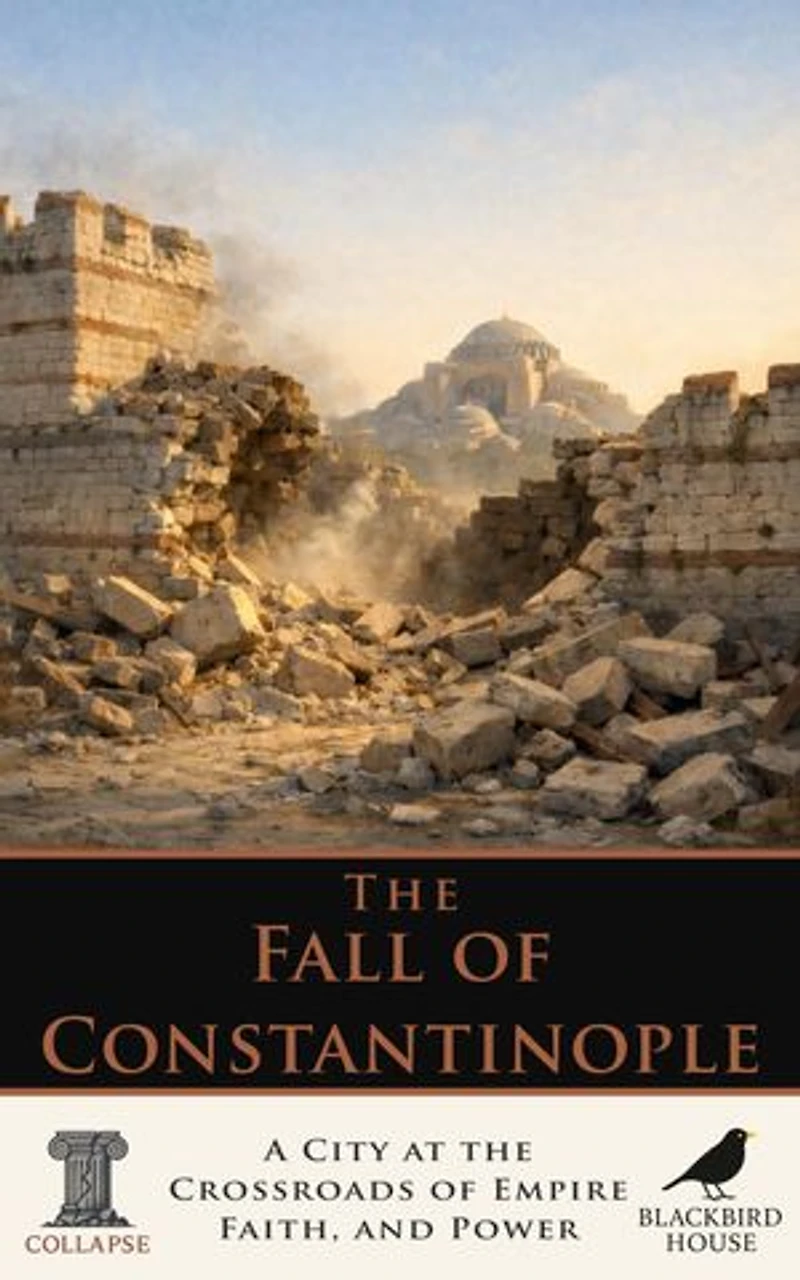
The Fall of Constantinople (1453): A City at the Crossroads of Empire, Faith, and Power
Current price: $6.43

The Fall of Constantinople (1453): A City at the Crossroads of Empire, Faith, and Power
Current price: $6.43
Loading Inventory...
Size: Kobo eBook
*Product information may vary - to confirm product availability, pricing, shipping and return information please contact Indigo
The fall of Constantinople was more than the end of the Byzantine Empire. It was a moment when long-standing political, military, and cultural structures were tested—and transformed.
This book tells the story of 1453 clearly and without exaggeration. Rather than relying on legend or simplified narratives, it explains why Constantinople fell, how both sides prepared and fought, what was lost in the conquest, and what unexpectedly endured.
Written for curious general readers rather than specialists, the book combines steady narrative with grounded historical analysis to show why the siege and capture of the city still matter today.
It examines the final years of Byzantium, marked by political isolation, shrinking manpower, religious tension, and structural decline. It follows Mehmed II as he forged an imperial strategy that blended ambition, engineering, and military reform. The siege itself is reconstructed step by step—from massive artillery and naval maneuvering to tunneling operations and the decisive night of 28–29 May.
The aftermath is treated with equal care. The book explores what happened in the first hours and days after the city fell, how the population was handled, and how the Ottomans reshaped Constantinople into a new imperial capital.
Finally, it looks beyond the walls. While the Byzantine state collapsed, Byzantine culture, learning, and faith survived in altered forms. The fall of the city reshaped the Ottoman world, unsettled Europe, and influenced the wider networks that connected the Mediterranean to emerging global routes.
Avoiding hero worship and demonization, this book presents 1453 as a turning point shaped by political necessity, technology, and statecraft—showing how a local siege became a moment of global consequence.
The fall of Constantinople was more than the end of the Byzantine Empire. It was a moment when long-standing political, military, and cultural structures were tested—and transformed.
This book tells the story of 1453 clearly and without exaggeration. Rather than relying on legend or simplified narratives, it explains why Constantinople fell, how both sides prepared and fought, what was lost in the conquest, and what unexpectedly endured.
Written for curious general readers rather than specialists, the book combines steady narrative with grounded historical analysis to show why the siege and capture of the city still matter today.
It examines the final years of Byzantium, marked by political isolation, shrinking manpower, religious tension, and structural decline. It follows Mehmed II as he forged an imperial strategy that blended ambition, engineering, and military reform. The siege itself is reconstructed step by step—from massive artillery and naval maneuvering to tunneling operations and the decisive night of 28–29 May.
The aftermath is treated with equal care. The book explores what happened in the first hours and days after the city fell, how the population was handled, and how the Ottomans reshaped Constantinople into a new imperial capital.
Finally, it looks beyond the walls. While the Byzantine state collapsed, Byzantine culture, learning, and faith survived in altered forms. The fall of the city reshaped the Ottoman world, unsettled Europe, and influenced the wider networks that connected the Mediterranean to emerging global routes.
Avoiding hero worship and demonization, this book presents 1453 as a turning point shaped by political necessity, technology, and statecraft—showing how a local siege became a moment of global consequence.
You May Also Like









More About Indigo at Erin Mills Town Centre
The largest book retailer in Canada also offers toys, music, home décor, gifts and lifestyle products. What's Inside...Books, Magazines, CD’s and DVD’s, Toys and Gifts, Home Accents, Electronics, Baby’s and Children’s Section, Bath and Body, Kitchen and Bedroom, Stationary Located outside in the exterior plaza.
5015 Glen Erin Dr, Mississauga, ON L5M 0R7, Canada
Find Indigo at Erin Mills Town Centre in Mississauga ON
Visit Indigo at Erin Mills Town Centre in Mississauga ON