

GIVE THE PERFECT GIFT
Erin Mills Town Centre Gift Cards are the perfect choice for your gift giving needs.Purchase gift cards at kiosks near the food court or centre court, at Guest Services, or click below to purchase online.PURCHASE HEREHome
The Feminine by Jean Mcconnell Graybeal, Paperback | Indigo Chapters
Indigo
Loading Inventory...
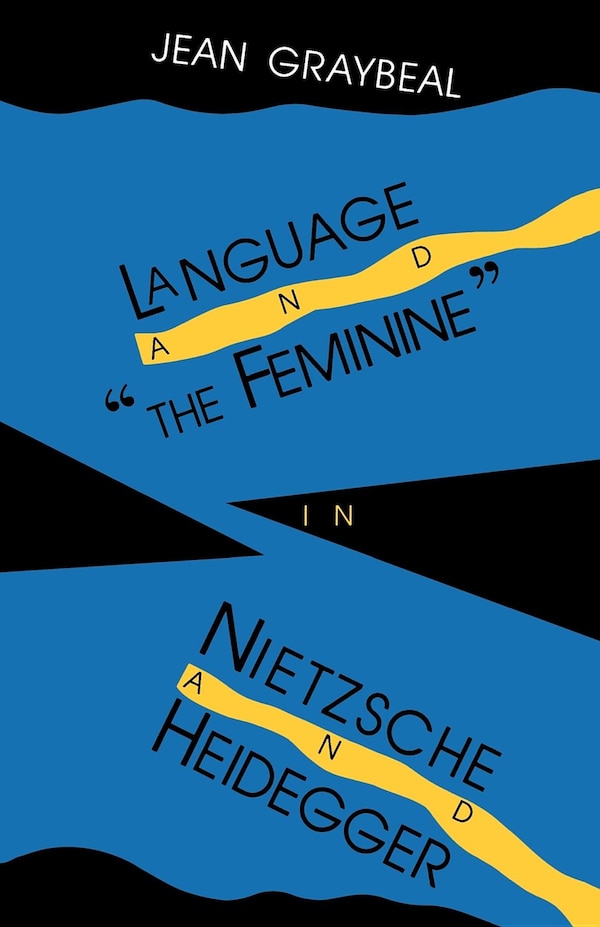
The Feminine by Jean Mcconnell Graybeal, Paperback | Indigo Chapters
By Jean Mcconnell Graybeal
Current price: $34.46

By Jean Mcconnell Graybeal
The Feminine by Jean Mcconnell Graybeal, Paperback | Indigo Chapters
Current price: $34.46
Loading Inventory...
Size: 1 x 9 x 350
*Product information may vary - to confirm product availability, pricing, shipping and return information please contact Indigo
Nietzsche and Heidegger were both lovers of language, and author Jean Graybeal argues that their writing styles demonstrate a relationship with the feminine dimension of language. Using as a framework the theories of Julia Kristeva concerning the symbolic and semiotic dispositions in language, Graybeal reads Nietzsche and Heidegger as writers and thinkers whose experimentation with language is directly relevant both to their quests for nonmetaphysical ways of thinking and to the feminist project of moving beyond male dominance. The chapters on Nietzsche discuss portions of The Gay Science, Thus Spoke Zarathustra, and Ecce Homo with the question of woman in the forefront of the analysis. The chapters on Heidegger deal, first, with Being and Time, describing the ways in which Heidegger evokes the feminine and semioitic dimensions in language. Finally, eight of Heidegger's later essays are read with attention to feminie, maternal, and erotic imagery. | The Feminine by Jean Mcconnell Graybeal, Paperback | Indigo Chapters
Nietzsche and Heidegger were both lovers of language, and author Jean Graybeal argues that their writing styles demonstrate a relationship with the feminine dimension of language. Using as a framework the theories of Julia Kristeva concerning the symbolic and semiotic dispositions in language, Graybeal reads Nietzsche and Heidegger as writers and thinkers whose experimentation with language is directly relevant both to their quests for nonmetaphysical ways of thinking and to the feminist project of moving beyond male dominance. The chapters on Nietzsche discuss portions of The Gay Science, Thus Spoke Zarathustra, and Ecce Homo with the question of woman in the forefront of the analysis. The chapters on Heidegger deal, first, with Being and Time, describing the ways in which Heidegger evokes the feminine and semioitic dimensions in language. Finally, eight of Heidegger's later essays are read with attention to feminie, maternal, and erotic imagery. | The Feminine by Jean Mcconnell Graybeal, Paperback | Indigo Chapters
You May Also Like








More About Indigo at Erin Mills Town Centre
The largest book retailer in Canada also offers toys, music, home décor, gifts and lifestyle products. What's Inside...Books, Magazines, CD’s and DVD’s, Toys and Gifts, Home Accents, Electronics, Baby’s and Children’s Section, Bath and Body, Kitchen and Bedroom, Stationary Located outside in the exterior plaza.
5015 Glen Erin Dr, Mississauga, ON L5M 0R7, Canada
Find Indigo at Erin Mills Town Centre in Mississauga ON
Visit Indigo at Erin Mills Town Centre in Mississauga ON