

GIVE THE PERFECT GIFT
Erin Mills Town Centre Gift Cards are the perfect choice for your gift giving needs.Purchase gift cards at kiosks near the food court or centre court, at Guest Services, or click below to purchase online.PURCHASE HEREHome
The Foundations of Japan: Notes Made During Journeys Of 6,000 Miles In The Rural Districts As A Basis For A Sounder Knowledge of The Japanese People
Indigo
Loading Inventory...
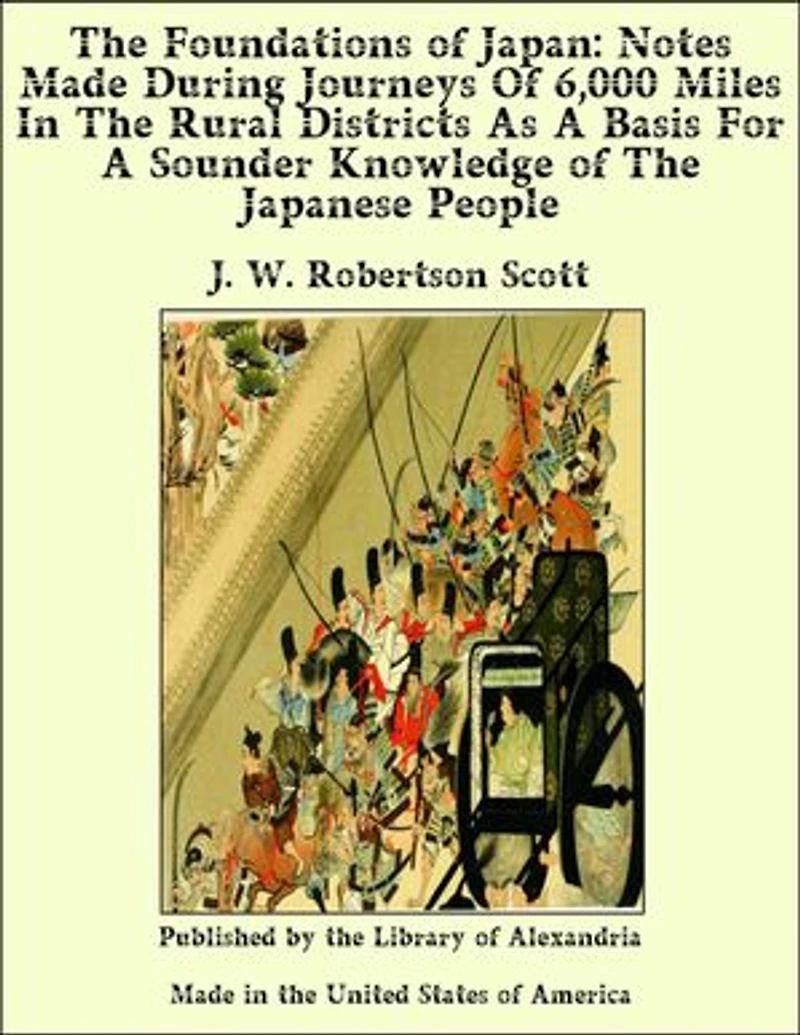
The Foundations of Japan: Notes Made During Journeys Of 6,000 Miles In The Rural Districts As A Basis For A Sounder Knowledge of The Japanese People
Current price: $8.69
Original price: $9.99

The Foundations of Japan: Notes Made During Journeys Of 6,000 Miles In The Rural Districts As A Basis For A Sounder Knowledge of The Japanese People
Current price: $8.69
Original price: $9.99
Loading Inventory...
Size: Kobo eBook
*Product information may vary - to confirm product availability, pricing, shipping and return information please contact Indigo
The hope with which these pages are written is that their readers may be enabled to see a little deeper into that problem of the relation of the West with Asia which the historian of the future will unquestionably regard as the greatest of our time. I lived for four and a half years in Japan. This book is a record of many of the things I saw and experienced and some of the things I was told chiefly during rural journeys—more than half the population is rural—extending to twice the distance across the United States or nearly eight times the distance between the English Channel and John o' Groats. These pages deal with a field of investigation in Japan which no other volume has explored. Because they fall short of what was planned, and in happier conditions might have been accomplished, a word or two may be pardoned on the beginnings of the book—one of the many literary victims of the War. The first book I ever bought was about the Far East. The first leading article of my journalistic apprenticeship in London was about Korea. When I left daily journalism, at the time of the siege of the Peking Legations, the first thing I published was a book pleading for a better understanding of the Chinese. After that, as a cottager in Essex, I wrote—above a nom de guerre which is better known than I am—a dozen volumes on rural subjects. During a visit to the late David Lubin in Rome I noticed in the big library of his International Institute of Agriculture that there was no took in English dealing with the agriculture of Japan. Just before the War the thoughts of forward-looking students of our home affairs ran strongly on the relation of intelligently managed small holdings to skilled capitalist farming.
The hope with which these pages are written is that their readers may be enabled to see a little deeper into that problem of the relation of the West with Asia which the historian of the future will unquestionably regard as the greatest of our time. I lived for four and a half years in Japan. This book is a record of many of the things I saw and experienced and some of the things I was told chiefly during rural journeys—more than half the population is rural—extending to twice the distance across the United States or nearly eight times the distance between the English Channel and John o' Groats. These pages deal with a field of investigation in Japan which no other volume has explored. Because they fall short of what was planned, and in happier conditions might have been accomplished, a word or two may be pardoned on the beginnings of the book—one of the many literary victims of the War. The first book I ever bought was about the Far East. The first leading article of my journalistic apprenticeship in London was about Korea. When I left daily journalism, at the time of the siege of the Peking Legations, the first thing I published was a book pleading for a better understanding of the Chinese. After that, as a cottager in Essex, I wrote—above a nom de guerre which is better known than I am—a dozen volumes on rural subjects. During a visit to the late David Lubin in Rome I noticed in the big library of his International Institute of Agriculture that there was no took in English dealing with the agriculture of Japan. Just before the War the thoughts of forward-looking students of our home affairs ran strongly on the relation of intelligently managed small holdings to skilled capitalist farming.
You May Also Like

![The Dead Sea: Or, Notes and Observations Made During a Journey to Palestine in 1856-7, On M. De Saulcy's Supposed Discovery of the Cities of the Plain [Publ. in Voyage Autour De La Mer Morte]](https://cdn.mall.adeptmind.ai/https%253A%252F%252Fcdn.shopify.com%252Fs%252Ffiles%252F1%252F0655%252F8980%252F5233%252Ffiles%252F1_9c5129cd-2084-4b98-ad19-0564362bc4b7.jpg_medium.webp)











More About Indigo at Erin Mills Town Centre
The largest book retailer in Canada also offers toys, music, home décor, gifts and lifestyle products. What's Inside...Books, Magazines, CD’s and DVD’s, Toys and Gifts, Home Accents, Electronics, Baby’s and Children’s Section, Bath and Body, Kitchen and Bedroom, Stationary Located outside in the exterior plaza.
5015 Glen Erin Dr, Mississauga, ON L5M 0R7, Canada
Find Indigo at Erin Mills Town Centre in Mississauga ON
Visit Indigo at Erin Mills Town Centre in Mississauga ON