

GIVE THE PERFECT GIFT
Erin Mills Town Centre Gift Cards are the perfect choice for your gift giving needs.Purchase gift cards at kiosks near the food court or centre court, at Guest Services, or click below to purchase online.PURCHASE HEREHome
The Impact of Domestic Actors on Iraq's Foreign Policy Formulation, 1950s to 1980s
Indigo
Loading Inventory...

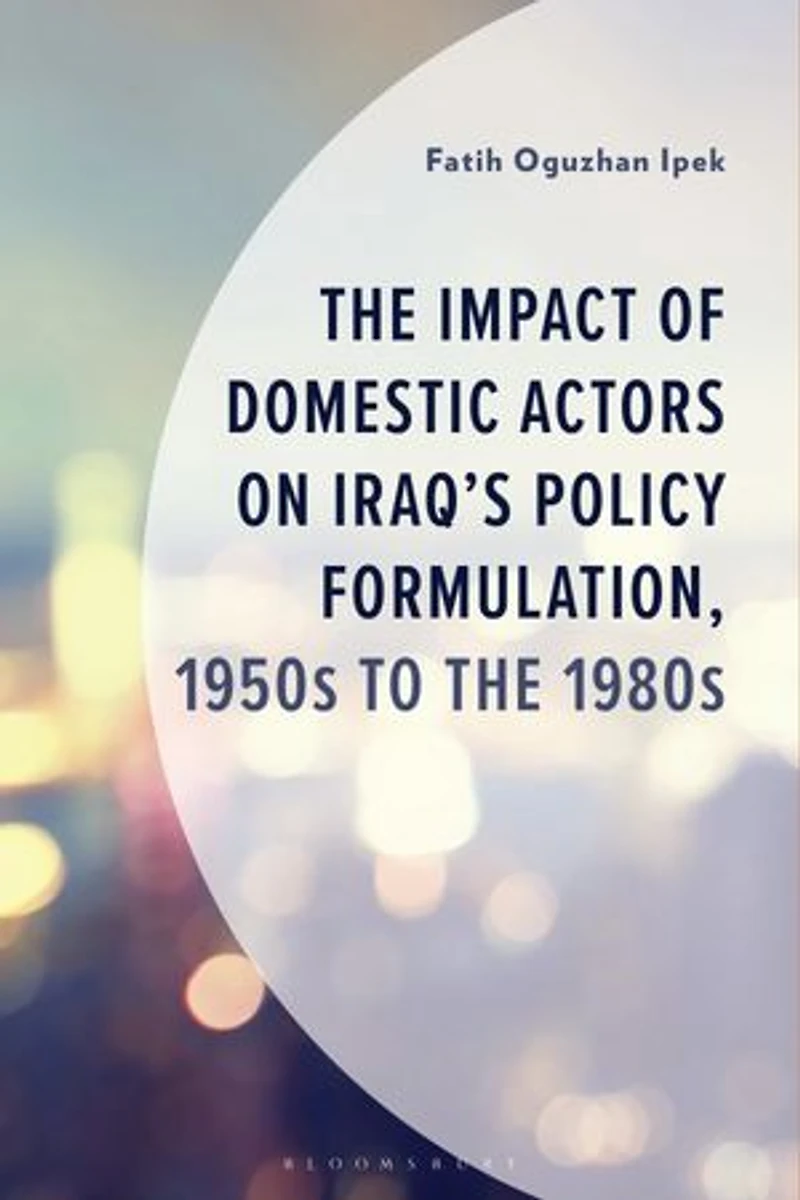
The Impact of Domestic Actors on Iraq's Foreign Policy Formulation, 1950s to 1980s
Current price: $160.95

The Impact of Domestic Actors on Iraq's Foreign Policy Formulation, 1950s to 1980s
Current price: $160.95
Loading Inventory...
Size: Hardcover
*Product information may vary - to confirm product availability, pricing, shipping and return information please contact Indigo
This book presents a theoretical framework for understanding Iraqi foreign policy from the 1950s through the late Cold War, examining how successive regimes navigated complex international and domestic pressures. Fatih Oguzhan Ipek analyzes the interplay between systemic factors-including influences from great and regional powers-and unit-level variables such as the Iraqi foreign policy executive (FPE) and societal elites. By exploring four critical dimensions-the threat environment, the FPE's structural autonomy, foreign policy coalitions, and domestic power balances-the book reveals how Iraqi leaders strategically used foreign policy to address both external threats and internal challenges. Case studies demonstrate how the concern for regime survival in the Hashemite monarchy motivated it to accede to the Baghdad Pact, how the Iraq-Egypt rivalry influenced Qasim's decision to invade Kuwait, how Nasserism and Arab nationalism compelled President Arif to join the 1967 Arab-Israeli War despite limited autonomy, and how Iraqi leaders responded to rising powers based on their structural position and the domestic political landscape. This analysis moves beyond conventional explanations of Iraqi foreign policy, offering a nuanced understanding of how authoritarian regimes balance external pressures and domestic constraints when formulating strategic decisions.
This book presents a theoretical framework for understanding Iraqi foreign policy from the 1950s through the late Cold War, examining how successive regimes navigated complex international and domestic pressures. Fatih Oguzhan Ipek analyzes the interplay between systemic factors-including influences from great and regional powers-and unit-level variables such as the Iraqi foreign policy executive (FPE) and societal elites. By exploring four critical dimensions-the threat environment, the FPE's structural autonomy, foreign policy coalitions, and domestic power balances-the book reveals how Iraqi leaders strategically used foreign policy to address both external threats and internal challenges. Case studies demonstrate how the concern for regime survival in the Hashemite monarchy motivated it to accede to the Baghdad Pact, how the Iraq-Egypt rivalry influenced Qasim's decision to invade Kuwait, how Nasserism and Arab nationalism compelled President Arif to join the 1967 Arab-Israeli War despite limited autonomy, and how Iraqi leaders responded to rising powers based on their structural position and the domestic political landscape. This analysis moves beyond conventional explanations of Iraqi foreign policy, offering a nuanced understanding of how authoritarian regimes balance external pressures and domestic constraints when formulating strategic decisions.
You May Also Like








More About Indigo at Erin Mills Town Centre
The largest book retailer in Canada also offers toys, music, home décor, gifts and lifestyle products. What's Inside...Books, Magazines, CD’s and DVD’s, Toys and Gifts, Home Accents, Electronics, Baby’s and Children’s Section, Bath and Body, Kitchen and Bedroom, Stationary Located outside in the exterior plaza.
5015 Glen Erin Dr, Mississauga, ON L5M 0R7, Canada
Find Indigo at Erin Mills Town Centre in Mississauga ON
Visit Indigo at Erin Mills Town Centre in Mississauga ON