

GIVE THE PERFECT GIFT
Erin Mills Town Centre Gift Cards are the perfect choice for your gift giving needs.Purchase gift cards at kiosks near the food court or centre court, at Guest Services, or click below to purchase online.PURCHASE HEREHome
The Japanese Central Banking System Compared with Its European and American Counterparts: A New Institutional Economics Approach
Indigo
Loading Inventory...
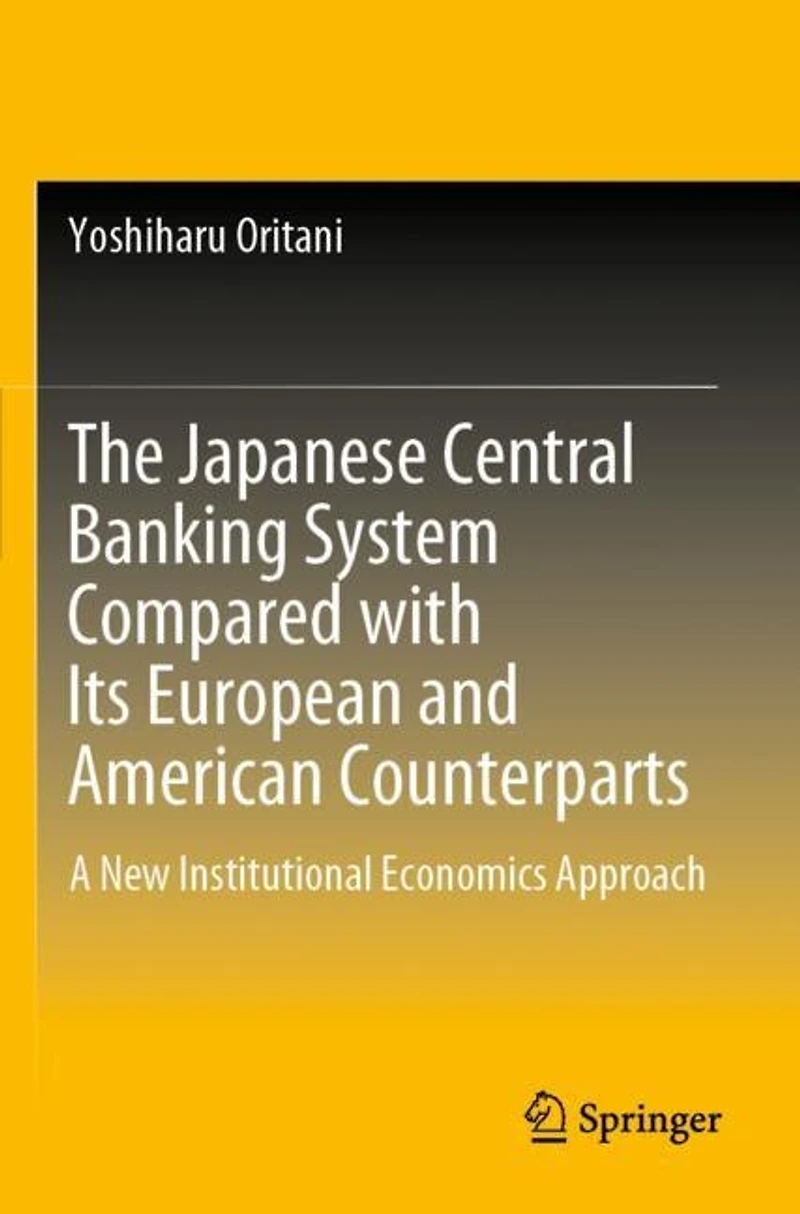
The Japanese Central Banking System Compared with Its European and American Counterparts: A New Institutional Economics Approach
Current price: $189.95

The Japanese Central Banking System Compared with Its European and American Counterparts: A New Institutional Economics Approach
Current price: $189.95
Loading Inventory...
Size: Paperback
*Product information may vary - to confirm product availability, pricing, shipping and return information please contact Indigo
This book uniquely explores the role and governance mechanism of central banks by applying new institutional economics (NIE). Simultaneously, the book tests the analytical viability of NIE when applied to an organization that has both public and private characteristics. Special attention is paid to the Bank of Japan (BOJ) based on the author's 30 years of work experience and "participant observation" there, touching upon discussion of central bank independence. The book argues that central bank independence cannot be defended solely by law, and a mechanism to eliminate requests from politicians needs to be embedded within the governance structure. The book also provides a comparative analysis between the BOJ and central banks in Europe and the USA. In reviewing the global financial crisis of 2008-2009, it suggests possible measures based on behavioral economics and public choice theory. These theory-based analyses provide useful insights when considering matters such as whether a central bank should issue electronic money or the European system of central banks could be established in Asia.
This book uniquely explores the role and governance mechanism of central banks by applying new institutional economics (NIE). Simultaneously, the book tests the analytical viability of NIE when applied to an organization that has both public and private characteristics. Special attention is paid to the Bank of Japan (BOJ) based on the author's 30 years of work experience and "participant observation" there, touching upon discussion of central bank independence. The book argues that central bank independence cannot be defended solely by law, and a mechanism to eliminate requests from politicians needs to be embedded within the governance structure. The book also provides a comparative analysis between the BOJ and central banks in Europe and the USA. In reviewing the global financial crisis of 2008-2009, it suggests possible measures based on behavioral economics and public choice theory. These theory-based analyses provide useful insights when considering matters such as whether a central bank should issue electronic money or the European system of central banks could be established in Asia.
You May Also Like















More About Indigo at Erin Mills Town Centre
The largest book retailer in Canada also offers toys, music, home décor, gifts and lifestyle products. What's Inside...Books, Magazines, CD’s and DVD’s, Toys and Gifts, Home Accents, Electronics, Baby’s and Children’s Section, Bath and Body, Kitchen and Bedroom, Stationary Located outside in the exterior plaza.
5015 Glen Erin Dr, Mississauga, ON L5M 0R7, Canada
Find Indigo at Erin Mills Town Centre in Mississauga ON
Visit Indigo at Erin Mills Town Centre in Mississauga ON