

GIVE THE PERFECT GIFT
Erin Mills Town Centre Gift Cards are the perfect choice for your gift giving needs.Purchase gift cards at kiosks near the food court or centre court, at Guest Services, or click below to purchase online.PURCHASE HEREHome
The Longitudinal Effects Of Self-monitoring And Locus Of Control On Social Network Position In Friendship Networks
Indigo
Loading Inventory...
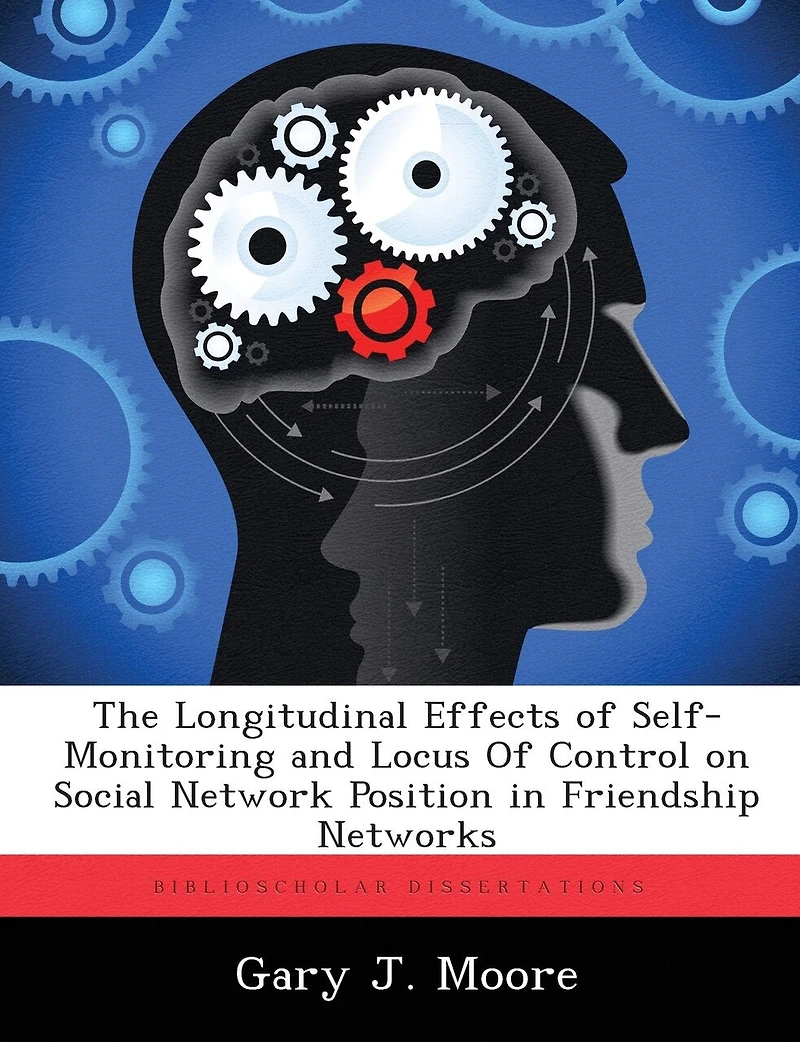
The Longitudinal Effects Of Self-monitoring And Locus Of Control On Social Network Position In Friendship Networks
Current price: $18.92

The Longitudinal Effects Of Self-monitoring And Locus Of Control On Social Network Position In Friendship Networks
Current price: $18.92
Loading Inventory...
Size: Paperback
*Product information may vary - to confirm product availability, pricing, shipping and return information please contact Indigo
The purpose of this research was to identify how enduring personality characteristics predict a person's location in a network, locations which in turn affect outcomes such as performance. Specifically, this thesis examines how self-monitoring and locus of control influence an individual's location in a friendship social network over time. Hierarchical Linear Modeling (HLM) was used to analyze 28 groups of students and instructors at a military training course over six and one half weeks. Self-monitoring predicted betweenness centrality in five of six time periods while locus of control predicted betweenness centrality in three of six time periods. The moderation of selfmonitoring on locus of control also determines social network centrality. A longitudinal analysis suggested that self-monitoring was not related to the rate of increase of centrality over time. Organizational leaders may benefit in better identifying influential social network employees by their personality make-up and assigning them where their impact will be most valuable.
The purpose of this research was to identify how enduring personality characteristics predict a person's location in a network, locations which in turn affect outcomes such as performance. Specifically, this thesis examines how self-monitoring and locus of control influence an individual's location in a friendship social network over time. Hierarchical Linear Modeling (HLM) was used to analyze 28 groups of students and instructors at a military training course over six and one half weeks. Self-monitoring predicted betweenness centrality in five of six time periods while locus of control predicted betweenness centrality in three of six time periods. The moderation of selfmonitoring on locus of control also determines social network centrality. A longitudinal analysis suggested that self-monitoring was not related to the rate of increase of centrality over time. Organizational leaders may benefit in better identifying influential social network employees by their personality make-up and assigning them where their impact will be most valuable.
You May Also Like












More About Indigo at Erin Mills Town Centre
The largest book retailer in Canada also offers toys, music, home décor, gifts and lifestyle products. What's Inside...Books, Magazines, CD’s and DVD’s, Toys and Gifts, Home Accents, Electronics, Baby’s and Children’s Section, Bath and Body, Kitchen and Bedroom, Stationary Located outside in the exterior plaza.
5015 Glen Erin Dr, Mississauga, ON L5M 0R7, Canada
Find Indigo at Erin Mills Town Centre in Mississauga ON
Visit Indigo at Erin Mills Town Centre in Mississauga ON