

GIVE THE PERFECT GIFT
Erin Mills Town Centre Gift Cards are the perfect choice for your gift giving needs.Purchase gift cards at kiosks near the food court or centre court, at Guest Services, or click below to purchase online.PURCHASE HEREHome
The Lost Epistles of Paul: What Was Left Outside the New Testament: The Voice of Paul
Indigo
Loading Inventory...
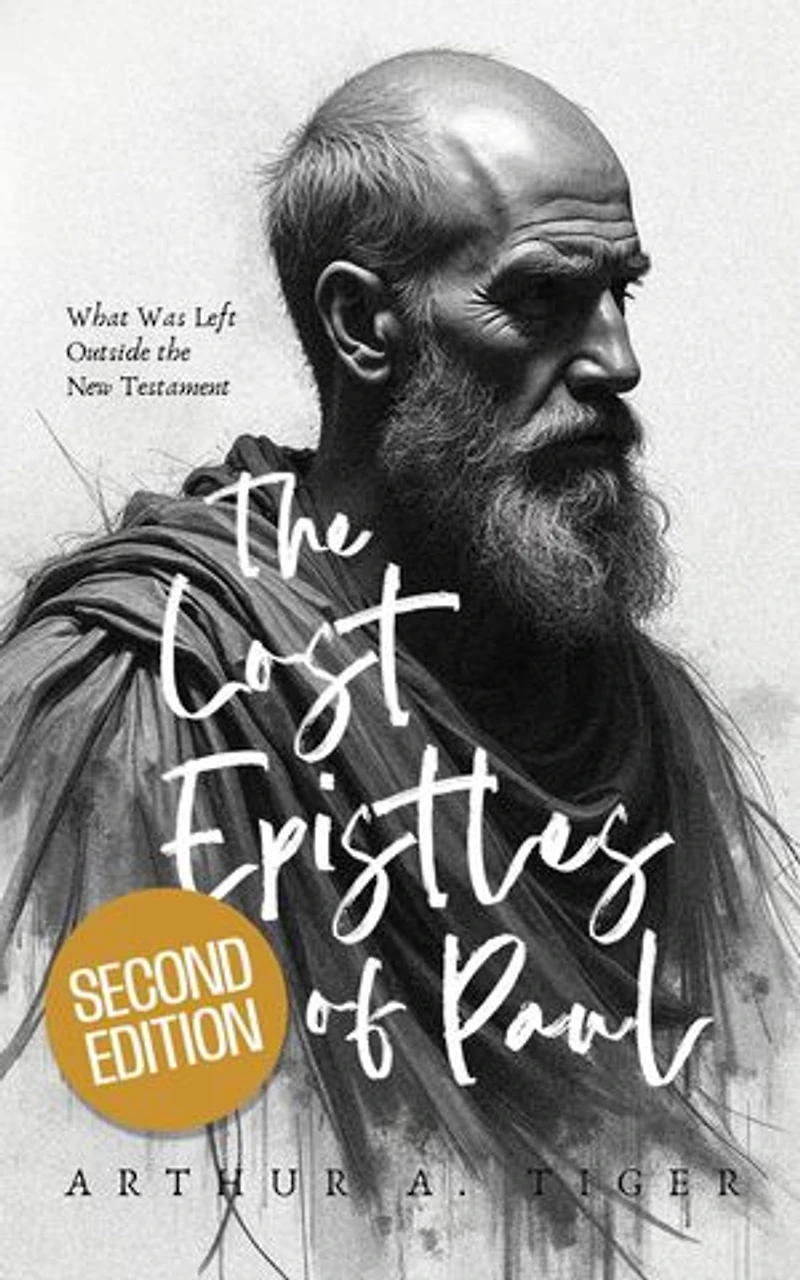
The Lost Epistles of Paul: What Was Left Outside the New Testament: The Voice of Paul
Current price: $13.99

The Lost Epistles of Paul: What Was Left Outside the New Testament: The Voice of Paul
Current price: $13.99
Loading Inventory...
Size: Kobo eBook
*Product information may vary - to confirm product availability, pricing, shipping and return information please contact Indigo
What happened to the letters Paul wrote but we never received?
The Apostle Paul explicitly mentions letters that are absent from our New Testament. In 1 Corinthians 5:9, he refers to a previous letter warning against associating with the immoral. In 2 Corinthians, he describes writing "out of much affliction and anguish of heart, with many tears." In Colossians 4:16, he instructs churches to exchange his letters—including one "from Laodicea" that has never been found.
These letters existed. Early Christians read them, discussed them, and preserved them—until they didn't. The question is: what can we know about them now?
In this carefully researched study, Arthur Tiger investigates:
The Previous Letter to Corinth — What prompted Paul's first written intervention in Corinthian affairs? Why was it misunderstood?
The Letter of Tears — Was Paul's painful letter completely lost, or is it hidden within 2 Corinthians itself? Tiger examines the evidence for both positions.
The Epistle to the Laodiceans — What was this letter, and why did it disappear? Could it be our Ephesians under another name?
Composite Letters — Did scribes combine multiple Pauline letters into single documents? The cases of 2 Corinthians and Philippians.
Ancient Forgeries — The apocryphal Laodiceans, the Paul-Seneca correspondence, and 3 Corinthians: what early Christians invented to fill the gaps.
What this book is NOT:
This is not creative fiction imagining what Paul "might have said." It is not devotional literature or theological speculation. Tiger maintains rigorous scholarly standards, clearly distinguishing between evidence-based reconstruction and conjecture.
What this book IS:
A serious investigation into the shape of Paul's full correspondence—what was preserved, what was lost, and why it matters for understanding early Christianity.
Includes:
Hypothetical reconstructions based solely on canonical evidence
Complete texts of apocryphal Pauline letters (Laodiceans, Paul-Seneca, 3 Corinthians)
Chronological tables of Paul's correspondence
Extensive bibliography for further study
For students of the New Testament, readers curious about early Christianity, and anyone who has wondered what lies in the spaces between Paul's surviving letters.
What happened to the letters Paul wrote but we never received?
The Apostle Paul explicitly mentions letters that are absent from our New Testament. In 1 Corinthians 5:9, he refers to a previous letter warning against associating with the immoral. In 2 Corinthians, he describes writing "out of much affliction and anguish of heart, with many tears." In Colossians 4:16, he instructs churches to exchange his letters—including one "from Laodicea" that has never been found.
These letters existed. Early Christians read them, discussed them, and preserved them—until they didn't. The question is: what can we know about them now?
In this carefully researched study, Arthur Tiger investigates:
The Previous Letter to Corinth — What prompted Paul's first written intervention in Corinthian affairs? Why was it misunderstood?
The Letter of Tears — Was Paul's painful letter completely lost, or is it hidden within 2 Corinthians itself? Tiger examines the evidence for both positions.
The Epistle to the Laodiceans — What was this letter, and why did it disappear? Could it be our Ephesians under another name?
Composite Letters — Did scribes combine multiple Pauline letters into single documents? The cases of 2 Corinthians and Philippians.
Ancient Forgeries — The apocryphal Laodiceans, the Paul-Seneca correspondence, and 3 Corinthians: what early Christians invented to fill the gaps.
What this book is NOT:
This is not creative fiction imagining what Paul "might have said." It is not devotional literature or theological speculation. Tiger maintains rigorous scholarly standards, clearly distinguishing between evidence-based reconstruction and conjecture.
What this book IS:
A serious investigation into the shape of Paul's full correspondence—what was preserved, what was lost, and why it matters for understanding early Christianity.
Includes:
Hypothetical reconstructions based solely on canonical evidence
Complete texts of apocryphal Pauline letters (Laodiceans, Paul-Seneca, 3 Corinthians)
Chronological tables of Paul's correspondence
Extensive bibliography for further study
For students of the New Testament, readers curious about early Christianity, and anyone who has wondered what lies in the spaces between Paul's surviving letters.
You May Also Like








More About Indigo at Erin Mills Town Centre
The largest book retailer in Canada also offers toys, music, home décor, gifts and lifestyle products. What's Inside...Books, Magazines, CD’s and DVD’s, Toys and Gifts, Home Accents, Electronics, Baby’s and Children’s Section, Bath and Body, Kitchen and Bedroom, Stationary Located outside in the exterior plaza.
5015 Glen Erin Dr, Mississauga, ON L5M 0R7, Canada
Find Indigo at Erin Mills Town Centre in Mississauga ON
Visit Indigo at Erin Mills Town Centre in Mississauga ON