

GIVE THE PERFECT GIFT
Erin Mills Town Centre Gift Cards are the perfect choice for your gift giving needs.Purchase gift cards at kiosks near the food court or centre court, at Guest Services, or click below to purchase online.PURCHASE HEREHome
The Oxford Handbook of Orchestration Studies
Indigo
Loading Inventory...
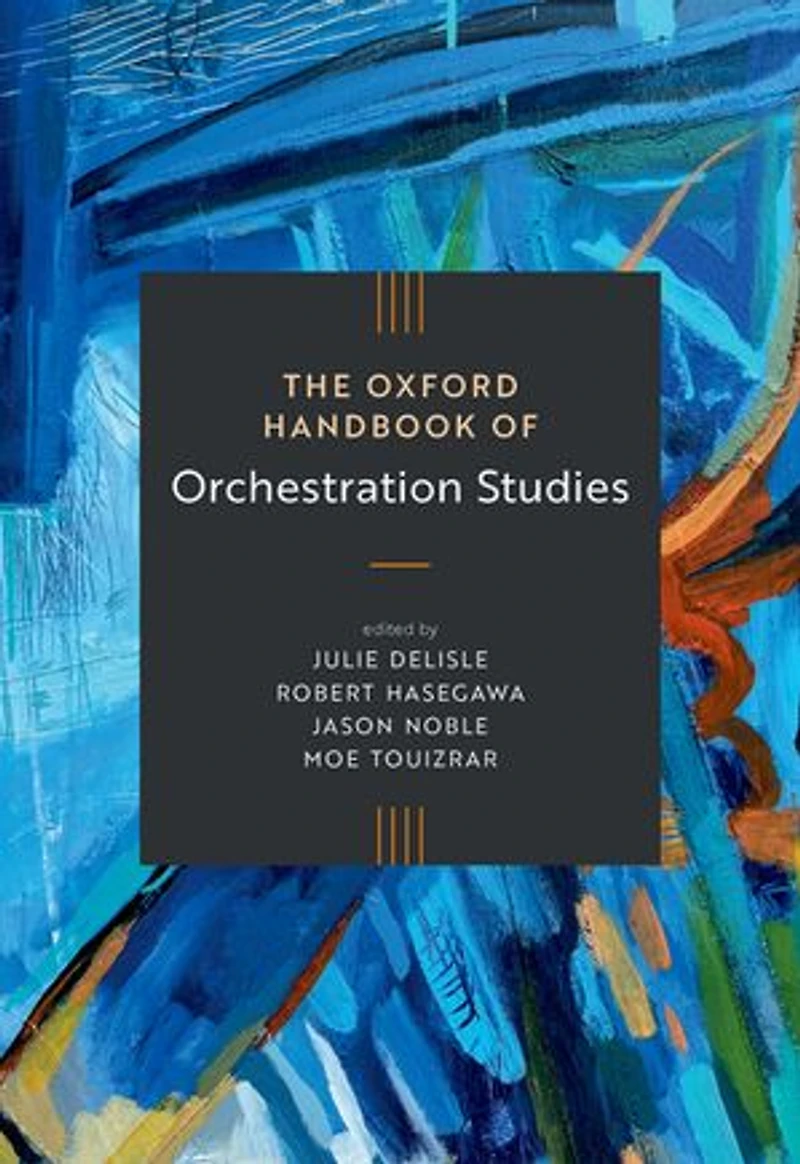
The Oxford Handbook of Orchestration Studies
Current price: $266.39
Original price: $332.99

The Oxford Handbook of Orchestration Studies
Current price: $266.39
Original price: $332.99
Loading Inventory...
Size: Kobo eBook
*Product information may vary - to confirm product availability, pricing, shipping and return information please contact Indigo
The Oxford Handbook of Orchestration Studies takes a new approach to the subject of orchestration, or the aspect of crafting a musical work that involves choosing and combining instruments and other sound sources to create combinations of tone colors (timbres). While most existing books on orchestration are textbooks or how-to manuals, this volume brings together a wide range of musical and scholarly perspectives on orchestration. This volume assembles authors from many established disciplines-musicology, ethnomusicology, music theory, organology, music psychology, composition, conducting, performing, cognitive science, acoustics, computer science, film, audio engineering, and more-to argue for the centrality of orchestration in musical practice and examine this often-neglected topic. Musical scholarship has frequently relegated orchestration to a merely decorative role-the adornment of composed notes and rhythms with instrumental timbres- but this volume seeks to reclaim orchestration's importance as an inherent and essential part of creative music making in a variety of genres and styles. Though the term "orchestration" is most typically associated with arranging previously composed musical ideas for the symphonic orchestra, this volume's definition (adapted from music psychologist Stephen McAdams) is much broader: orchestration is the choice, combination, and/or juxtaposition of timbres in a musical context. Under this encompassing definition, orchestration is no longer separate from composition and improvisatory creation but an integral part of the process: whenever we "com-pose" (put together) timbres with attention to their constituent and emergent qualities, we are simultaneously orchestrating. In this sense, orchestration is present in virtually all musical settings and traditions, from chamber music to gamelan ensembles, jazz big bands, or the mixing of synthesized sounds in the electronic music studio. By adopting the phrase "orchestration studies," this volume seeks to open a wide-ranging interdisciplinary engagement with the topic. Scientific and theoretical approaches are introduced in an accessible way to musicians and scholars, with an eye towards practical applications.
The Oxford Handbook of Orchestration Studies takes a new approach to the subject of orchestration, or the aspect of crafting a musical work that involves choosing and combining instruments and other sound sources to create combinations of tone colors (timbres). While most existing books on orchestration are textbooks or how-to manuals, this volume brings together a wide range of musical and scholarly perspectives on orchestration. This volume assembles authors from many established disciplines-musicology, ethnomusicology, music theory, organology, music psychology, composition, conducting, performing, cognitive science, acoustics, computer science, film, audio engineering, and more-to argue for the centrality of orchestration in musical practice and examine this often-neglected topic. Musical scholarship has frequently relegated orchestration to a merely decorative role-the adornment of composed notes and rhythms with instrumental timbres- but this volume seeks to reclaim orchestration's importance as an inherent and essential part of creative music making in a variety of genres and styles. Though the term "orchestration" is most typically associated with arranging previously composed musical ideas for the symphonic orchestra, this volume's definition (adapted from music psychologist Stephen McAdams) is much broader: orchestration is the choice, combination, and/or juxtaposition of timbres in a musical context. Under this encompassing definition, orchestration is no longer separate from composition and improvisatory creation but an integral part of the process: whenever we "com-pose" (put together) timbres with attention to their constituent and emergent qualities, we are simultaneously orchestrating. In this sense, orchestration is present in virtually all musical settings and traditions, from chamber music to gamelan ensembles, jazz big bands, or the mixing of synthesized sounds in the electronic music studio. By adopting the phrase "orchestration studies," this volume seeks to open a wide-ranging interdisciplinary engagement with the topic. Scientific and theoretical approaches are introduced in an accessible way to musicians and scholars, with an eye towards practical applications.
You May Also Like







More About Indigo at Erin Mills Town Centre
The largest book retailer in Canada also offers toys, music, home décor, gifts and lifestyle products. What's Inside...Books, Magazines, CD’s and DVD’s, Toys and Gifts, Home Accents, Electronics, Baby’s and Children’s Section, Bath and Body, Kitchen and Bedroom, Stationary Located outside in the exterior plaza.
5015 Glen Erin Dr, Mississauga, ON L5M 0R7, Canada
Find Indigo at Erin Mills Town Centre in Mississauga ON
Visit Indigo at Erin Mills Town Centre in Mississauga ON