

GIVE THE PERFECT GIFT
Erin Mills Town Centre Gift Cards are the perfect choice for your gift giving needs.Purchase gift cards at kiosks near the food court or centre court, at Guest Services, or click below to purchase online.PURCHASE HEREHome
The Phonology of Consonants
Indigo
Loading Inventory...
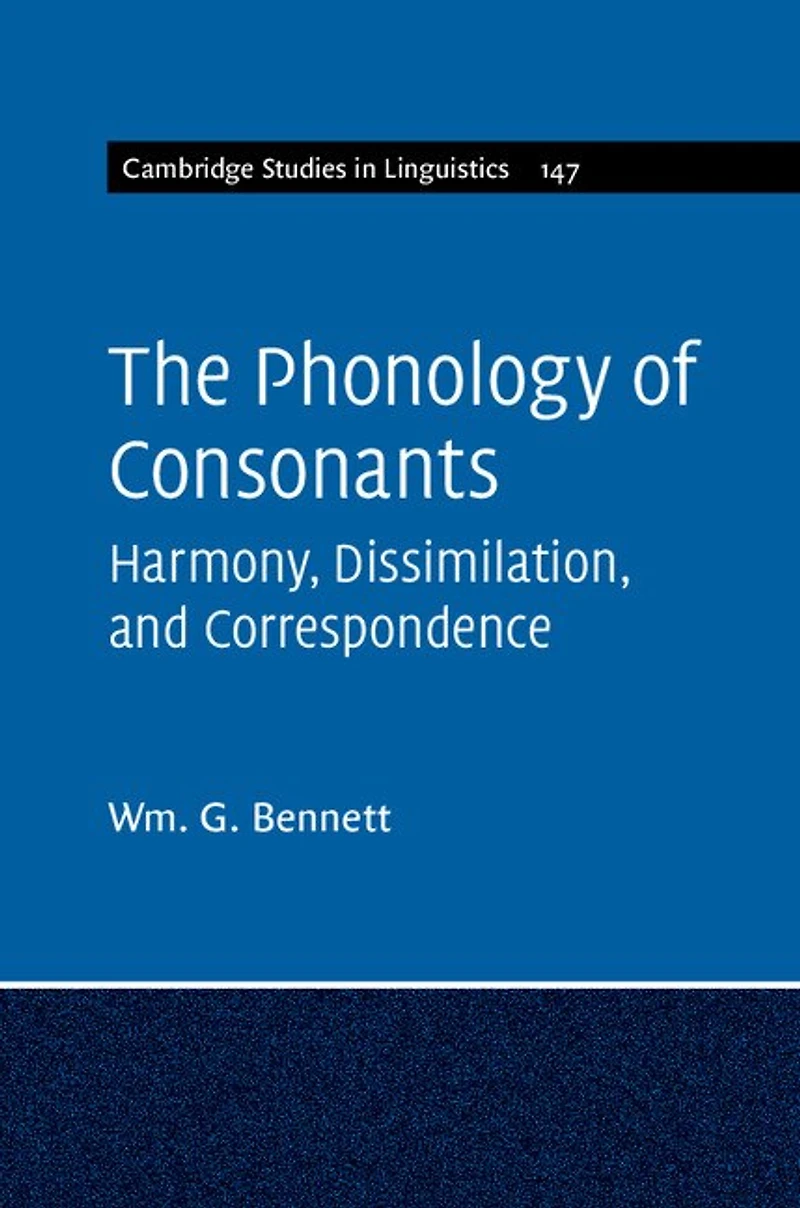
The Phonology of Consonants
Current price: $177.95

The Phonology of Consonants
Current price: $177.95
Loading Inventory...
Size: Hardcover
*Product information may vary - to confirm product availability, pricing, shipping and return information please contact Indigo
The most comprehensive work on dissimilation (the avoidance or repair of combinations of similar sounds) to date, this book proposes a novel analysis that handles dissimilation as the avoidance of surface correspondence relationships. It draws on recent work in Agreement By Correspondence to show that dissimilation is a natural outcome predicted by the same theory of Surface Correspondence. The theory is developed in more detail than ever before, and its predictions are tested and evaluated through ten in-depth analyses of diverse languages from Quechua to Kinyarwanda, together with a typological survey of over 150 dissimilation patterns drawn from over 130 languages, from Acehnese to Zulu. The book redefines the core of Surface Correspondence theory to a level of formal specificity and theoretical precision surpassing previous work. The book's findings are made more accessible by numerous examples featuring data from 47 languages from around the world.
The most comprehensive work on dissimilation (the avoidance or repair of combinations of similar sounds) to date, this book proposes a novel analysis that handles dissimilation as the avoidance of surface correspondence relationships. It draws on recent work in Agreement By Correspondence to show that dissimilation is a natural outcome predicted by the same theory of Surface Correspondence. The theory is developed in more detail than ever before, and its predictions are tested and evaluated through ten in-depth analyses of diverse languages from Quechua to Kinyarwanda, together with a typological survey of over 150 dissimilation patterns drawn from over 130 languages, from Acehnese to Zulu. The book redefines the core of Surface Correspondence theory to a level of formal specificity and theoretical precision surpassing previous work. The book's findings are made more accessible by numerous examples featuring data from 47 languages from around the world.
You May Also Like







More About Indigo at Erin Mills Town Centre
The largest book retailer in Canada also offers toys, music, home décor, gifts and lifestyle products. What's Inside...Books, Magazines, CD’s and DVD’s, Toys and Gifts, Home Accents, Electronics, Baby’s and Children’s Section, Bath and Body, Kitchen and Bedroom, Stationary Located outside in the exterior plaza.
5015 Glen Erin Dr, Mississauga, ON L5M 0R7, Canada
Find Indigo at Erin Mills Town Centre in Mississauga ON
Visit Indigo at Erin Mills Town Centre in Mississauga ON