

GIVE THE PERFECT GIFT
Erin Mills Town Centre Gift Cards are the perfect choice for your gift giving needs.Purchase gift cards at kiosks near the food court or centre court, at Guest Services, or click below to purchase online.PURCHASE HEREHome
the Sense of Taste: genes, molecules and fascinating biology one most fundamental senses
Indigo
Loading Inventory...
the Sense of Taste: genes, molecules and fascinating biology one most fundamental senses
Current price: $6.09
Original price: $6.76

the Sense of Taste: genes, molecules and fascinating biology one most fundamental senses
Current price: $6.09
Original price: $6.76
Loading Inventory...
Size: Kobo eBook
*Product information may vary - to confirm product availability, pricing, shipping and return information please contact Indigo
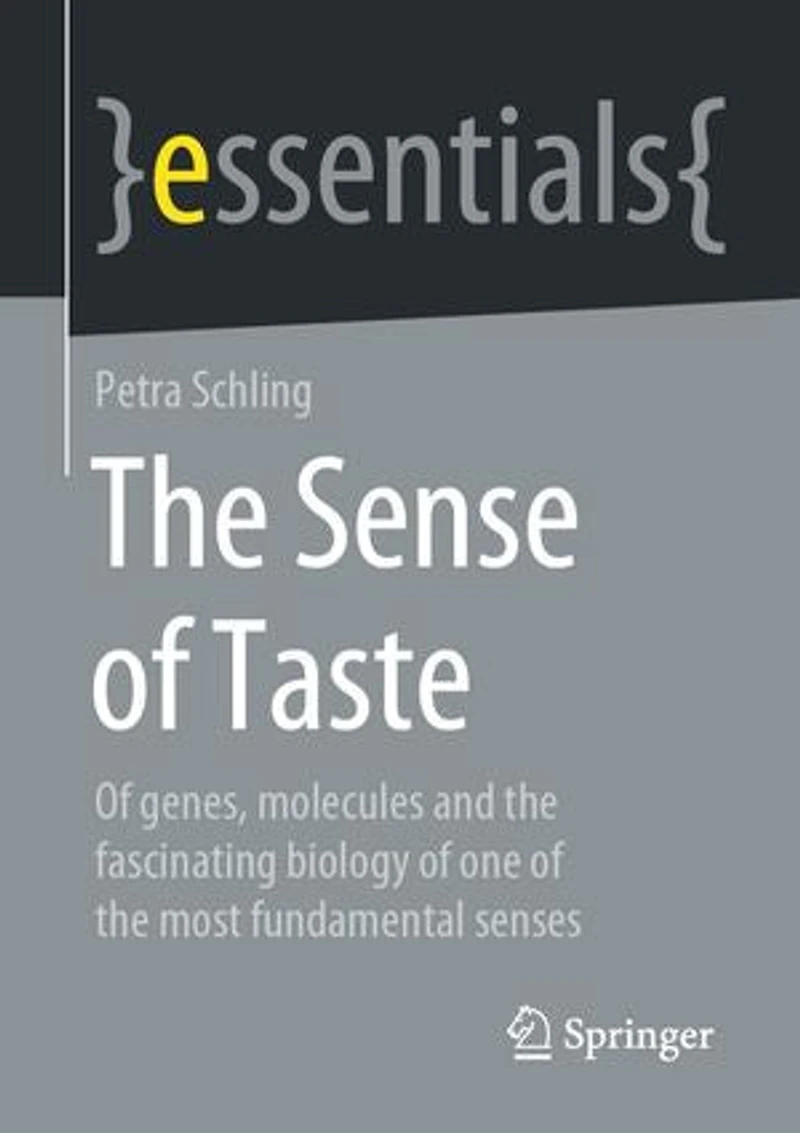
In this essential, Petra Schling gives an overview of the current state of research on the topic of taste. She regards taste as a sensory perception that allows us to distinguish essential food components from toxins. What we eat depends not insignificantly on how we like it. But how do we actually taste - and what do we taste? As omnivores, we humans have a relatively wide range of taste receptors, not only in our mouths, which provide us with important information about our food. Outside the mouth, taste receptors serve our innate immune system to "taste" bacteria, worms and other intruders. We can and should rely on this. Our sense of taste warns us of toxins and unwanted co-inhabitants and can only be deceived to a very limited extent by sweeteners, bitter blockers or similar tricks.
This Springer essential is a translation of the original German 1st edition essentials , Der Geschmack by Petra Schling, published by Springer Fachmedien Wiesbaden GmbH, part of Springer Nature in 2021.The translation was done with the help of artificial intelligence (machine translation by the service DeepL.com). A subsequent human revision was done primarily in terms of content, so that the book will read stylistically differently from a conventional translation. Springer Nature works continuously to further the development of tools for the production of books and on the related technologies to support the authors.
In this essential, Petra Schling gives an overview of the current state of research on the topic of taste. She regards taste as a sensory perception that allows us to distinguish essential food components from toxins. What we eat depends not insignificantly on how we like it. But how do we actually taste - and what do we taste? As omnivores, we humans have a relatively wide range of taste receptors, not only in our mouths, which provide us with important information about our food. Outside the mouth, taste receptors serve our innate immune system to "taste" bacteria, worms and other intruders. We can and should rely on this. Our sense of taste warns us of toxins and unwanted co-inhabitants and can only be deceived to a very limited extent by sweeteners, bitter blockers or similar tricks.
This Springer essential is a translation of the original German 1st edition essentials , Der Geschmack by Petra Schling, published by Springer Fachmedien Wiesbaden GmbH, part of Springer Nature in 2021.The translation was done with the help of artificial intelligence (machine translation by the service DeepL.com). A subsequent human revision was done primarily in terms of content, so that the book will read stylistically differently from a conventional translation. Springer Nature works continuously to further the development of tools for the production of books and on the related technologies to support the authors.
You May Also Like















More About Indigo at Erin Mills Town Centre
The largest book retailer in Canada also offers toys, music, home décor, gifts and lifestyle products. What's Inside...Books, Magazines, CD’s and DVD’s, Toys and Gifts, Home Accents, Electronics, Baby’s and Children’s Section, Bath and Body, Kitchen and Bedroom, Stationary Located outside in the exterior plaza.
5015 Glen Erin Dr, Mississauga, ON L5M 0R7, Canada
Find Indigo at Erin Mills Town Centre in Mississauga ON
Visit Indigo at Erin Mills Town Centre in Mississauga ON