

GIVE THE PERFECT GIFT
Erin Mills Town Centre Gift Cards are the perfect choice for your gift giving needs.Purchase gift cards at kiosks near the food court or centre court, at Guest Services, or click below to purchase online.PURCHASE HEREHome
The Split-Hopkinson Bar: Techniques, Applications and Methods
Indigo
Loading Inventory...
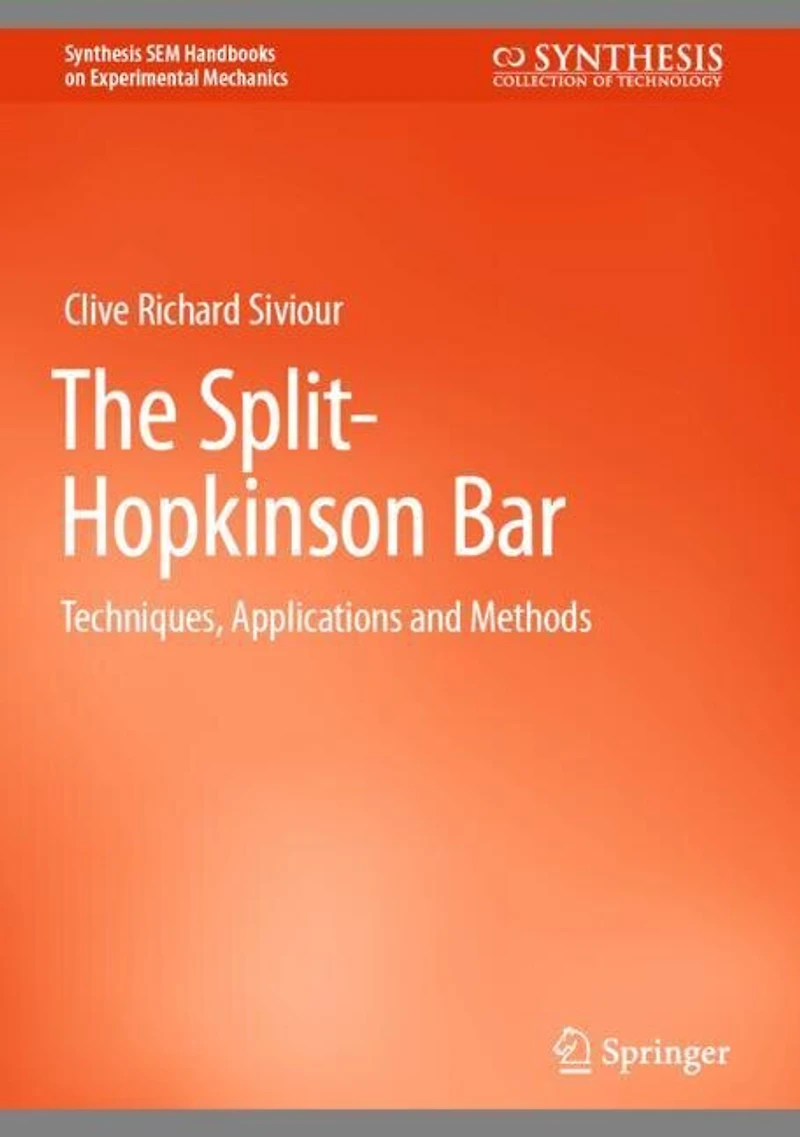
The Split-Hopkinson Bar: Techniques, Applications and Methods
Current price: $131.50

The Split-Hopkinson Bar: Techniques, Applications and Methods
Current price: $131.50
Loading Inventory...
Size: Hardcover
*Product information may vary - to confirm product availability, pricing, shipping and return information please contact Indigo
This book provides a concise practical introduction to the split-Hopkinson bar, by giving an overview of both the basic technique and a wide range of topics relevant to its application. The split-Hopkinson pressure bar (SHPB) has become the key apparatus for the characterization of the mechanical response of materials at high strain rates. Systems have been used at rates from approximately 100 to 1,000,000 s-1, to test materials ranging from low modulus elastomers to high strength superalloys. The power of the system is its suitability, with appropriate practice, to be used on many materials and in conjunction with a wide range of different diagnostic systems. Each chapter provides information and guidance for practitioners to perform high-quality experiments, whilst also introducing the resources required to engage in a deeper exploration of the topic.
This book provides a concise practical introduction to the split-Hopkinson bar, by giving an overview of both the basic technique and a wide range of topics relevant to its application. The split-Hopkinson pressure bar (SHPB) has become the key apparatus for the characterization of the mechanical response of materials at high strain rates. Systems have been used at rates from approximately 100 to 1,000,000 s-1, to test materials ranging from low modulus elastomers to high strength superalloys. The power of the system is its suitability, with appropriate practice, to be used on many materials and in conjunction with a wide range of different diagnostic systems. Each chapter provides information and guidance for practitioners to perform high-quality experiments, whilst also introducing the resources required to engage in a deeper exploration of the topic.
You May Also Like












More About Indigo at Erin Mills Town Centre
The largest book retailer in Canada also offers toys, music, home décor, gifts and lifestyle products. What's Inside...Books, Magazines, CD’s and DVD’s, Toys and Gifts, Home Accents, Electronics, Baby’s and Children’s Section, Bath and Body, Kitchen and Bedroom, Stationary Located outside in the exterior plaza.
5015 Glen Erin Dr, Mississauga, ON L5M 0R7, Canada
Find Indigo at Erin Mills Town Centre in Mississauga ON
Visit Indigo at Erin Mills Town Centre in Mississauga ON