

GIVE THE PERFECT GIFT
Erin Mills Town Centre Gift Cards are the perfect choice for your gift giving needs.Purchase gift cards at kiosks near the food court or centre court, at Guest Services, or click below to purchase online.PURCHASE HEREHome
The Tragedy of King Richard 3
Indigo
Loading Inventory...
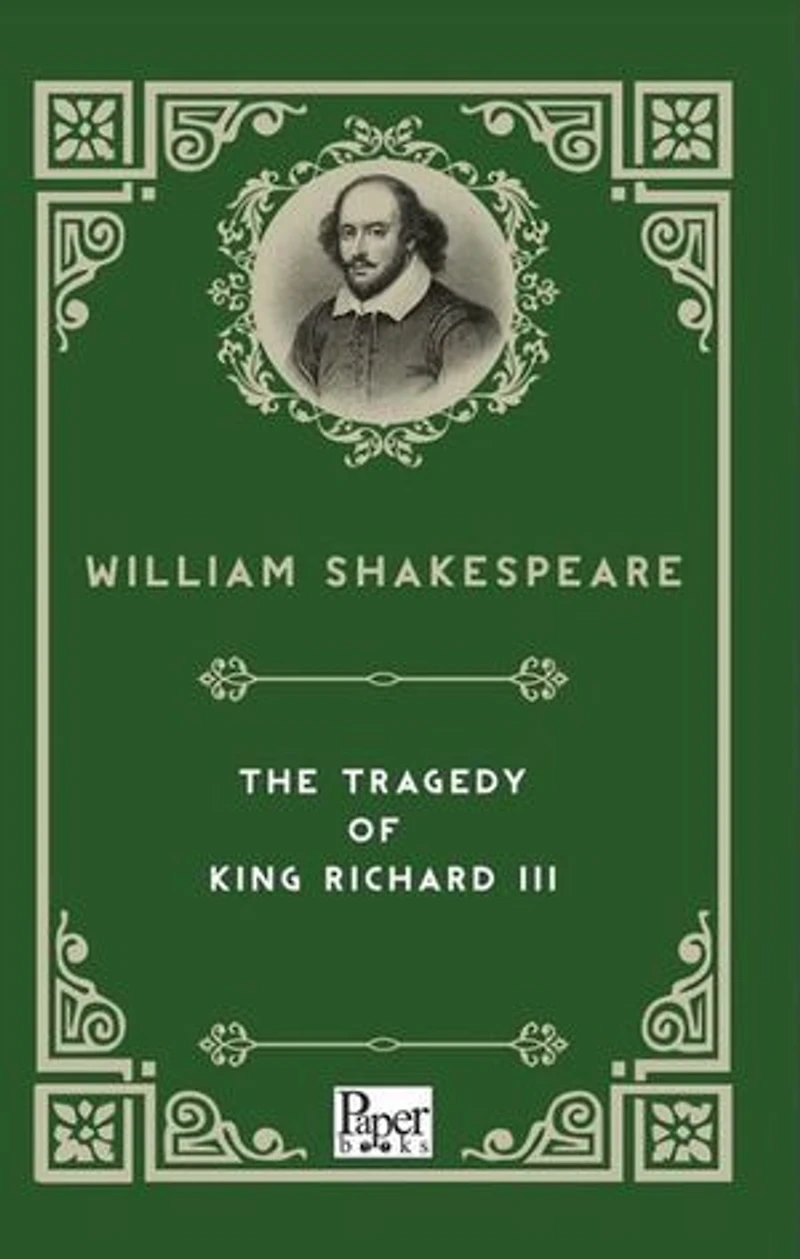
The Tragedy of King Richard 3
Current price: $3.11

The Tragedy of King Richard 3
Current price: $3.11
Loading Inventory...
Size: Kobo eBook
*Product information may vary - to confirm product availability, pricing, shipping and return information please contact Indigo
Richard III is a play by William Shakespeare. It was probably written c. 1592–1594. It is labelled a history in the First Folio, and is usually considered one, but it is sometimes called a tragedy, as in the quarto edition. Richard III concludes Shakespeare's first tetralogy (also containing Henry VI, Part 1, Henry VI, Part 2, and Henry VI, Part 3) and depicts the Machiavellian rise to power and subsequent short reign of King Richard III of England.It is the second longest play in the Shakespearean canon and is the longest of the First Folio, whose version of Hamlet, otherwise the longest, is shorter than its quarto counterpart. The play is often abridged for brevity, and peripheral characters removed. In such cases, extra lines are often invented or added from elsewhere to establish the nature of the characters' relationships. A further reason for abridgment is that Shakespeare assumed his audiences' familiarity with his Henry VI plays, frequently referring to these plays.
Richard III is a play by William Shakespeare. It was probably written c. 1592–1594. It is labelled a history in the First Folio, and is usually considered one, but it is sometimes called a tragedy, as in the quarto edition. Richard III concludes Shakespeare's first tetralogy (also containing Henry VI, Part 1, Henry VI, Part 2, and Henry VI, Part 3) and depicts the Machiavellian rise to power and subsequent short reign of King Richard III of England.It is the second longest play in the Shakespearean canon and is the longest of the First Folio, whose version of Hamlet, otherwise the longest, is shorter than its quarto counterpart. The play is often abridged for brevity, and peripheral characters removed. In such cases, extra lines are often invented or added from elsewhere to establish the nature of the characters' relationships. A further reason for abridgment is that Shakespeare assumed his audiences' familiarity with his Henry VI plays, frequently referring to these plays.
You May Also Like








More About Indigo at Erin Mills Town Centre
The largest book retailer in Canada also offers toys, music, home décor, gifts and lifestyle products. What's Inside...Books, Magazines, CD’s and DVD’s, Toys and Gifts, Home Accents, Electronics, Baby’s and Children’s Section, Bath and Body, Kitchen and Bedroom, Stationary Located outside in the exterior plaza.
5015 Glen Erin Dr, Mississauga, ON L5M 0R7, Canada
Find Indigo at Erin Mills Town Centre in Mississauga ON
Visit Indigo at Erin Mills Town Centre in Mississauga ON