

GIVE THE PERFECT GIFT
Erin Mills Town Centre Gift Cards are the perfect choice for your gift giving needs.Purchase gift cards at kiosks near the food court or centre court, at Guest Services, or click below to purchase online.PURCHASE HEREHome
The Tragedy of Romeo and Juliet: Introduction and Notes by Henry Norman Hudson (Classic Reprint)
Indigo
Loading Inventory...
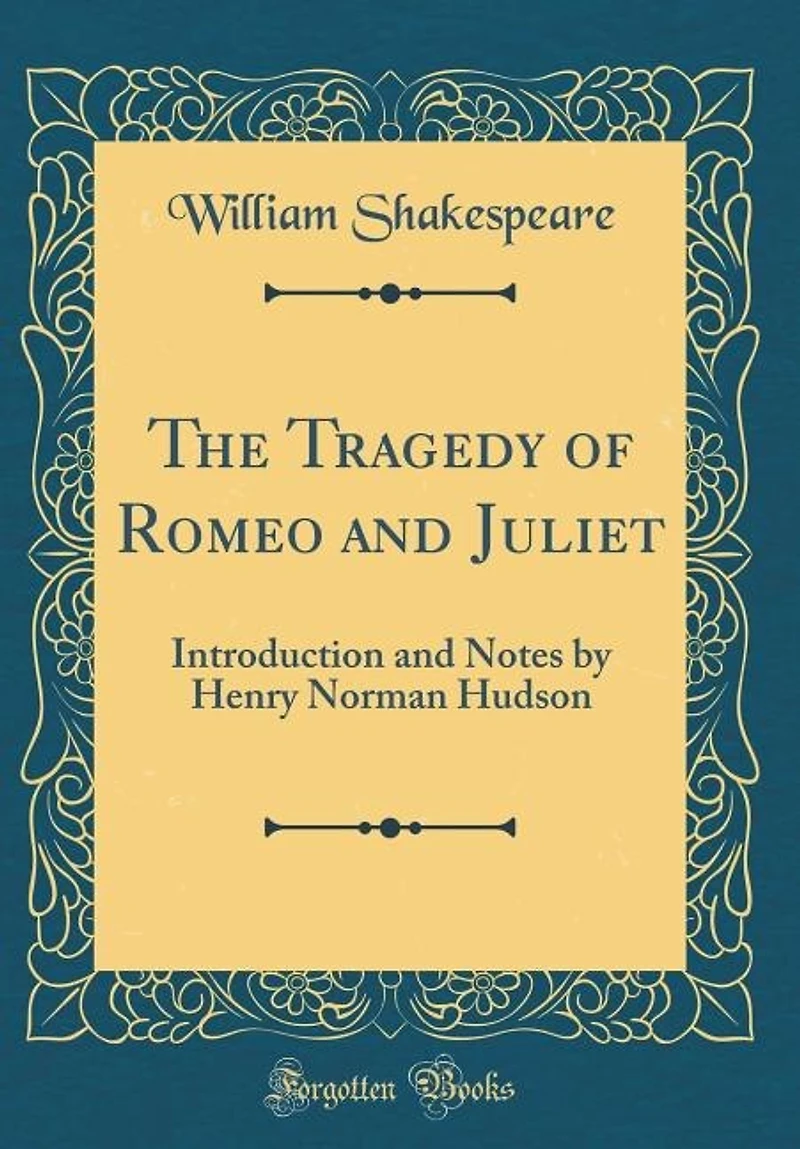
The Tragedy of Romeo and Juliet: Introduction and Notes by Henry Norman Hudson (Classic Reprint)
Current price: $28.31

The Tragedy of Romeo and Juliet: Introduction and Notes by Henry Norman Hudson (Classic Reprint)
Current price: $28.31
Loading Inventory...
Size: Hardcover
*Product information may vary - to confirm product availability, pricing, shipping and return information please contact Indigo
Excerpt from The Tragedy of Romeo and Juliet: Introduction and Notes by Henry Norman Hudson While it'is important that the principle of mum at'que be attended to so far as is possible in matters of research and scholarship, it is becoming more and more difficult to give every man his own in Shakespearian annotation. The amount of material accumulated is so great that the identity-origin of much important comment and suggestion is either wholly lost or so crushed out of shape as to be beyond recognition. Instructive significance perhaps attaches to this in editing the works of one who quietly made so much of materials gath ered by others. But the list of authorities given on page xlix will indicate the chief source of much that has gone to enrich the value of this edition. Especial acknowledgment is here made of the obligations to Dr. William Aldis Wright and Dr. Horace Howard F umess, whose work in the collation of Quartos, Folios, and the more important English and Amer ican editions of Shakespeare has been of so great value to all subsequent editors and investigators. About the Publisher Forgotten Books publishes hundreds of thousands of rare and classic books. Find more at www.forgottenbooks.com This book is a reproduction of an important historical work. Forgotten Books uses state-of-the-art technology to digitally reconstruct the work, preserving the original format whilst repairing imperfections present in the aged copy. In rare cases, an imperfection in the original, such as a blemish or missing page, may be replicated in our edition. We do, however, repair the vast majority of imperfections successfully; any imperfections that remain are intentionally left to preserve the state of such historical works.
Excerpt from The Tragedy of Romeo and Juliet: Introduction and Notes by Henry Norman Hudson While it'is important that the principle of mum at'que be attended to so far as is possible in matters of research and scholarship, it is becoming more and more difficult to give every man his own in Shakespearian annotation. The amount of material accumulated is so great that the identity-origin of much important comment and suggestion is either wholly lost or so crushed out of shape as to be beyond recognition. Instructive significance perhaps attaches to this in editing the works of one who quietly made so much of materials gath ered by others. But the list of authorities given on page xlix will indicate the chief source of much that has gone to enrich the value of this edition. Especial acknowledgment is here made of the obligations to Dr. William Aldis Wright and Dr. Horace Howard F umess, whose work in the collation of Quartos, Folios, and the more important English and Amer ican editions of Shakespeare has been of so great value to all subsequent editors and investigators. About the Publisher Forgotten Books publishes hundreds of thousands of rare and classic books. Find more at www.forgottenbooks.com This book is a reproduction of an important historical work. Forgotten Books uses state-of-the-art technology to digitally reconstruct the work, preserving the original format whilst repairing imperfections present in the aged copy. In rare cases, an imperfection in the original, such as a blemish or missing page, may be replicated in our edition. We do, however, repair the vast majority of imperfections successfully; any imperfections that remain are intentionally left to preserve the state of such historical works.
You May Also Like











More About Indigo at Erin Mills Town Centre
The largest book retailer in Canada also offers toys, music, home décor, gifts and lifestyle products. What's Inside...Books, Magazines, CD’s and DVD’s, Toys and Gifts, Home Accents, Electronics, Baby’s and Children’s Section, Bath and Body, Kitchen and Bedroom, Stationary Located outside in the exterior plaza.
5015 Glen Erin Dr, Mississauga, ON L5M 0R7, Canada
Find Indigo at Erin Mills Town Centre in Mississauga ON
Visit Indigo at Erin Mills Town Centre in Mississauga ON