

GIVE THE PERFECT GIFT
Erin Mills Town Centre Gift Cards are the perfect choice for your gift giving needs.Purchase gift cards at kiosks near the food court or centre court, at Guest Services, or click below to purchase online.PURCHASE HEREHome
The Transmission-Line Modeling (TLM) Method in Electromagnetics
Indigo
Loading Inventory...
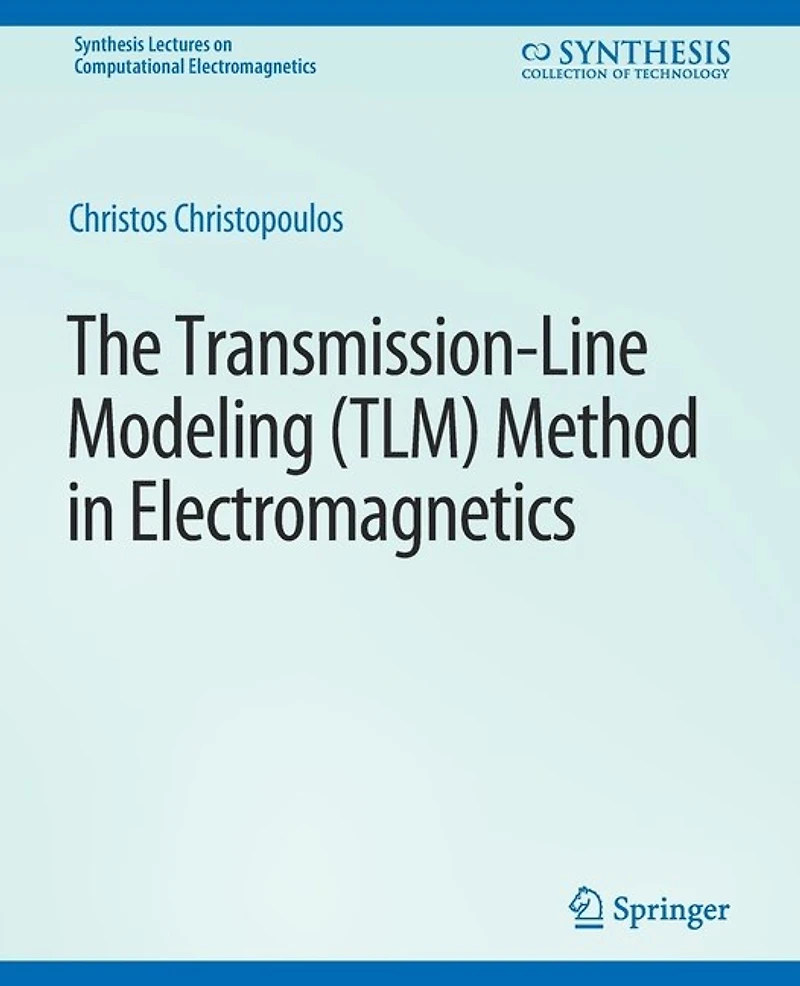
The Transmission-Line Modeling (TLM) Method in Electromagnetics
Current price: $49.50

The Transmission-Line Modeling (TLM) Method in Electromagnetics
Current price: $49.50
Loading Inventory...
Size: Paperback
*Product information may vary - to confirm product availability, pricing, shipping and return information please contact Indigo
This book presents the topic in electromagnetics known as Transmission-Line Modeling or Matrix method-TLM. While it is written for engineering students at graduate and advanced undergraduate levels, it is also highly suitable for specialists in computational electromagnetics working in industry, who wish to become familiar with the topic. The main method of implementation of TLM is via the time-domain differential equations, however, this can also be via the frequency-domain differential equations. The emphasis in this book is on the time-domain TLM. Physical concepts are emphasized here before embarking onto mathematical development in order to provide simple, straightforward suggestions for the development of models that can then be readily programmed for further computations. Sections with strong mathematical flavors have been included where there are clear methodological advantages forming the basis for developing practical modeling tools. The book can be read at different depths depending on the background of the reader, and can be consulted as and when the need arises.
This book presents the topic in electromagnetics known as Transmission-Line Modeling or Matrix method-TLM. While it is written for engineering students at graduate and advanced undergraduate levels, it is also highly suitable for specialists in computational electromagnetics working in industry, who wish to become familiar with the topic. The main method of implementation of TLM is via the time-domain differential equations, however, this can also be via the frequency-domain differential equations. The emphasis in this book is on the time-domain TLM. Physical concepts are emphasized here before embarking onto mathematical development in order to provide simple, straightforward suggestions for the development of models that can then be readily programmed for further computations. Sections with strong mathematical flavors have been included where there are clear methodological advantages forming the basis for developing practical modeling tools. The book can be read at different depths depending on the background of the reader, and can be consulted as and when the need arises.
You May Also Like








More About Indigo at Erin Mills Town Centre
The largest book retailer in Canada also offers toys, music, home décor, gifts and lifestyle products. What's Inside...Books, Magazines, CD’s and DVD’s, Toys and Gifts, Home Accents, Electronics, Baby’s and Children’s Section, Bath and Body, Kitchen and Bedroom, Stationary Located outside in the exterior plaza.
5015 Glen Erin Dr, Mississauga, ON L5M 0R7, Canada
Find Indigo at Erin Mills Town Centre in Mississauga ON
Visit Indigo at Erin Mills Town Centre in Mississauga ON