

GIVE THE PERFECT GIFT
Erin Mills Town Centre Gift Cards are the perfect choice for your gift giving needs.Purchase gift cards at kiosks near the food court or centre court, at Guest Services, or click below to purchase online.PURCHASE HEREHome
the Twilight of Pluto: Astrology and Rise Fall Planetary Influences
Indigo
Loading Inventory...
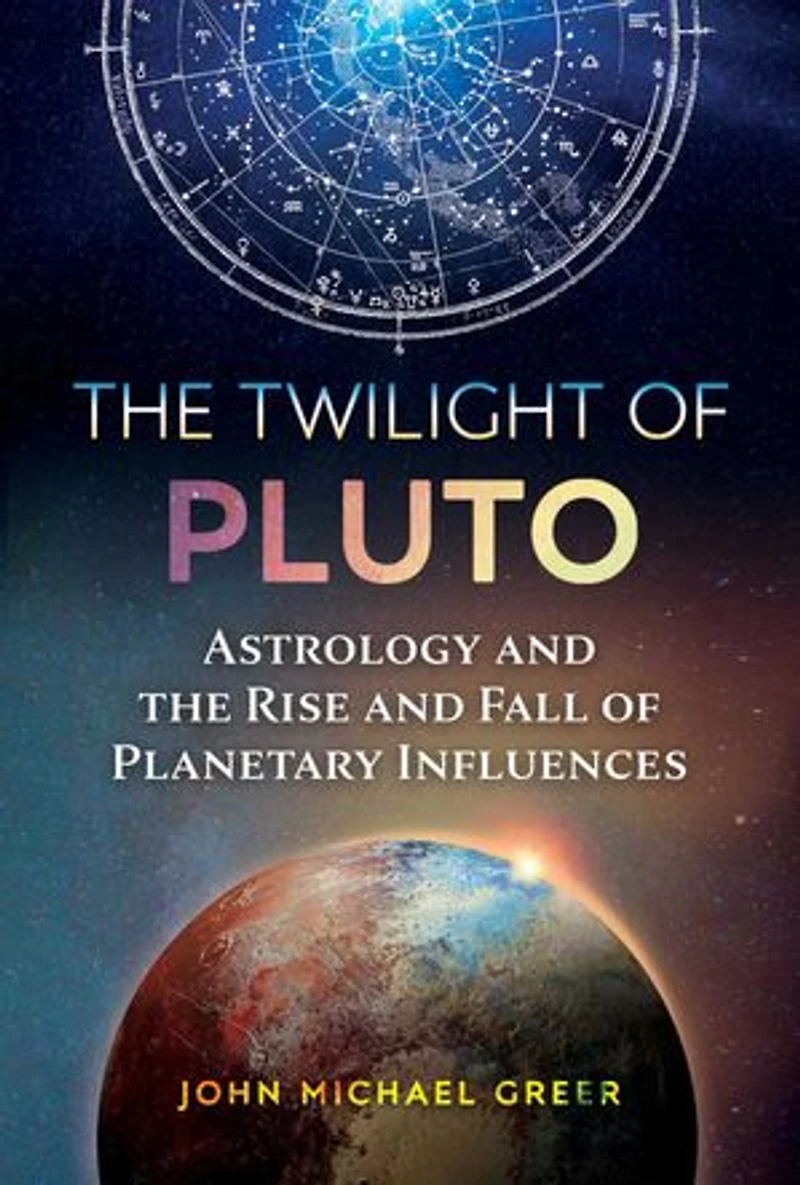
the Twilight of Pluto: Astrology and Rise Fall Planetary Influences
Current price: $16.99

the Twilight of Pluto: Astrology and Rise Fall Planetary Influences
Current price: $16.99
Loading Inventory...
Size: Kobo eBook
*Product information may vary - to confirm product availability, pricing, shipping and return information please contact Indigo
An examination of the waxing and waning influence of demoted planets
• Explains in detail how the demotion or proved nonexistence of a planet marks the beginning of a roughly 30-year period in which that planet’s influence wanes
• Explores Pluto’s arc of influence on individual and collective life in depth, from its discovery in 1930 to the end of its influence in 2036
• Offers examples from other demoted planets, such as Ceres, whose fifty-year reign as a planet corresponds very closely to the Romantic Era of history
Recent research in astrology has shown that the discovery of a new planet correlates with the emergence of a new set of influences in individual and collective life. As John Michael Greer reveals, the opposite is also true: the demotion of a planet correlates with the decline of a set of influences into the background.
Exploring the waxing and waning of planetary influences in astrology, Greer explains in detail how the demotion or proved nonexistence of a planet marks the beginning of a roughly 30-year period in which that planet’s influence fades out. He examines several examples of planet demotion, including Ceres, whose influence began to take shape some 30 years before its discovery in 1801 and gradually faded over the three decades following its demotion in the 1850s.
Examining Pluto’s astrological influence in depth, from the beginning of the search for “Planet X” in 1900 to the end of its influence in 2036, the author shows how during the Plutonian era the concept of cosmos--from the ancient Greek meaning “that which is beautifully ordered”--was in eclipse. Pluto’s influence led to the rejection of unity, beauty, and order, exemplified through the splitting of the atom by physicists, the splitting of the individual into conscious and subconscious halves by psychoanalysts, and the splitting of the world into warring camps by politicians.
Offering an essential guide not only to the astrology of the future but also to the twilight of the Plutonian era, Greer shows how as Pluto’s influence fades out in the years ahead, a great many disruptive phenomena of the recent past will fade with it.
An examination of the waxing and waning influence of demoted planets
• Explains in detail how the demotion or proved nonexistence of a planet marks the beginning of a roughly 30-year period in which that planet’s influence wanes
• Explores Pluto’s arc of influence on individual and collective life in depth, from its discovery in 1930 to the end of its influence in 2036
• Offers examples from other demoted planets, such as Ceres, whose fifty-year reign as a planet corresponds very closely to the Romantic Era of history
Recent research in astrology has shown that the discovery of a new planet correlates with the emergence of a new set of influences in individual and collective life. As John Michael Greer reveals, the opposite is also true: the demotion of a planet correlates with the decline of a set of influences into the background.
Exploring the waxing and waning of planetary influences in astrology, Greer explains in detail how the demotion or proved nonexistence of a planet marks the beginning of a roughly 30-year period in which that planet’s influence fades out. He examines several examples of planet demotion, including Ceres, whose influence began to take shape some 30 years before its discovery in 1801 and gradually faded over the three decades following its demotion in the 1850s.
Examining Pluto’s astrological influence in depth, from the beginning of the search for “Planet X” in 1900 to the end of its influence in 2036, the author shows how during the Plutonian era the concept of cosmos--from the ancient Greek meaning “that which is beautifully ordered”--was in eclipse. Pluto’s influence led to the rejection of unity, beauty, and order, exemplified through the splitting of the atom by physicists, the splitting of the individual into conscious and subconscious halves by psychoanalysts, and the splitting of the world into warring camps by politicians.
Offering an essential guide not only to the astrology of the future but also to the twilight of the Plutonian era, Greer shows how as Pluto’s influence fades out in the years ahead, a great many disruptive phenomena of the recent past will fade with it.
You May Also Like
















More About Indigo at Erin Mills Town Centre
The largest book retailer in Canada also offers toys, music, home décor, gifts and lifestyle products. What's Inside...Books, Magazines, CD’s and DVD’s, Toys and Gifts, Home Accents, Electronics, Baby’s and Children’s Section, Bath and Body, Kitchen and Bedroom, Stationary Located outside in the exterior plaza.
5015 Glen Erin Dr, Mississauga, ON L5M 0R7, Canada
Find Indigo at Erin Mills Town Centre in Mississauga ON
Visit Indigo at Erin Mills Town Centre in Mississauga ON