

GIVE THE PERFECT GIFT
Erin Mills Town Centre Gift Cards are the perfect choice for your gift giving needs.Purchase gift cards at kiosks near the food court or centre court, at Guest Services, or click below to purchase online.PURCHASE HEREHome
Time, Death, and Eternity: Reflecting on Augustine's Confessions in Light of Heidegger's Being and Time
Indigo
Loading Inventory...
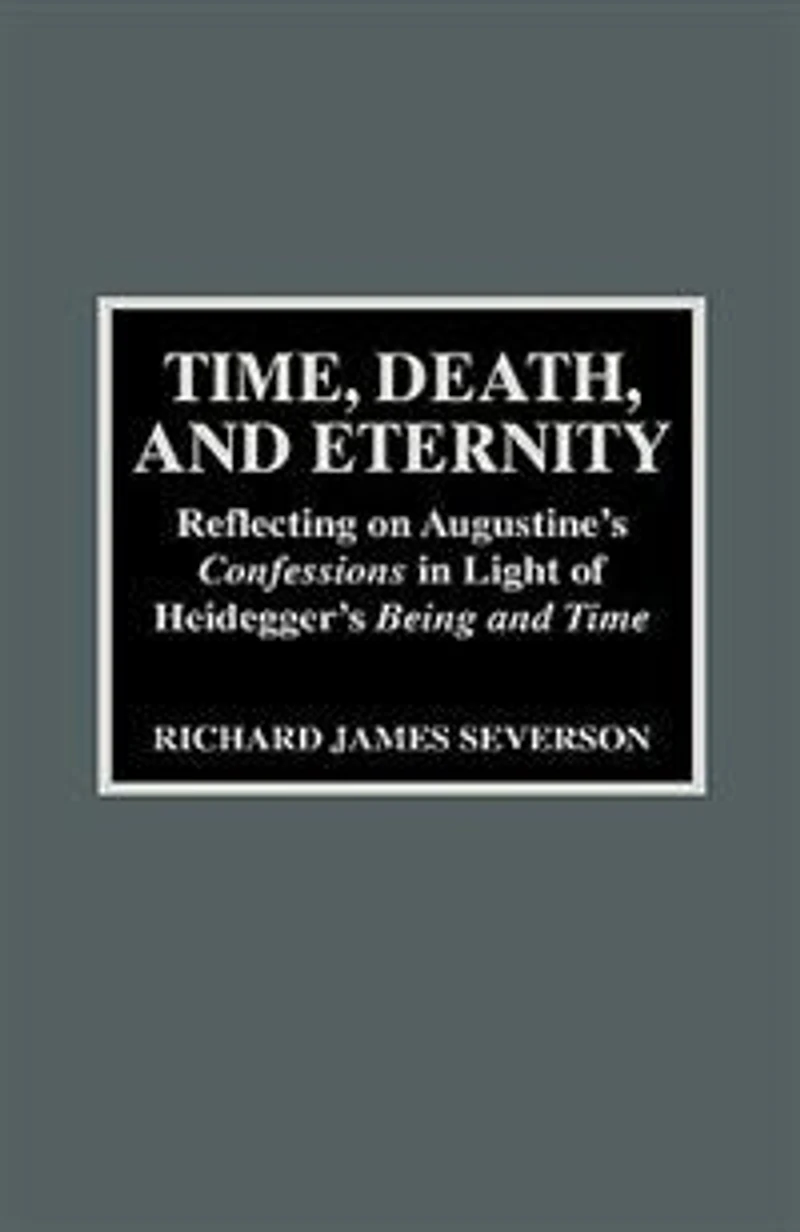
Time, Death, and Eternity: Reflecting on Augustine's Confessions in Light of Heidegger's Being and Time
Current price: $68.80

Time, Death, and Eternity: Reflecting on Augustine's Confessions in Light of Heidegger's Being and Time
Current price: $68.80
Loading Inventory...
Size: Hardcover
*Product information may vary - to confirm product availability, pricing, shipping and return information please contact Indigo
In Book XI of the Confessions , Augustine claims that time has its beginning and ending in eternity. In Being and Time , Heidegger claims that death is the ultimate futural possibility for authentic human existence. These two texts, one from the fourth century, the other from the twentieth century, depict two very different perspectives on what limits the human conception of time. Can these perspectives be reconciled?
Initially, Severson follows Paul Ricoeur's reconciliation of Augustine and Heidegger on time and eternity as presented in Time and Narrative (Chicago, 1984-88). But Ricoeur's argument is criticized for lacking theological depth. Building upon the earlier work of Bultmann, Tillich, and Scharlemann, Severson offers a new reading of the Confessions that affirms Augustine's religious quest for understanding while taking into account the constraints of modern criticism.
In Book XI of the Confessions , Augustine claims that time has its beginning and ending in eternity. In Being and Time , Heidegger claims that death is the ultimate futural possibility for authentic human existence. These two texts, one from the fourth century, the other from the twentieth century, depict two very different perspectives on what limits the human conception of time. Can these perspectives be reconciled?
Initially, Severson follows Paul Ricoeur's reconciliation of Augustine and Heidegger on time and eternity as presented in Time and Narrative (Chicago, 1984-88). But Ricoeur's argument is criticized for lacking theological depth. Building upon the earlier work of Bultmann, Tillich, and Scharlemann, Severson offers a new reading of the Confessions that affirms Augustine's religious quest for understanding while taking into account the constraints of modern criticism.
You May Also Like







More About Indigo at Erin Mills Town Centre
The largest book retailer in Canada also offers toys, music, home décor, gifts and lifestyle products. What's Inside...Books, Magazines, CD’s and DVD’s, Toys and Gifts, Home Accents, Electronics, Baby’s and Children’s Section, Bath and Body, Kitchen and Bedroom, Stationary Located outside in the exterior plaza.
5015 Glen Erin Dr, Mississauga, ON L5M 0R7, Canada
Find Indigo at Erin Mills Town Centre in Mississauga ON
Visit Indigo at Erin Mills Town Centre in Mississauga ON