

GIVE THE PERFECT GIFT
Erin Mills Town Centre Gift Cards are the perfect choice for your gift giving needs.Purchase gift cards at kiosks near the food court or centre court, at Guest Services, or click below to purchase online.PURCHASE HEREHome
To Strive, to Seek, to Find, and Not Yield - How Chiefs of Staff of the Army Lead Changes
Indigo
Loading Inventory...
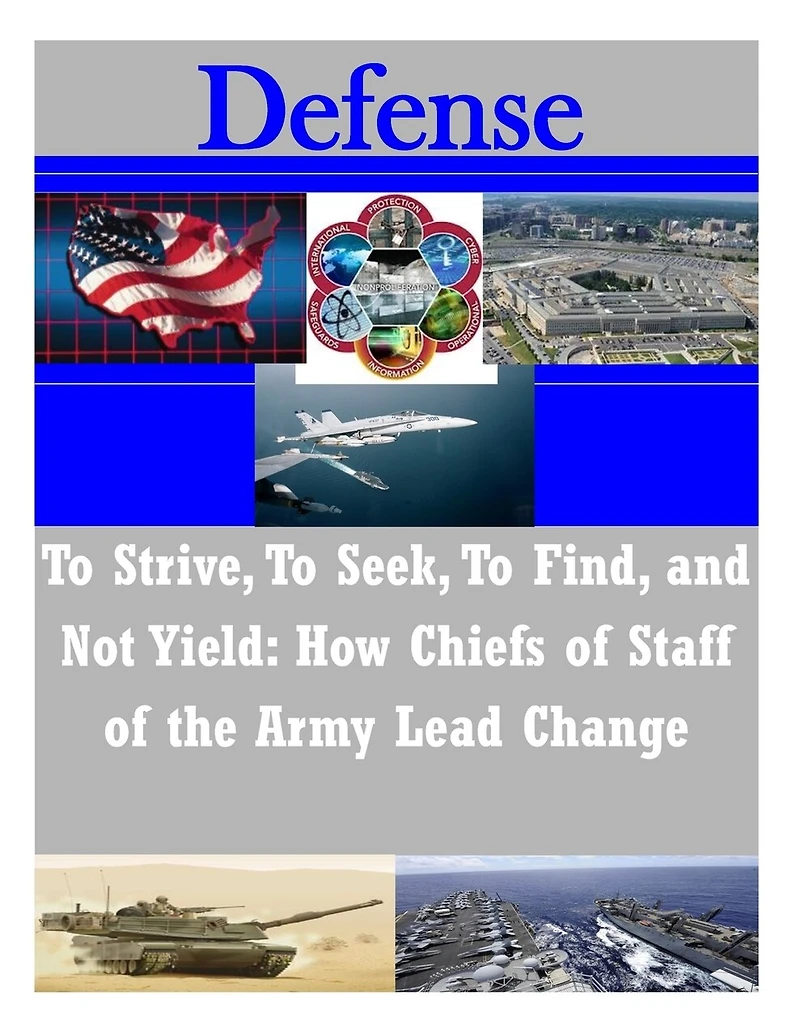
To Strive, to Seek, to Find, and Not Yield - How Chiefs of Staff of the Army Lead Changes
Current price: $12.95

To Strive, to Seek, to Find, and Not Yield - How Chiefs of Staff of the Army Lead Changes
Current price: $12.95
Loading Inventory...
Size: Paperback
*Product information may vary - to confirm product availability, pricing, shipping and return information please contact Indigo
How does the Chief of Staff of the Army lead strategic change for the Army during post-war transitions? The Army is currently conducting a post-war transition after 10 years of continuous conflict and requires a methodology for leading change. What is more, the Army has conducted significant change during many post-war transitions with varying degrees of effectiveness. Failure to address the problem of how to lead change during post-war transitions will result in an Army that is too costly to the nation and less effective for the next war. Given this, there must be a model for the Chiefs of Staff to use in leading change during post-war transitions. In defining a model for the Chiefs of Staff to use during transition this research examines how to lead organizational change develops a model to guide change, and it then applies the model to previous Chiefs of Staff to assess how they led change. The model uses a combination of Stephen M. Covey's The Speed of Trust, Gordon R. Sullivan's "Leading Strategic Change in America's Army: The Way Forward." The research then applies the model to Generals Eisenhower, Ridgway, and Abrams as they led Army change during their post-war transitions. Finally, the research provides recommendations for future Chiefs of Staff to lead change during future post-war transitions.
How does the Chief of Staff of the Army lead strategic change for the Army during post-war transitions? The Army is currently conducting a post-war transition after 10 years of continuous conflict and requires a methodology for leading change. What is more, the Army has conducted significant change during many post-war transitions with varying degrees of effectiveness. Failure to address the problem of how to lead change during post-war transitions will result in an Army that is too costly to the nation and less effective for the next war. Given this, there must be a model for the Chiefs of Staff to use in leading change during post-war transitions. In defining a model for the Chiefs of Staff to use during transition this research examines how to lead organizational change develops a model to guide change, and it then applies the model to previous Chiefs of Staff to assess how they led change. The model uses a combination of Stephen M. Covey's The Speed of Trust, Gordon R. Sullivan's "Leading Strategic Change in America's Army: The Way Forward." The research then applies the model to Generals Eisenhower, Ridgway, and Abrams as they led Army change during their post-war transitions. Finally, the research provides recommendations for future Chiefs of Staff to lead change during future post-war transitions.
You May Also Like












More About Indigo at Erin Mills Town Centre
The largest book retailer in Canada also offers toys, music, home décor, gifts and lifestyle products. What's Inside...Books, Magazines, CD’s and DVD’s, Toys and Gifts, Home Accents, Electronics, Baby’s and Children’s Section, Bath and Body, Kitchen and Bedroom, Stationary Located outside in the exterior plaza.
5015 Glen Erin Dr, Mississauga, ON L5M 0R7, Canada
Find Indigo at Erin Mills Town Centre in Mississauga ON
Visit Indigo at Erin Mills Town Centre in Mississauga ON