

GIVE THE PERFECT GIFT
Erin Mills Town Centre Gift Cards are the perfect choice for your gift giving needs.Purchase gift cards at kiosks near the food court or centre court, at Guest Services, or click below to purchase online.PURCHASE HEREHome
Tria sunt: An Art of Poetry and Prose
Indigo
Loading Inventory...
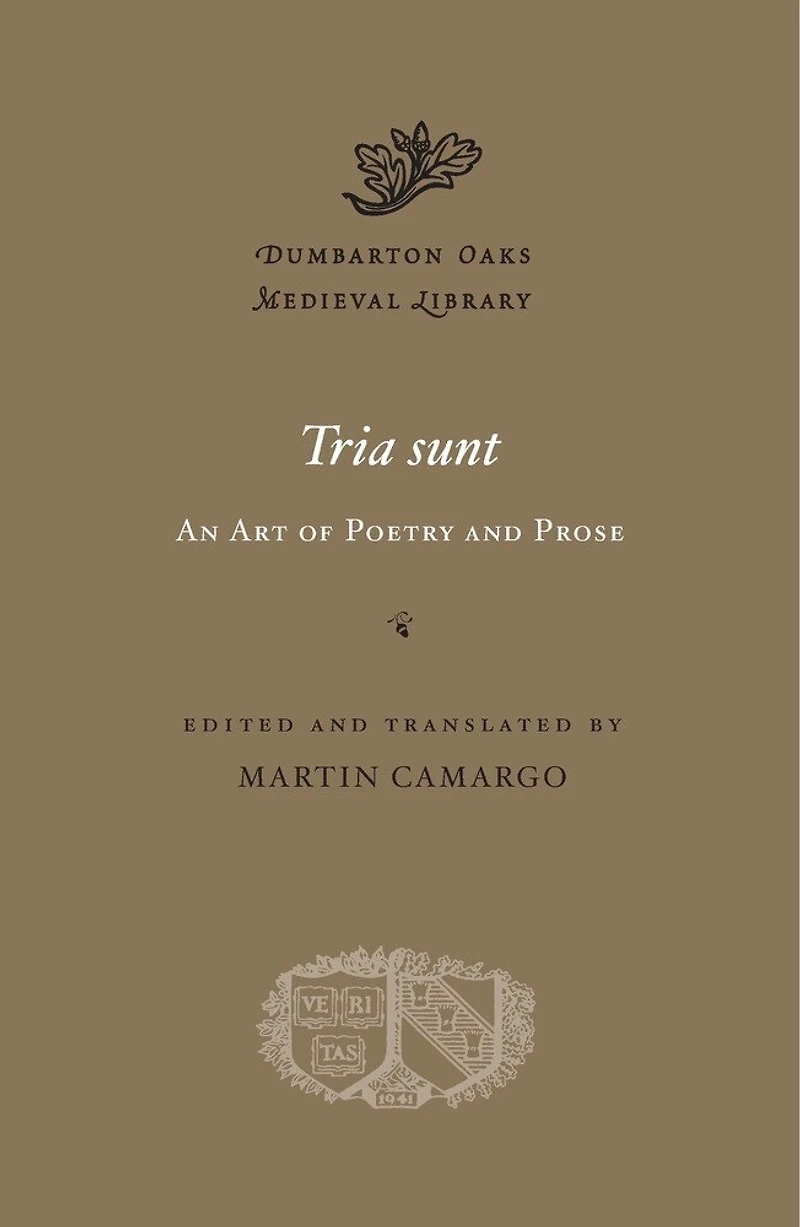
Tria sunt: An Art of Poetry and Prose
Current price: $47.00

Tria sunt: An Art of Poetry and Prose
Current price: $47.00
Loading Inventory...
Size: Hardcover
*Product information may vary - to confirm product availability, pricing, shipping and return information please contact Indigo
The Tria sunt, named for its opening words, was a widely used and highly ambitious book composed in England in the late fourteenth century during a revival of interest in the art of poetry and prose.
The backbone of this comprehensive guide to writing Latin texts is the wealth of illustrative and instructive sources compiled, including examples from classical authors such as Cicero and Horace as well as from medieval literature, and excerpts from other treatises of the same period by authors from Matthew of Vendôme through Gervase of Melkley. Topics treated at length include methods for beginning and ending a composition, techniques for expanding and abbreviating a text, varieties of figurative language, attributes of persons and actions, and the art of letter writing.
This anonymous treatise, related especially closely to work by Geoffrey of Vinsauf, served as a textbook for rhetorical composition at Oxford. Of all the major Latin arts of poetry and prose, it is the only one not previously edited or translated into English.
The Tria sunt, named for its opening words, was a widely used and highly ambitious book composed in England in the late fourteenth century during a revival of interest in the art of poetry and prose.
The backbone of this comprehensive guide to writing Latin texts is the wealth of illustrative and instructive sources compiled, including examples from classical authors such as Cicero and Horace as well as from medieval literature, and excerpts from other treatises of the same period by authors from Matthew of Vendôme through Gervase of Melkley. Topics treated at length include methods for beginning and ending a composition, techniques for expanding and abbreviating a text, varieties of figurative language, attributes of persons and actions, and the art of letter writing.
This anonymous treatise, related especially closely to work by Geoffrey of Vinsauf, served as a textbook for rhetorical composition at Oxford. Of all the major Latin arts of poetry and prose, it is the only one not previously edited or translated into English.
You May Also Like










More About Indigo at Erin Mills Town Centre
The largest book retailer in Canada also offers toys, music, home décor, gifts and lifestyle products. What's Inside...Books, Magazines, CD’s and DVD’s, Toys and Gifts, Home Accents, Electronics, Baby’s and Children’s Section, Bath and Body, Kitchen and Bedroom, Stationary Located outside in the exterior plaza.
5015 Glen Erin Dr, Mississauga, ON L5M 0R7, Canada
Find Indigo at Erin Mills Town Centre in Mississauga ON
Visit Indigo at Erin Mills Town Centre in Mississauga ON