

GIVE THE PERFECT GIFT
Erin Mills Town Centre Gift Cards are the perfect choice for your gift giving needs.Purchase gift cards at kiosks near the food court or centre court, at Guest Services, or click below to purchase online.PURCHASE HEREHome
(Un)Civil Democracy: Political Incivility as a Communication Strategy
Indigo
Loading Inventory...
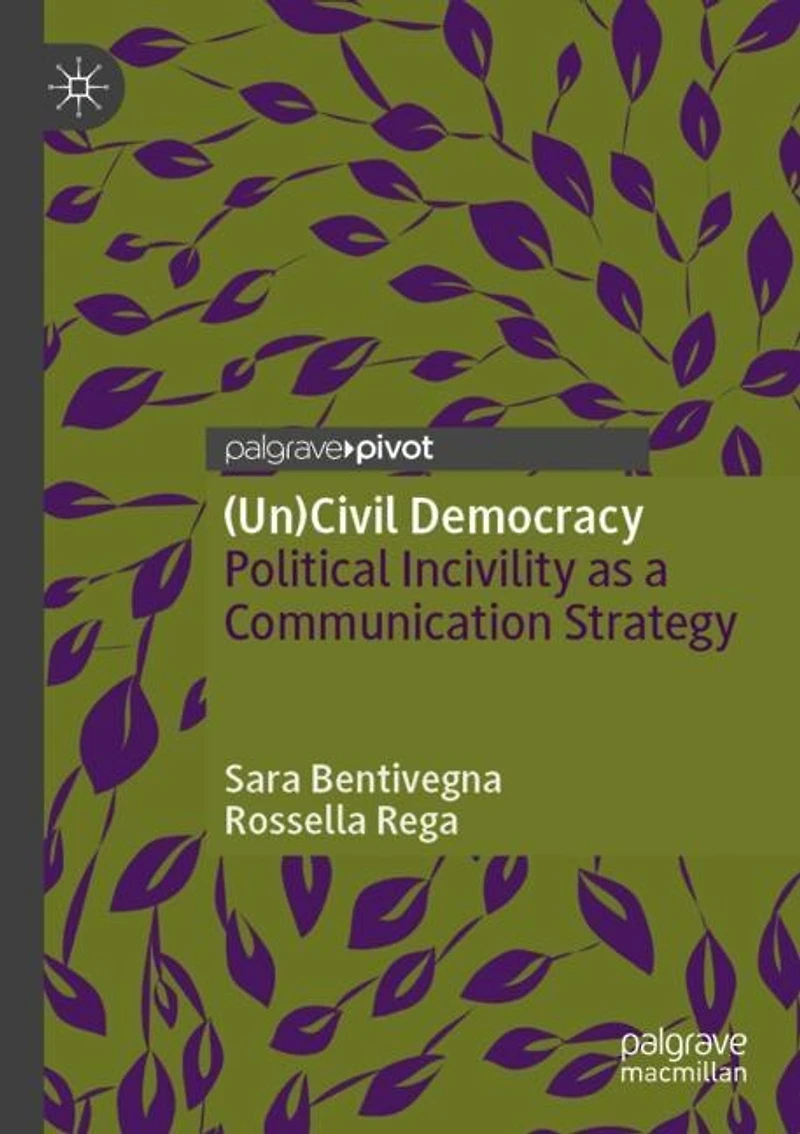
(Un)Civil Democracy: Political Incivility as a Communication Strategy
Current price: $72.95

(Un)Civil Democracy: Political Incivility as a Communication Strategy
Current price: $72.95
Loading Inventory...
Size: Paperback
*Product information may vary - to confirm product availability, pricing, shipping and return information please contact Indigo
This book offers a systematization of the recourse to political incivility by different subjects and in different contexts. The authors argue that incivility has now become a strategic resource that can be used by various actors in the public arena to achieve specific goals. We are referring not only to traditional political subjects, but also to journalists, citizens, movements and protest groups, that is to a plurality of actors who, from different angles, contribute to the construction of the "political spectacle". This resource can be activated according to circumstances and conveniences, whether their nature be political (to place an issue at the center of public debate or a new actor in the offer range), mediatic (to achieve an increase in visibility or viewership) or relational (to expand one's visibility and centrality in social media). The book identifies common elements linking the different levels of use of incivility, which can be traced in uncivil forms of communication. These are their expressive power (memorable gestures and unequivocal messages, which are immediately recognizable and visible), their aggregation power (they build group identities, and consolidate allegiances and bonds) and their mobilization power (they galvanize people, and inspire them to participate and take action).
This book offers a systematization of the recourse to political incivility by different subjects and in different contexts. The authors argue that incivility has now become a strategic resource that can be used by various actors in the public arena to achieve specific goals. We are referring not only to traditional political subjects, but also to journalists, citizens, movements and protest groups, that is to a plurality of actors who, from different angles, contribute to the construction of the "political spectacle". This resource can be activated according to circumstances and conveniences, whether their nature be political (to place an issue at the center of public debate or a new actor in the offer range), mediatic (to achieve an increase in visibility or viewership) or relational (to expand one's visibility and centrality in social media). The book identifies common elements linking the different levels of use of incivility, which can be traced in uncivil forms of communication. These are their expressive power (memorable gestures and unequivocal messages, which are immediately recognizable and visible), their aggregation power (they build group identities, and consolidate allegiances and bonds) and their mobilization power (they galvanize people, and inspire them to participate and take action).
You May Also Like










More About Indigo at Erin Mills Town Centre
The largest book retailer in Canada also offers toys, music, home décor, gifts and lifestyle products. What's Inside...Books, Magazines, CD’s and DVD’s, Toys and Gifts, Home Accents, Electronics, Baby’s and Children’s Section, Bath and Body, Kitchen and Bedroom, Stationary Located outside in the exterior plaza.
5015 Glen Erin Dr, Mississauga, ON L5M 0R7, Canada
Find Indigo at Erin Mills Town Centre in Mississauga ON
Visit Indigo at Erin Mills Town Centre in Mississauga ON