

GIVE THE PERFECT GIFT
Erin Mills Town Centre Gift Cards are the perfect choice for your gift giving needs.Purchase gift cards at kiosks near the food court or centre court, at Guest Services, or click below to purchase online.PURCHASE HEREHome
Understanding Peace Cultures
Indigo
Loading Inventory...
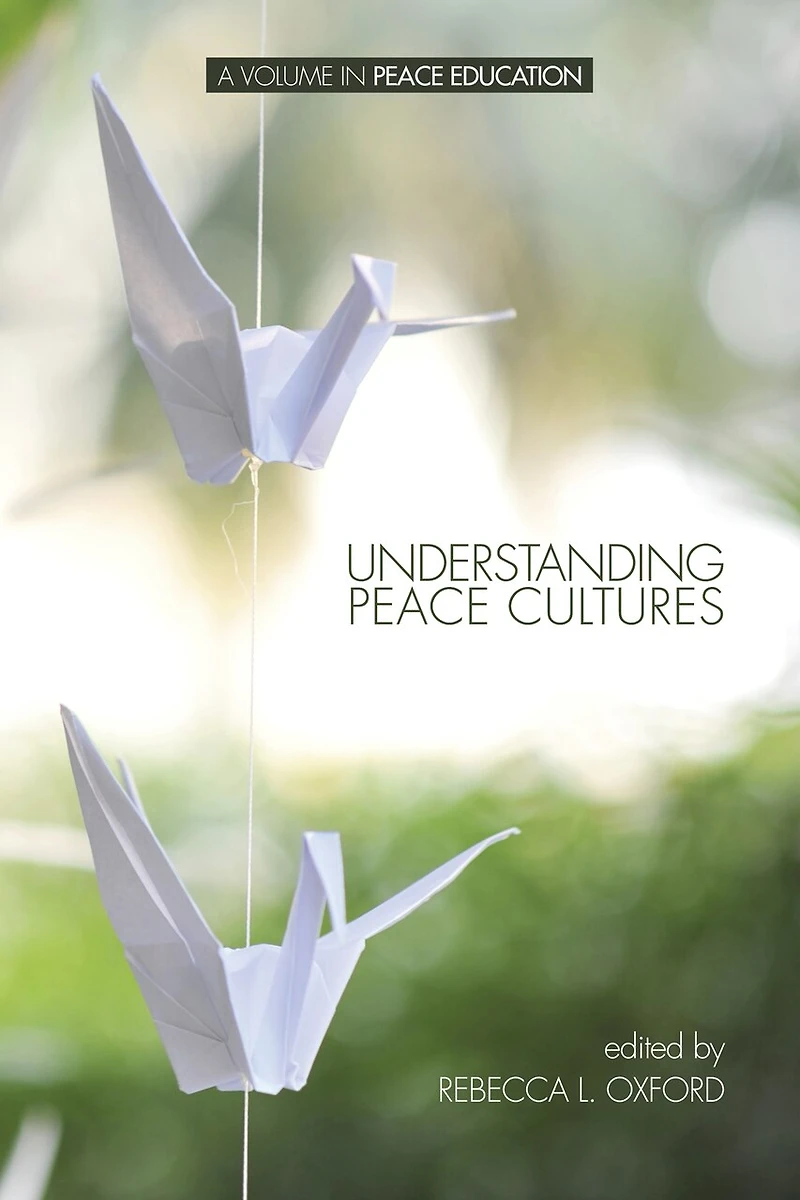
Understanding Peace Cultures
Current price: $149.99

Understanding Peace Cultures
Current price: $149.99
Loading Inventory...
Size: Hardcover
*Product information may vary - to confirm product availability, pricing, shipping and return information please contact Indigo
Understanding Peace Cultures is exceptionally practical as well as theoretically grounded. As Elise Boulding tells us, culture consists of the shared values, ideas, practices, and artifacts of a group united by a common history. Rebecca Oxford explains that peace cultures are cultures, large or small, which foster any of the dimensions of peace – inner, interpersonal, intergroup, international, intercultural, or ecological – and thus help transform the world. As in her earlier book, The Language of Peace: Communicating to Create Harmony, Oxford contends here that peace is a serious and desirable option. Excellent educators help build peace cultures. In this book, Shelley Wong and Rachel Grant reveal how highly diverse public school classrooms serve as peace cultures, using activities and themes founded on womanist and critical race theories. Yingji Wang portrays a peace culture in a university classroom. Rui Ma’s model reaches out interculturally to Abraham’s children: Jewish, Christian, and Muslim youth, who share an ancient heritage. Children’s literature (Rebecca Oxford et al.) and students’ own writing (Tina Wei) spread cultures of peace. Deep traditions, such as African performance art, Buddhism, Daoism, Confucianism and Islam, give rise to peace cultures, as shown here by John Grayzel, Sister Jewel (a colleague of Thich Nhat Hanh), Yingji Wang et al., and Dian Marissa et al. Peace cultures also emerge in completely unexpected venues, such as gangsta rap, unveiled by Charles Blake et al., and a prison where inmates learn Lois Liggett’s “spiritual semantics.” Finally, the book includes perspectives from Jerusalem (by Lawrence Berlin) and North Korea and South Korea (by Carol Griffiths) to help us envision – and hope for – new, transformative peace cultures where now there is strife.
Understanding Peace Cultures is exceptionally practical as well as theoretically grounded. As Elise Boulding tells us, culture consists of the shared values, ideas, practices, and artifacts of a group united by a common history. Rebecca Oxford explains that peace cultures are cultures, large or small, which foster any of the dimensions of peace – inner, interpersonal, intergroup, international, intercultural, or ecological – and thus help transform the world. As in her earlier book, The Language of Peace: Communicating to Create Harmony, Oxford contends here that peace is a serious and desirable option. Excellent educators help build peace cultures. In this book, Shelley Wong and Rachel Grant reveal how highly diverse public school classrooms serve as peace cultures, using activities and themes founded on womanist and critical race theories. Yingji Wang portrays a peace culture in a university classroom. Rui Ma’s model reaches out interculturally to Abraham’s children: Jewish, Christian, and Muslim youth, who share an ancient heritage. Children’s literature (Rebecca Oxford et al.) and students’ own writing (Tina Wei) spread cultures of peace. Deep traditions, such as African performance art, Buddhism, Daoism, Confucianism and Islam, give rise to peace cultures, as shown here by John Grayzel, Sister Jewel (a colleague of Thich Nhat Hanh), Yingji Wang et al., and Dian Marissa et al. Peace cultures also emerge in completely unexpected venues, such as gangsta rap, unveiled by Charles Blake et al., and a prison where inmates learn Lois Liggett’s “spiritual semantics.” Finally, the book includes perspectives from Jerusalem (by Lawrence Berlin) and North Korea and South Korea (by Carol Griffiths) to help us envision – and hope for – new, transformative peace cultures where now there is strife.
You May Also Like








More About Indigo at Erin Mills Town Centre
The largest book retailer in Canada also offers toys, music, home décor, gifts and lifestyle products. What's Inside...Books, Magazines, CD’s and DVD’s, Toys and Gifts, Home Accents, Electronics, Baby’s and Children’s Section, Bath and Body, Kitchen and Bedroom, Stationary Located outside in the exterior plaza.
5015 Glen Erin Dr, Mississauga, ON L5M 0R7, Canada
Find Indigo at Erin Mills Town Centre in Mississauga ON
Visit Indigo at Erin Mills Town Centre in Mississauga ON