

GIVE THE PERFECT GIFT
Erin Mills Town Centre Gift Cards are the perfect choice for your gift giving needs.Purchase gift cards at kiosks near the food court or centre court, at Guest Services, or click below to purchase online.PURCHASE HEREHome
Understanding Territorial Withdrawal: Israeli Occupations and Exits
Indigo
Loading Inventory...
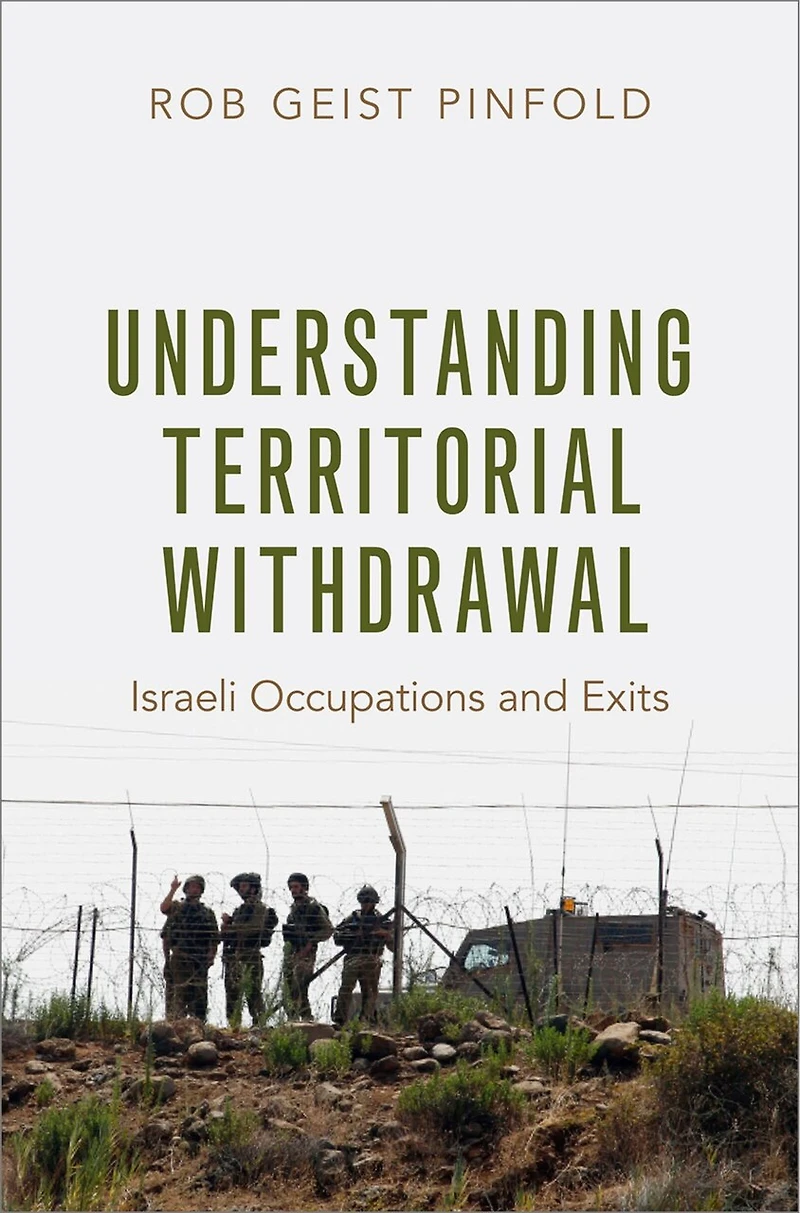
Understanding Territorial Withdrawal: Israeli Occupations and Exits
Current price: $113.76

Understanding Territorial Withdrawal: Israeli Occupations and Exits
Current price: $113.76
Loading Inventory...
Size: Hardcover
*Product information may vary - to confirm product availability, pricing, shipping and return information please contact Indigo
From Ukraine to Afghanistan and beyond, occupations and exit dilemmas permeate contemporary geopolitics. However, the existing literature on territorial conflict rarely scrutinizes a pivotal, related question: what makes a state withdraw from an occupied territory, or entrench itself within it?
In Understanding Territorial Withdrawal, Rob Geist Pinfold addresses this research gap. He focuses primarily on Israel, a unique but important milieu that offers pertinent lessons for other states facing similar policy problems. As Pinfold demonstrates, occupiers choose to either perpetuate or abandon an occupation because of three factors: their relations with the occupied, interactions with third parties, and the occupier's domestic politics. He argues that each withdrawal is the culmination of a gradual process of policy re-assessment. Critically, it is a combination of local violence and international pressure that causes popular and elite opinion within the occupier to endorse an exit, rather than perpetuate the status quo. To affirm this pattern, Pinfold constructs a generalizable framework for understanding territorial withdrawal. He then applies this framework to multiple case studies, which include: Israel's withdrawal from the Sinai Peninsula between 1974-1982; its "unilateral" withdrawal from southern Lebanon in 2000; and its "unilateral disengagement" from the Gaza Strip in 2005, as well as Israel's non-withdrawals from the West Bank and Golan Heights. Overall, Understanding Territorial Withdrawal delineates commonalities that manifested in each exit yet were absent in the cases of occupation without exit.
A powerful analysis of a central concern for the study of international security, territorial conflict, and the Arab-Israel conflict alike, this book provides a critical intervention that identifies why occupiers either retain, or leave, occupied territory.
From Ukraine to Afghanistan and beyond, occupations and exit dilemmas permeate contemporary geopolitics. However, the existing literature on territorial conflict rarely scrutinizes a pivotal, related question: what makes a state withdraw from an occupied territory, or entrench itself within it?
In Understanding Territorial Withdrawal, Rob Geist Pinfold addresses this research gap. He focuses primarily on Israel, a unique but important milieu that offers pertinent lessons for other states facing similar policy problems. As Pinfold demonstrates, occupiers choose to either perpetuate or abandon an occupation because of three factors: their relations with the occupied, interactions with third parties, and the occupier's domestic politics. He argues that each withdrawal is the culmination of a gradual process of policy re-assessment. Critically, it is a combination of local violence and international pressure that causes popular and elite opinion within the occupier to endorse an exit, rather than perpetuate the status quo. To affirm this pattern, Pinfold constructs a generalizable framework for understanding territorial withdrawal. He then applies this framework to multiple case studies, which include: Israel's withdrawal from the Sinai Peninsula between 1974-1982; its "unilateral" withdrawal from southern Lebanon in 2000; and its "unilateral disengagement" from the Gaza Strip in 2005, as well as Israel's non-withdrawals from the West Bank and Golan Heights. Overall, Understanding Territorial Withdrawal delineates commonalities that manifested in each exit yet were absent in the cases of occupation without exit.
A powerful analysis of a central concern for the study of international security, territorial conflict, and the Arab-Israel conflict alike, this book provides a critical intervention that identifies why occupiers either retain, or leave, occupied territory.
You May Also Like












More About Indigo at Erin Mills Town Centre
The largest book retailer in Canada also offers toys, music, home décor, gifts and lifestyle products. What's Inside...Books, Magazines, CD’s and DVD’s, Toys and Gifts, Home Accents, Electronics, Baby’s and Children’s Section, Bath and Body, Kitchen and Bedroom, Stationary Located outside in the exterior plaza.
5015 Glen Erin Dr, Mississauga, ON L5M 0R7, Canada
Find Indigo at Erin Mills Town Centre in Mississauga ON
Visit Indigo at Erin Mills Town Centre in Mississauga ON