

GIVE THE PERFECT GIFT
Erin Mills Town Centre Gift Cards are the perfect choice for your gift giving needs.Purchase gift cards at kiosks near the food court or centre court, at Guest Services, or click below to purchase online.PURCHASE HEREHome
Unrealized Arguments and the Grammar of Context
Indigo
Loading Inventory...
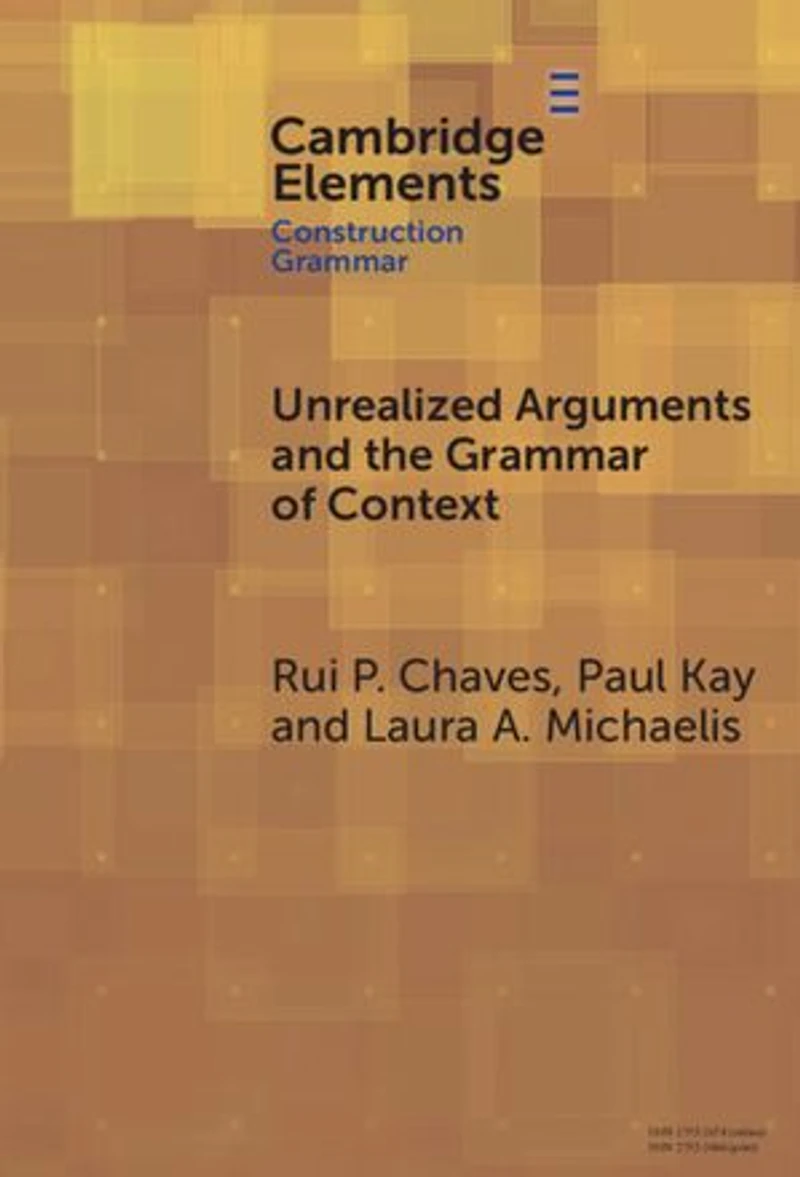
Unrealized Arguments and the Grammar of Context
Current price: $23.19
Original price: $28.95

Unrealized Arguments and the Grammar of Context
Current price: $23.19
Original price: $28.95
Loading Inventory...
Size: Kobo eBook
*Product information may vary - to confirm product availability, pricing, shipping and return information please contact Indigo
In null instantiation (NI) an optionally unexpressed argument receives either anaphoric or existential interpretation. One cannot accurately predict a predicator's NI potential based either on semantic factors (e.g., Aktionsart class of the verb) or pragmatic factors (e.g., relative discourse prominence of arguments), but NI potential, while highly constrained, is not simply lexical idiosyncrasy. It is instead the product of both lexical and constructional licensing. In the latter case, a construction can endow a verb with NI potential that it would not otherwise have. Using representational tools of sign based construction grammar, this Element offers a lexical treatment of English null instantiation that covers both distinct patterns of construal of null-instantiated arguments and the difference between listeme-based and contextually licensed, thus construction-based, null complementation.
In null instantiation (NI) an optionally unexpressed argument receives either anaphoric or existential interpretation. One cannot accurately predict a predicator's NI potential based either on semantic factors (e.g., Aktionsart class of the verb) or pragmatic factors (e.g., relative discourse prominence of arguments), but NI potential, while highly constrained, is not simply lexical idiosyncrasy. It is instead the product of both lexical and constructional licensing. In the latter case, a construction can endow a verb with NI potential that it would not otherwise have. Using representational tools of sign based construction grammar, this Element offers a lexical treatment of English null instantiation that covers both distinct patterns of construal of null-instantiated arguments and the difference between listeme-based and contextually licensed, thus construction-based, null complementation.
You May Also Like











More About Indigo at Erin Mills Town Centre
The largest book retailer in Canada also offers toys, music, home décor, gifts and lifestyle products. What's Inside...Books, Magazines, CD’s and DVD’s, Toys and Gifts, Home Accents, Electronics, Baby’s and Children’s Section, Bath and Body, Kitchen and Bedroom, Stationary Located outside in the exterior plaza.
5015 Glen Erin Dr, Mississauga, ON L5M 0R7, Canada
Find Indigo at Erin Mills Town Centre in Mississauga ON
Visit Indigo at Erin Mills Town Centre in Mississauga ON