

GIVE THE PERFECT GIFT
Erin Mills Town Centre Gift Cards are the perfect choice for your gift giving needs.Purchase gift cards at kiosks near the food court or centre court, at Guest Services, or click below to purchase online.PURCHASE HEREHome
Urban Scaling: Allometry Studies and Spatial Science
Indigo
Loading Inventory...
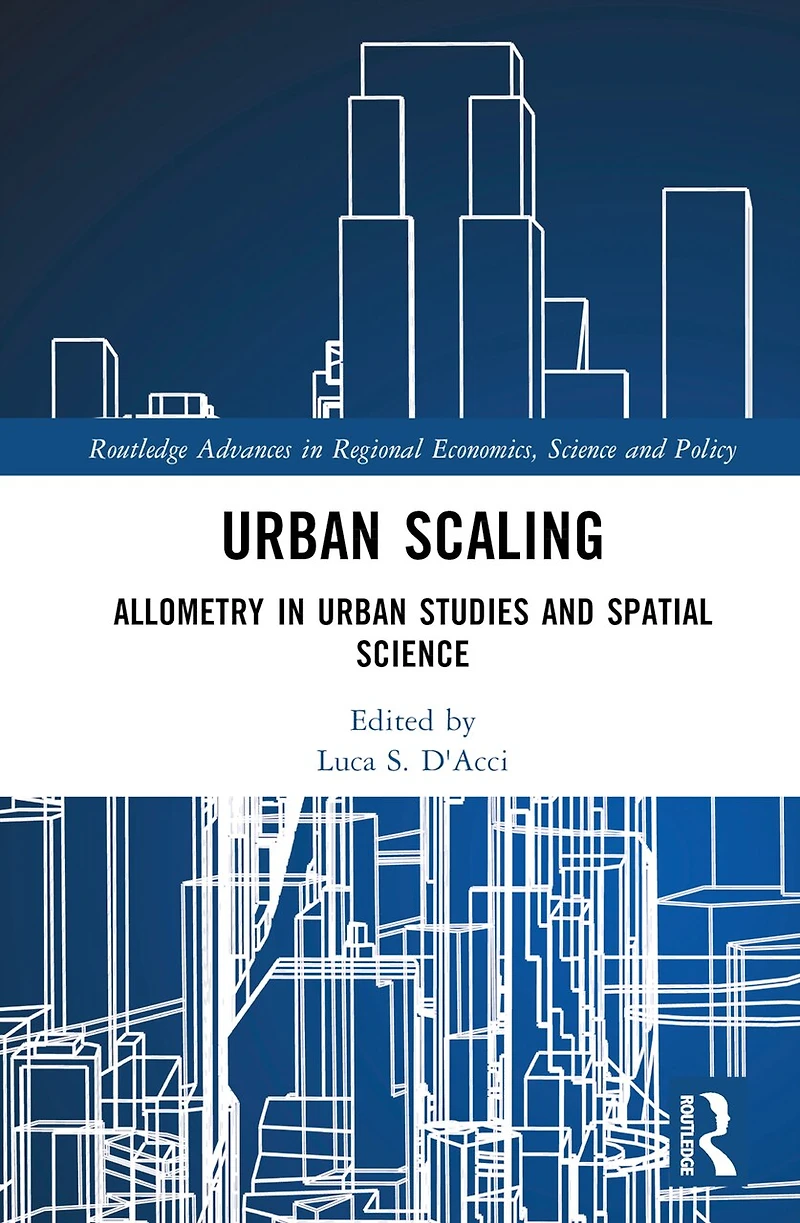
Urban Scaling: Allometry Studies and Spatial Science
Current price: $346.50

Urban Scaling: Allometry Studies and Spatial Science
Current price: $346.50
Loading Inventory...
Size: Hardcover
*Product information may vary - to confirm product availability, pricing, shipping and return information please contact Indigo
Urban allometry empirically describes how "things", for example crime, GDP, emissions, energy use, area, street length, housing prices, etc. change in cities when their size, in terms of population, increases. Urban scaling is a relatively recent area of urban science, investigating how measurable characteristics of cities vary with their sizes. This book addresses this relatively novel but highly debated topic within urban studies and geography. It presents many results, techniques, methods, and reflections on urban scaling and allometry. The sections are organized into different sub- areas such as socio- economic, infrastructural or environmental outputs, so that there is a broad organization of the findings into recognizable sub- domains. The book is particularly timely as it is becoming increasingly urgent and necessary to understand the pro and cons of different city sizes and therefore to plan policies accordingly. The book is especially interesting from a theoretical perspective because it presents the latest developments and achievements in the field, which will help to highlight potential universal rules across cities and regions. This book will benefit researchers in urban science, and scholars entering the field from various disciplines, such as geography, sociology, economics, mathematics, physics, or urban and regional planning. It will also find an audience among practitioners and policymakers. Chapters 2, 13 and 31 of this book are freely available as a downloadable Open Access PDF at http://www.taylorfrancis.com under a Creative Commons Attribution-Non Commercial-No Derivatives (CC-BY-NC-ND) 4.0 license.
Urban allometry empirically describes how "things", for example crime, GDP, emissions, energy use, area, street length, housing prices, etc. change in cities when their size, in terms of population, increases. Urban scaling is a relatively recent area of urban science, investigating how measurable characteristics of cities vary with their sizes. This book addresses this relatively novel but highly debated topic within urban studies and geography. It presents many results, techniques, methods, and reflections on urban scaling and allometry. The sections are organized into different sub- areas such as socio- economic, infrastructural or environmental outputs, so that there is a broad organization of the findings into recognizable sub- domains. The book is particularly timely as it is becoming increasingly urgent and necessary to understand the pro and cons of different city sizes and therefore to plan policies accordingly. The book is especially interesting from a theoretical perspective because it presents the latest developments and achievements in the field, which will help to highlight potential universal rules across cities and regions. This book will benefit researchers in urban science, and scholars entering the field from various disciplines, such as geography, sociology, economics, mathematics, physics, or urban and regional planning. It will also find an audience among practitioners and policymakers. Chapters 2, 13 and 31 of this book are freely available as a downloadable Open Access PDF at http://www.taylorfrancis.com under a Creative Commons Attribution-Non Commercial-No Derivatives (CC-BY-NC-ND) 4.0 license.
You May Also Like










More About Indigo at Erin Mills Town Centre
The largest book retailer in Canada also offers toys, music, home décor, gifts and lifestyle products. What's Inside...Books, Magazines, CD’s and DVD’s, Toys and Gifts, Home Accents, Electronics, Baby’s and Children’s Section, Bath and Body, Kitchen and Bedroom, Stationary Located outside in the exterior plaza.
5015 Glen Erin Dr, Mississauga, ON L5M 0R7, Canada
Find Indigo at Erin Mills Town Centre in Mississauga ON
Visit Indigo at Erin Mills Town Centre in Mississauga ON