

GIVE THE PERFECT GIFT
Erin Mills Town Centre Gift Cards are the perfect choice for your gift giving needs.Purchase gift cards at kiosks near the food court or centre court, at Guest Services, or click below to purchase online.PURCHASE HEREHome
Vibration Behavior Ceramic-Matrix Composites
Indigo
Loading Inventory...
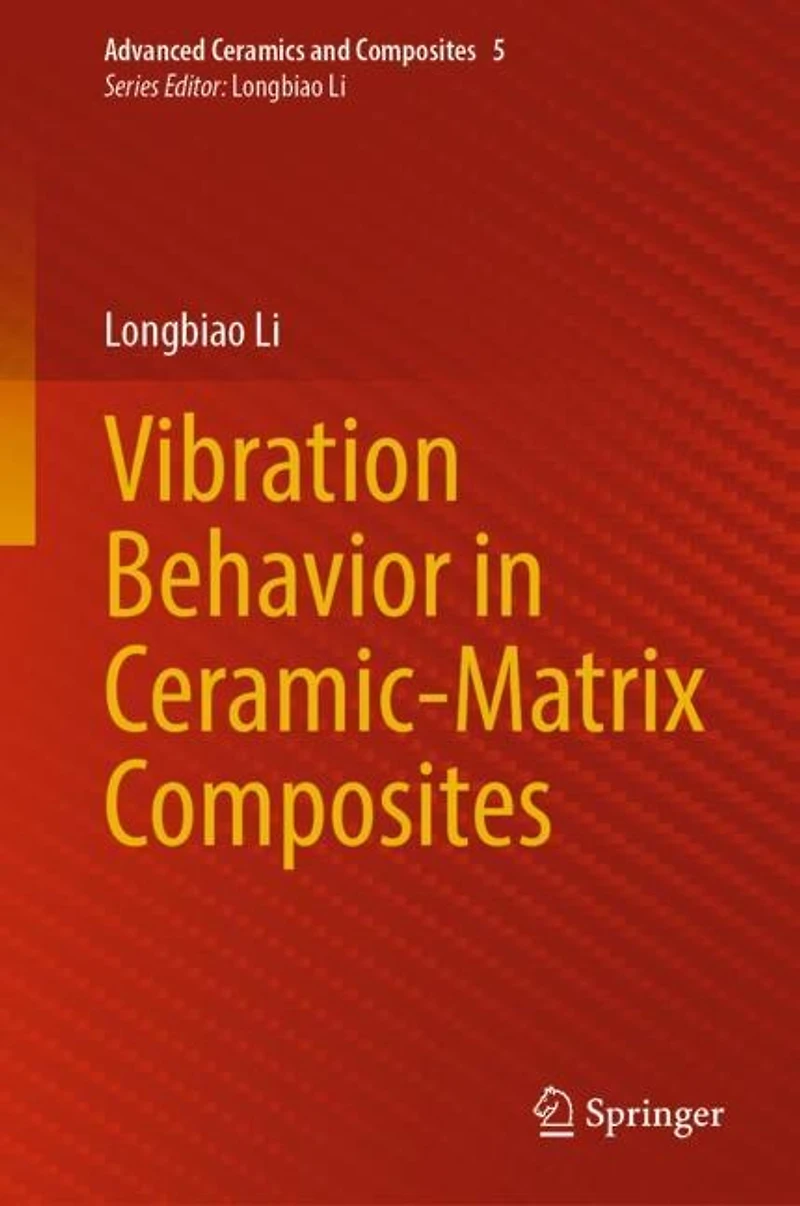
Vibration Behavior Ceramic-Matrix Composites
Current price: $291.95

Vibration Behavior Ceramic-Matrix Composites
Current price: $291.95
Loading Inventory...
Size: Hardcover
*Product information may vary - to confirm product availability, pricing, shipping and return information please contact Indigo
This book focuses on the vibration behavior of ceramic-matrix composites (CMCs), including (1) vibration natural frequency of intact and damaged CMCs; (2) vibration damping of CMCs considering fibers debonding and fracture; (3) temperature-dependent vibration damping of CMCs; (4) time-dependent vibration damping of CMCs; and (5) cyclic-dependent vibration damping of CMCs. Ceramic-matrix composites (CMCs) possess low material density (i.e., only 1/4 or 1/3 of high-temperature alloy) and high-temperature resistance, which can reduce cooling air and improve structure efficiency. Understanding the failure mechanisms and internal damage evolution represents an important step to ensure reliability and safety of CMCs. Relationships between microstructure, damage mechanisms, vibration natural frequency, and vibration damping of CMCs are established. This book helps the material scientists and engineering designers to understand and master the vibration behavior of CMCs at room and elevated temperatures.
This book focuses on the vibration behavior of ceramic-matrix composites (CMCs), including (1) vibration natural frequency of intact and damaged CMCs; (2) vibration damping of CMCs considering fibers debonding and fracture; (3) temperature-dependent vibration damping of CMCs; (4) time-dependent vibration damping of CMCs; and (5) cyclic-dependent vibration damping of CMCs. Ceramic-matrix composites (CMCs) possess low material density (i.e., only 1/4 or 1/3 of high-temperature alloy) and high-temperature resistance, which can reduce cooling air and improve structure efficiency. Understanding the failure mechanisms and internal damage evolution represents an important step to ensure reliability and safety of CMCs. Relationships between microstructure, damage mechanisms, vibration natural frequency, and vibration damping of CMCs are established. This book helps the material scientists and engineering designers to understand and master the vibration behavior of CMCs at room and elevated temperatures.
You May Also Like









More About Indigo at Erin Mills Town Centre
The largest book retailer in Canada also offers toys, music, home décor, gifts and lifestyle products. What's Inside...Books, Magazines, CD’s and DVD’s, Toys and Gifts, Home Accents, Electronics, Baby’s and Children’s Section, Bath and Body, Kitchen and Bedroom, Stationary Located outside in the exterior plaza.
5015 Glen Erin Dr, Mississauga, ON L5M 0R7, Canada
Find Indigo at Erin Mills Town Centre in Mississauga ON
Visit Indigo at Erin Mills Town Centre in Mississauga ON