

GIVE THE PERFECT GIFT
Erin Mills Town Centre Gift Cards are the perfect choice for your gift giving needs.Purchase gift cards at kiosks near the food court or centre court, at Guest Services, or click below to purchase online.PURCHASE HEREHome
Weapons of Choice: The Development Precision Guided Munitions
Indigo
Loading Inventory...
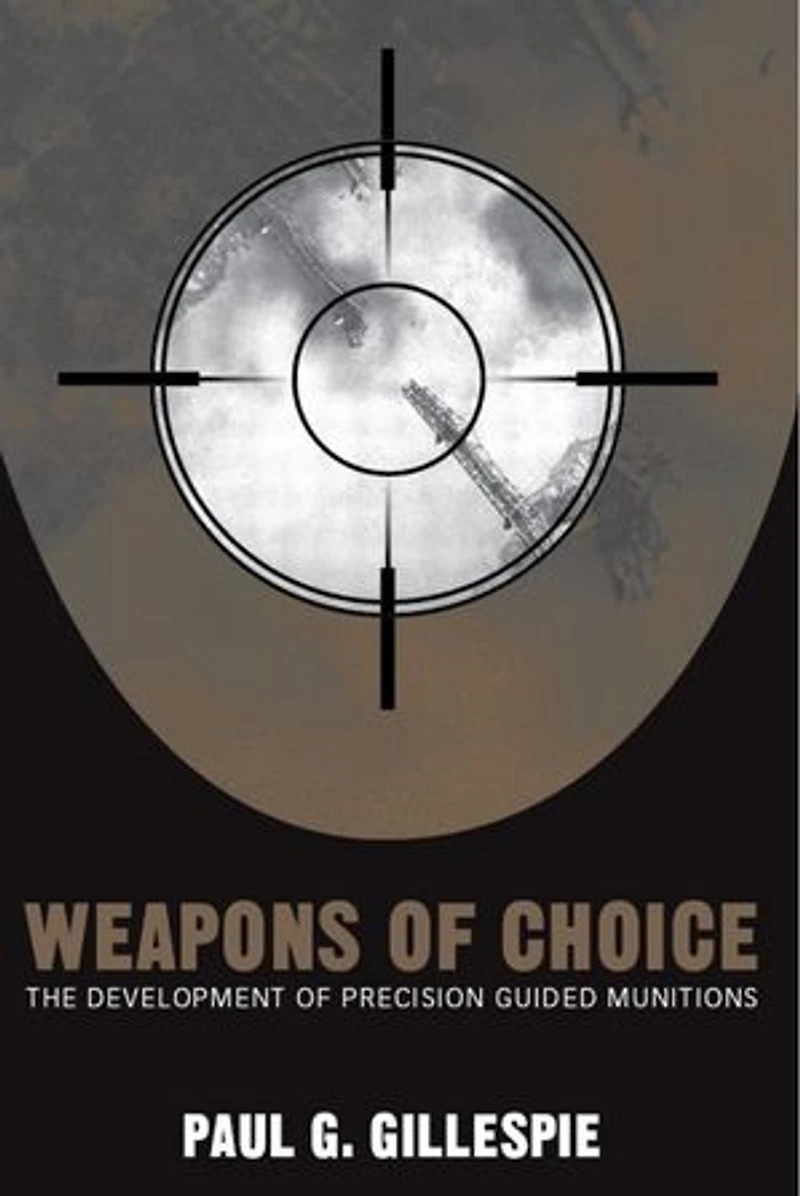
Weapons of Choice: The Development Precision Guided Munitions
Current price: $43.99
Original price: $55.00

Weapons of Choice: The Development Precision Guided Munitions
Current price: $43.99
Original price: $55.00
Loading Inventory...
Size: Kobo eBook
*Product information may vary - to confirm product availability, pricing, shipping and return information please contact Indigo
A military history study that traces the development of precision?guided munitions from World War I through the Gulf War, examining how advances in weapons technology reshaped air power, military strategy, and U.S. national security policy. In the United States, efforts to develop precision guided munitions?PGMs?began during the First World War and resulted in an 'aerial torpedo' by the 1920s. While World War II was dominated by large-scale strategic bombing?essentially throwing out tons of free-falling munitions in the hope they hit something important?both sides in the war worked to develop airborne munitions that could be steered toward a target. However after that war, U.S. national security policy focused on the atomic bomb, hardly a weapon that needed to be directed with accuracy. The cost of emphasis on atomic weapons was revealed in the general unsuitability of American tactics and weapons deployment systems during the Vietnam War. Lessons learned in that conflict, coupled with rapid technological developments in aerodynamics, lasers, and solid-state electronics, brought air power dramatically closer to the "surgical strike" now seen as crucial to modern warfare. New technology created attractive choices and options for American policymakers as well as field commanders, and events in the Arab-Israeli wars, the U.S. raid on Libya, and most dramatically in the first Gulf War created an ever-increasing demand for the precision weapons. The prospect of pinpoint delivery of weapons right to the enemy's door by speeding aircraft seems to presage war in which the messy and politically risky deployment of ground troops is unnecessary. The potential of such weapons, and their strategic limitations, made the Gulf War and Iraqi War living theater for assessing what such weapons can and cannot do and have important implications for planning for future warfare.
A military history study that traces the development of precision?guided munitions from World War I through the Gulf War, examining how advances in weapons technology reshaped air power, military strategy, and U.S. national security policy. In the United States, efforts to develop precision guided munitions?PGMs?began during the First World War and resulted in an 'aerial torpedo' by the 1920s. While World War II was dominated by large-scale strategic bombing?essentially throwing out tons of free-falling munitions in the hope they hit something important?both sides in the war worked to develop airborne munitions that could be steered toward a target. However after that war, U.S. national security policy focused on the atomic bomb, hardly a weapon that needed to be directed with accuracy. The cost of emphasis on atomic weapons was revealed in the general unsuitability of American tactics and weapons deployment systems during the Vietnam War. Lessons learned in that conflict, coupled with rapid technological developments in aerodynamics, lasers, and solid-state electronics, brought air power dramatically closer to the "surgical strike" now seen as crucial to modern warfare. New technology created attractive choices and options for American policymakers as well as field commanders, and events in the Arab-Israeli wars, the U.S. raid on Libya, and most dramatically in the first Gulf War created an ever-increasing demand for the precision weapons. The prospect of pinpoint delivery of weapons right to the enemy's door by speeding aircraft seems to presage war in which the messy and politically risky deployment of ground troops is unnecessary. The potential of such weapons, and their strategic limitations, made the Gulf War and Iraqi War living theater for assessing what such weapons can and cannot do and have important implications for planning for future warfare.
You May Also Like

















More About Indigo at Erin Mills Town Centre
The largest book retailer in Canada also offers toys, music, home décor, gifts and lifestyle products. What's Inside...Books, Magazines, CD’s and DVD’s, Toys and Gifts, Home Accents, Electronics, Baby’s and Children’s Section, Bath and Body, Kitchen and Bedroom, Stationary Located outside in the exterior plaza.
5015 Glen Erin Dr, Mississauga, ON L5M 0R7, Canada
Find Indigo at Erin Mills Town Centre in Mississauga ON
Visit Indigo at Erin Mills Town Centre in Mississauga ON