

GIVE THE PERFECT GIFT
Erin Mills Town Centre Gift Cards are the perfect choice for your gift giving needs.Purchase gift cards at kiosks near the food court or centre court, at Guest Services, or click below to purchase online.PURCHASE HEREHome
Work Social Status And Gender In Post-slavery Mauritania by Katherine A. Wiley, Hardcover | Indigo Chapters
Indigo
Loading Inventory...
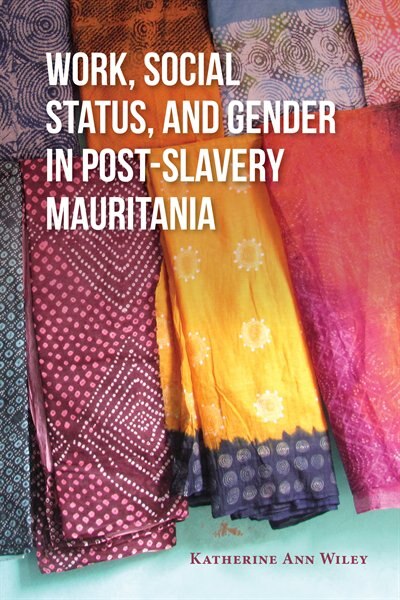
Work Social Status And Gender In Post-slavery Mauritania by Katherine A. Wiley, Hardcover | Indigo Chapters
By Katherine A. Wiley
Current price: $110.95

By Katherine A. Wiley
Work Social Status And Gender In Post-slavery Mauritania by Katherine A. Wiley, Hardcover | Indigo Chapters
Current price: $110.95
Loading Inventory...
Size: 1 x 9 x 350
*Product information may vary - to confirm product availability, pricing, shipping and return information please contact Indigo
Although slavery was legally abolished in 1981 in Mauritania, its legacy lives on in the political, economic, and social discrimination against ex-slaves and their descendants. Katherine Ann Wiley examines the shifting roles of Muslim ar??n (ex-slaves and their descendants) women, who provide financial support for their families. Wiley uses economic activity as a lens to examine what makes suitable work for women, their trade practices, and how they understand and assert their social positions, social worth, and personal value in their everyday lives. She finds that while genealogy and social hierarchy contributed to status in the past, women today believe that attributes such as wealth, respect, and distance from slavery help to establish social capital. Wiley shows how the legacy of slavery continues to constrain some women even while many of them draw on neoliberal values to connect through kinship, friendship, and professional associations. This powerful ethnography challenges stereotypical views of Muslim women and demonstrates how they work together to navigate social inequality and bring about social change. | Work Social Status And Gender In Post-slavery Mauritania by Katherine A. Wiley, Hardcover | Indigo Chapters
Although slavery was legally abolished in 1981 in Mauritania, its legacy lives on in the political, economic, and social discrimination against ex-slaves and their descendants. Katherine Ann Wiley examines the shifting roles of Muslim ar??n (ex-slaves and their descendants) women, who provide financial support for their families. Wiley uses economic activity as a lens to examine what makes suitable work for women, their trade practices, and how they understand and assert their social positions, social worth, and personal value in their everyday lives. She finds that while genealogy and social hierarchy contributed to status in the past, women today believe that attributes such as wealth, respect, and distance from slavery help to establish social capital. Wiley shows how the legacy of slavery continues to constrain some women even while many of them draw on neoliberal values to connect through kinship, friendship, and professional associations. This powerful ethnography challenges stereotypical views of Muslim women and demonstrates how they work together to navigate social inequality and bring about social change. | Work Social Status And Gender In Post-slavery Mauritania by Katherine A. Wiley, Hardcover | Indigo Chapters
You May Also Like











More About Indigo at Erin Mills Town Centre
The largest book retailer in Canada also offers toys, music, home décor, gifts and lifestyle products. What's Inside...Books, Magazines, CD’s and DVD’s, Toys and Gifts, Home Accents, Electronics, Baby’s and Children’s Section, Bath and Body, Kitchen and Bedroom, Stationary Located outside in the exterior plaza.
5015 Glen Erin Dr, Mississauga, ON L5M 0R7, Canada
Find Indigo at Erin Mills Town Centre in Mississauga ON
Visit Indigo at Erin Mills Town Centre in Mississauga ON