

GIVE THE PERFECT GIFT
Erin Mills Town Centre Gift Cards are the perfect choice for your gift giving needs.Purchase gift cards at kiosks near the food court or centre court, at Guest Services, or click below to purchase online.PURCHASE HEREHome
Writing Exile: The Discourse of Displacement in Greco-Roman Antiquity and Beyond
Indigo
Loading Inventory...
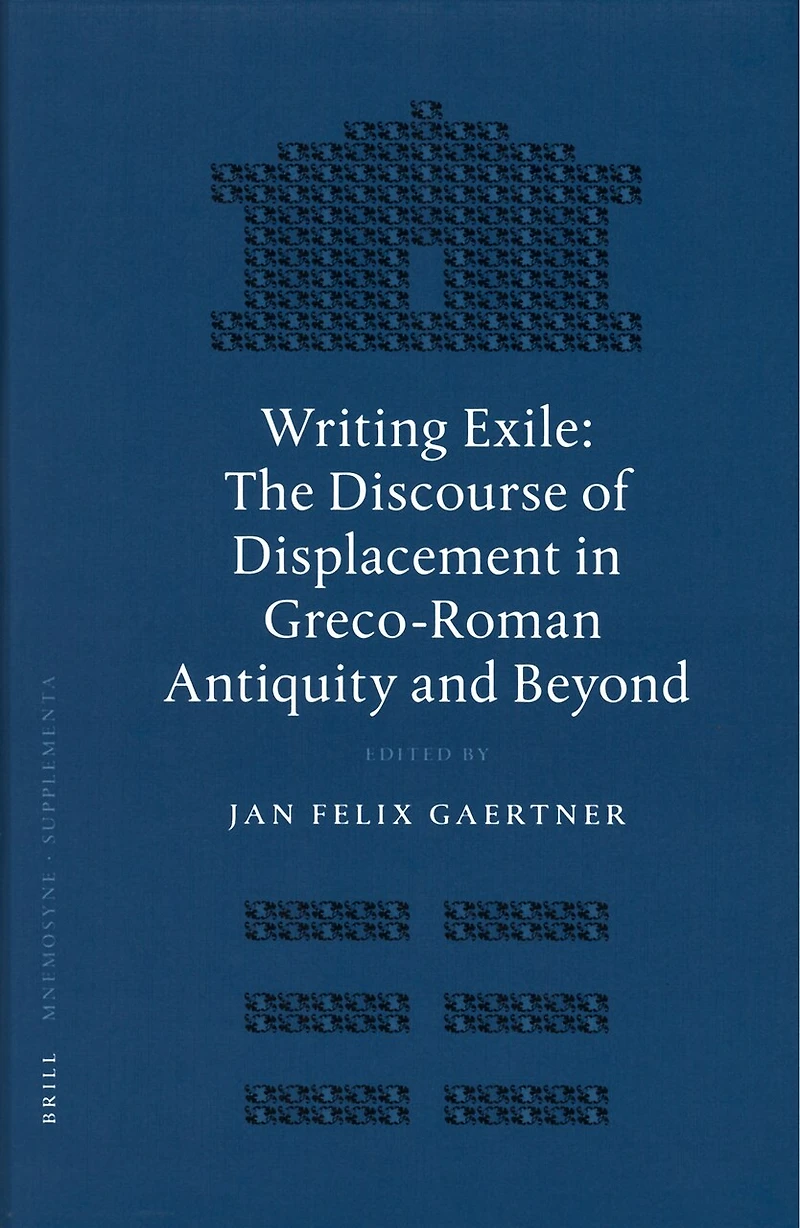
Writing Exile: The Discourse of Displacement in Greco-Roman Antiquity and Beyond
Current price: $240.99

Writing Exile: The Discourse of Displacement in Greco-Roman Antiquity and Beyond
Current price: $240.99
Loading Inventory...
Size: Hardcover
*Product information may vary - to confirm product availability, pricing, shipping and return information please contact Indigo
Exile and displacement are central topics in classical literature. Previous research has been mostly biographical and has focused on the three most prominent exiles: Cicero, Ovid, and Seneca. By shifting focus to a discourse of exile and displacement in early Greek poetry, Greek historiography, Cynicism, consolatory literature, Latin epic, Greek literature of the empire, and Medieval Latin literature, the present volume questions the notion of a distinct, psychologically conditioned ‘genre’ or ‘mode’ of exile literature. It shows how ancient and medieval authors perceive and present their exile according to pre-existent literary paradigms, style themselves or others as ‘typical’ exiles, and employ ‘exile’ as a powerful trope to express estrangement, elicit readerly sympathy, and question political power structures.
Exile and displacement are central topics in classical literature. Previous research has been mostly biographical and has focused on the three most prominent exiles: Cicero, Ovid, and Seneca. By shifting focus to a discourse of exile and displacement in early Greek poetry, Greek historiography, Cynicism, consolatory literature, Latin epic, Greek literature of the empire, and Medieval Latin literature, the present volume questions the notion of a distinct, psychologically conditioned ‘genre’ or ‘mode’ of exile literature. It shows how ancient and medieval authors perceive and present their exile according to pre-existent literary paradigms, style themselves or others as ‘typical’ exiles, and employ ‘exile’ as a powerful trope to express estrangement, elicit readerly sympathy, and question political power structures.
You May Also Like







More About Indigo at Erin Mills Town Centre
The largest book retailer in Canada also offers toys, music, home décor, gifts and lifestyle products. What's Inside...Books, Magazines, CD’s and DVD’s, Toys and Gifts, Home Accents, Electronics, Baby’s and Children’s Section, Bath and Body, Kitchen and Bedroom, Stationary Located outside in the exterior plaza.
5015 Glen Erin Dr, Mississauga, ON L5M 0R7, Canada
Find Indigo at Erin Mills Town Centre in Mississauga ON
Visit Indigo at Erin Mills Town Centre in Mississauga ON