

GIVE THE PERFECT GIFT
Erin Mills Town Centre Gift Cards are the perfect choice for your gift giving needs.Purchase gift cards at kiosks near the food court or centre court, at Guest Services, or click below to purchase online.PURCHASE HEREHome
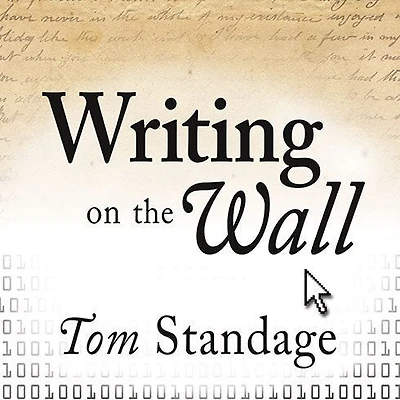
Writing on the Wall: Scenario Development in Times of Discontinuity
Indigo
Loading Inventory...
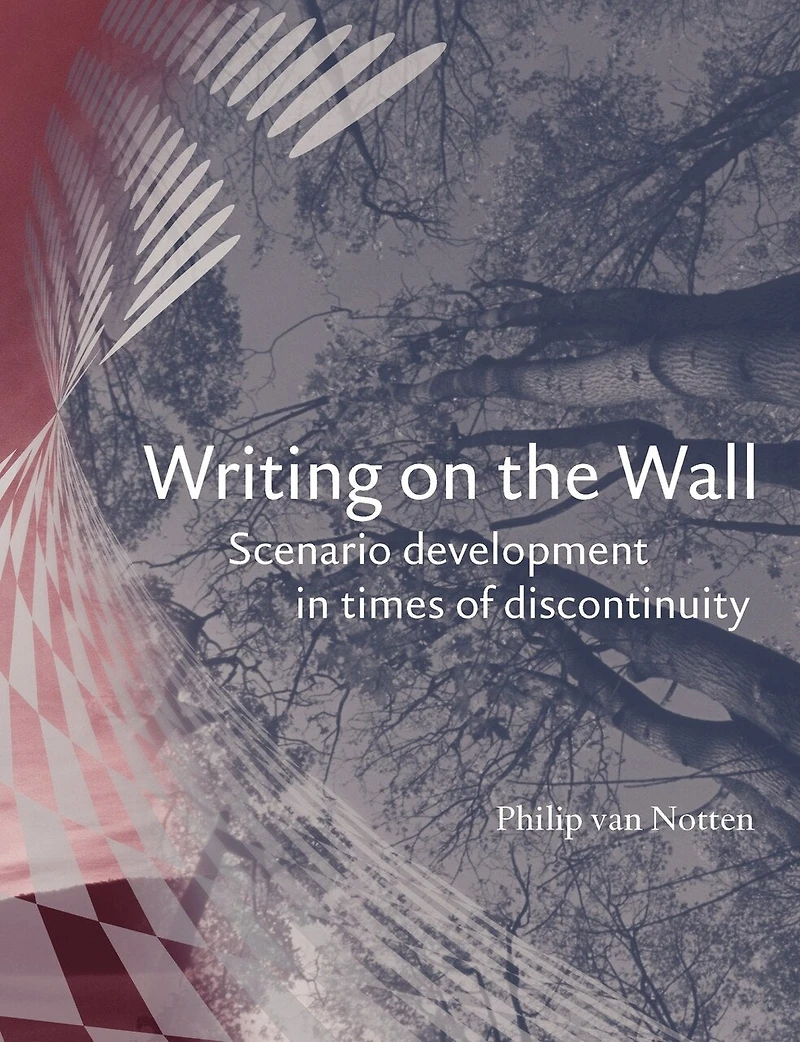
Writing on the Wall: Scenario Development in Times of Discontinuity
Current price: $55.95

Writing on the Wall: Scenario Development in Times of Discontinuity
Current price: $55.95
Loading Inventory...
Size: Paperback
*Product information may vary - to confirm product availability, pricing, shipping and return information please contact Indigo
Although the significance of '9/11' is subject to debate, it is symbolic of a general sentiment of discontinuity whereby society is vulnerable to undefined and highly disruptive events. Recent catalysts of this sentiment are eye-catching developments such as the SARS (Severe Acute Respiratory Syndrome) and bird flu outbreaks, the Enron and Parmalat scandals, political assassinations in Sweden and the Netherlands, regime changes in Iraq and Afghanistan, and terrorist attacks in Bali, Istanbul, Madrid, and various parts of the Middle East. However, recent discontinuities should not be seen as evidence that discontinuities occur more frequently now than they did before. Looking back in history we see that disruptive processes are common. For example, 25 years ago few Europeans would have predicted the upcoming upheavals on their own continent: the collapse of communism, Berlin as the capital of a reunited Germany, the wars in the former Yugoslavia, the single European currency, and the near doubling of the number of European Union member states. Changes elsewhere have been no less discontinuous and unforeseen: the fall of the Asian tigers, the emergence of the Internet and mobile telecommunication, and the presidency of Nelson Mandela. Societal discontinuity is a relatively new area of concern in policy development. Since the 1970s the consideration of change and discontinuity has gained some ground over predictive forecasting, which tended to reason from continuous developments and linear processes. Rather than making forecasting the future, it has become popular to use scenarios as a manner to consider several possible futures. Scenarios are coherent descriptions of alternative hypothetical futures that reflect different perspectives on past, present, and future developments, which can serve as a basis for action. Scenario development aims to combine analytical knowledge with creative thinking in an effort to capture a wide range of possible future developments in a limited number of outlooks. Scenario development assumes that the future is uncertain and the directions in which current developments might range from the conventional to the revolutionary. In theory, scenario development is a way to consider future discontinuity. However, there are indications that the theoretical promise is not reflected in scenario practice. Research has shown that scenarios do not consider the idea of discontinuity as a matter of course. In our research, we found that a scenario study would benefit from efforts to create and foster a 'culture of curiosity' for exploring the future and the possible discontinuities rather than simply commissioning a scenario study to provide insights about the future. Only then can one read the writing on the wall of future developments.
Although the significance of '9/11' is subject to debate, it is symbolic of a general sentiment of discontinuity whereby society is vulnerable to undefined and highly disruptive events. Recent catalysts of this sentiment are eye-catching developments such as the SARS (Severe Acute Respiratory Syndrome) and bird flu outbreaks, the Enron and Parmalat scandals, political assassinations in Sweden and the Netherlands, regime changes in Iraq and Afghanistan, and terrorist attacks in Bali, Istanbul, Madrid, and various parts of the Middle East. However, recent discontinuities should not be seen as evidence that discontinuities occur more frequently now than they did before. Looking back in history we see that disruptive processes are common. For example, 25 years ago few Europeans would have predicted the upcoming upheavals on their own continent: the collapse of communism, Berlin as the capital of a reunited Germany, the wars in the former Yugoslavia, the single European currency, and the near doubling of the number of European Union member states. Changes elsewhere have been no less discontinuous and unforeseen: the fall of the Asian tigers, the emergence of the Internet and mobile telecommunication, and the presidency of Nelson Mandela. Societal discontinuity is a relatively new area of concern in policy development. Since the 1970s the consideration of change and discontinuity has gained some ground over predictive forecasting, which tended to reason from continuous developments and linear processes. Rather than making forecasting the future, it has become popular to use scenarios as a manner to consider several possible futures. Scenarios are coherent descriptions of alternative hypothetical futures that reflect different perspectives on past, present, and future developments, which can serve as a basis for action. Scenario development aims to combine analytical knowledge with creative thinking in an effort to capture a wide range of possible future developments in a limited number of outlooks. Scenario development assumes that the future is uncertain and the directions in which current developments might range from the conventional to the revolutionary. In theory, scenario development is a way to consider future discontinuity. However, there are indications that the theoretical promise is not reflected in scenario practice. Research has shown that scenarios do not consider the idea of discontinuity as a matter of course. In our research, we found that a scenario study would benefit from efforts to create and foster a 'culture of curiosity' for exploring the future and the possible discontinuities rather than simply commissioning a scenario study to provide insights about the future. Only then can one read the writing on the wall of future developments.
You May Also Like







More About Indigo at Erin Mills Town Centre
The largest book retailer in Canada also offers toys, music, home décor, gifts and lifestyle products. What's Inside...Books, Magazines, CD’s and DVD’s, Toys and Gifts, Home Accents, Electronics, Baby’s and Children’s Section, Bath and Body, Kitchen and Bedroom, Stationary Located outside in the exterior plaza.
5015 Glen Erin Dr, Mississauga, ON L5M 0R7, Canada
Find Indigo at Erin Mills Town Centre in Mississauga ON
Visit Indigo at Erin Mills Town Centre in Mississauga ON