

GIVE THE PERFECT GIFT
Erin Mills Town Centre Gift Cards are the perfect choice for your gift giving needs.Purchase gift cards at kiosks near the food court or centre court, at Guest Services, or click below to purchase online.PURCHASE HEREHome
Writings on Music, 1965-2000
Indigo
Loading Inventory...
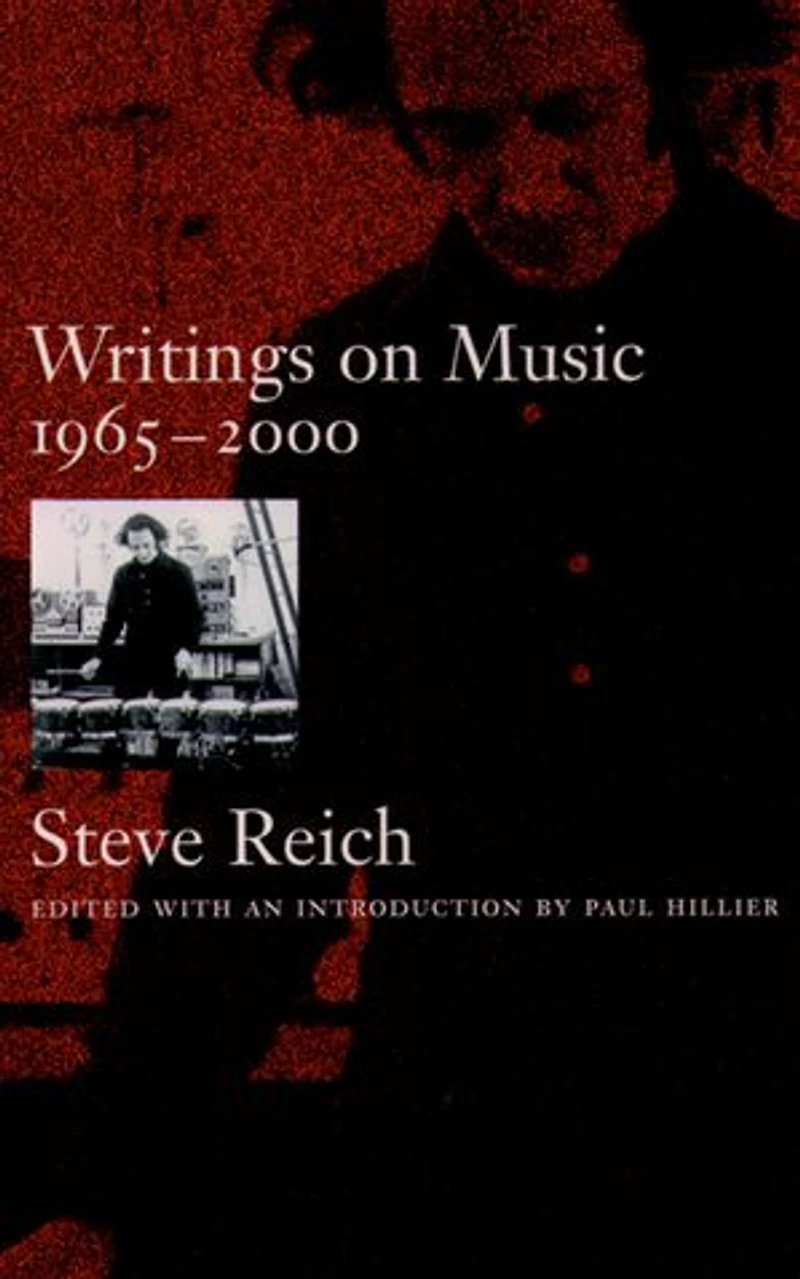
Writings on Music, 1965-2000
Current price: $33.59
Original price: $41.99

Writings on Music, 1965-2000
Current price: $33.59
Original price: $41.99
Loading Inventory...
Size: Kobo eBook
*Product information may vary - to confirm product availability, pricing, shipping and return information please contact Indigo
In the mid-1960s, Steve Reich radically renewed the musical landscape with a back-to-basics sound that came to be called Minimalism. These early works, characterized by a relentless pulse and static harmony, focused single-mindedly on the process of gradual rhythmic change. Throughout his
career, Reich has continued to reinvigorate the music world, drawing from a wide array of classical, popular, sacred, and non-western idioms. His works reflect the steady evolution of an original musical mind.
Writings on Music documents the creative journey of this thoughtful, groundbreaking composer. These 64 short pieces include Reich''s 1968 essay "Music as a Gradual Process," widely considered one of the most influential pieces of music theory in the second half of the 20th century. Subsequent
essays, articles, and interviews treat Reich''s early work with tape and phase shifting, showing its development into more recent work with speech melody and instrumental music. Other essays recount his exposure to non-western music -- African drumming, Balinese gamelan, Hebrew cantillation -- and
the influence of these musics as structures and not as sounds. The writings include Reich''s reactions to and appreciations of the works of his contemporaries (John Cage, Luciano Berio, Morton Feldman, Gyorgy Ligeti) and older influences (Kurt Weill, Schoenberg). Each major work of the composer''s
career is also explored through notes written for performances and recordings.
Paul Hillier, himself a respected figure in the early music and new music worlds, has revisited these texts, working with the author to clarify their central narrative: the aesthetic and intellectual development of an influential composer. For long-time listeners and young musicians recently
introduced to his work, this book provides an opportunity to get to know Reich''s music in greater depth and perspective.
In the mid-1960s, Steve Reich radically renewed the musical landscape with a back-to-basics sound that came to be called Minimalism. These early works, characterized by a relentless pulse and static harmony, focused single-mindedly on the process of gradual rhythmic change. Throughout his
career, Reich has continued to reinvigorate the music world, drawing from a wide array of classical, popular, sacred, and non-western idioms. His works reflect the steady evolution of an original musical mind.
Writings on Music documents the creative journey of this thoughtful, groundbreaking composer. These 64 short pieces include Reich''s 1968 essay "Music as a Gradual Process," widely considered one of the most influential pieces of music theory in the second half of the 20th century. Subsequent
essays, articles, and interviews treat Reich''s early work with tape and phase shifting, showing its development into more recent work with speech melody and instrumental music. Other essays recount his exposure to non-western music -- African drumming, Balinese gamelan, Hebrew cantillation -- and
the influence of these musics as structures and not as sounds. The writings include Reich''s reactions to and appreciations of the works of his contemporaries (John Cage, Luciano Berio, Morton Feldman, Gyorgy Ligeti) and older influences (Kurt Weill, Schoenberg). Each major work of the composer''s
career is also explored through notes written for performances and recordings.
Paul Hillier, himself a respected figure in the early music and new music worlds, has revisited these texts, working with the author to clarify their central narrative: the aesthetic and intellectual development of an influential composer. For long-time listeners and young musicians recently
introduced to his work, this book provides an opportunity to get to know Reich''s music in greater depth and perspective.
You May Also Like














More About Indigo at Erin Mills Town Centre
The largest book retailer in Canada also offers toys, music, home décor, gifts and lifestyle products. What's Inside...Books, Magazines, CD’s and DVD’s, Toys and Gifts, Home Accents, Electronics, Baby’s and Children’s Section, Bath and Body, Kitchen and Bedroom, Stationary Located outside in the exterior plaza.
5015 Glen Erin Dr, Mississauga, ON L5M 0R7, Canada
Find Indigo at Erin Mills Town Centre in Mississauga ON
Visit Indigo at Erin Mills Town Centre in Mississauga ON