

GIVE THE PERFECT GIFT
Erin Mills Town Centre Gift Cards are the perfect choice for your gift giving needs.Purchase gift cards at kiosks near the food court or centre court, at Guest Services, or click below to purchase online.PURCHASE HEREHome
Hitler and America by Klaus P. Fischer, Paper over Board | Indigo Chapters
Indigo
Loading Inventory...
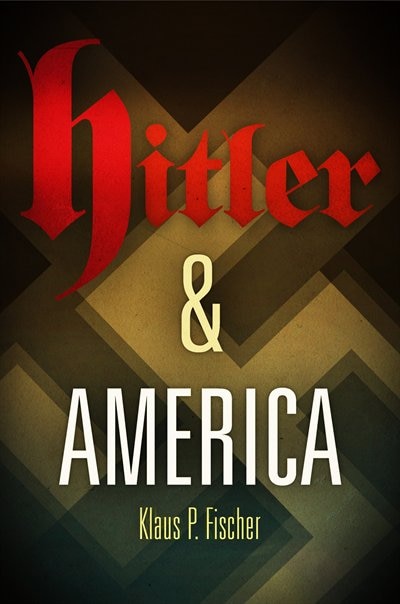
Hitler and America by Klaus P. Fischer, Paper over Board | Indigo Chapters
By Klaus P. Fischer
Current price: $97.99

By Klaus P. Fischer
Hitler and America by Klaus P. Fischer, Paper over Board | Indigo Chapters
Current price: $97.99
Loading Inventory...
Size: 1 x 9 x 1
*Product information may vary - to confirm product availability, pricing, shipping and return information please contact Indigo
In February 1942, barely two months after he had declared war on the United States, Adolf Hitler praised America's great industrial achievements and admitted that Germany would need some time to catch up. The Americans, he said, had shown the way in developing the most efficient methods of production—especially in iron and coal, which formed the basis of modern industrial civilization. He also touted America's superiority in the field of transportation, particularly the automobile. He loved automobiles and saw in Henry Ford a great hero of the industrial age. Hitler's personal train was even code-named Amerika.InHitler and America, historian Klaus P. Fischer seeks to understand more deeply how Hitler viewed America, the nation that was central to Germany's defeat. He reveals Hitler's split-minded image of America:AmericaandAmerika. Hitler would loudly call the United States a feeble country while at the same time referring to it as an industrial colossus worthy of imitation. Or he would belittle America in the vilest terms while at the same time looking at the latest photos from the United States, watching American films, and amusing himself with Mickey Mouse cartoons. America was a place that Hitler admired—for the can-do spirit of the American people, which he attributed to their Nordic blood—and envied—for its enormous territorial size, abundant resources, and political power. Amerika, however, was to Hitler a mongrel nation, grown too rich too soon and governed by a capitalist elite with strong ties to the Jews. Across the Atlantic, President Franklin Delano Roosevelt had his own, far more realistically grounded views of Hitler. Fischer contrasts these with the misconceptions and misunderstandings that caused Hitler, in the end, to see only Amerika, not America, and led to his defeat. | Hitler and America by Klaus P. Fischer, Paper over Board | Indigo Chapters
In February 1942, barely two months after he had declared war on the United States, Adolf Hitler praised America's great industrial achievements and admitted that Germany would need some time to catch up. The Americans, he said, had shown the way in developing the most efficient methods of production—especially in iron and coal, which formed the basis of modern industrial civilization. He also touted America's superiority in the field of transportation, particularly the automobile. He loved automobiles and saw in Henry Ford a great hero of the industrial age. Hitler's personal train was even code-named Amerika.InHitler and America, historian Klaus P. Fischer seeks to understand more deeply how Hitler viewed America, the nation that was central to Germany's defeat. He reveals Hitler's split-minded image of America:AmericaandAmerika. Hitler would loudly call the United States a feeble country while at the same time referring to it as an industrial colossus worthy of imitation. Or he would belittle America in the vilest terms while at the same time looking at the latest photos from the United States, watching American films, and amusing himself with Mickey Mouse cartoons. America was a place that Hitler admired—for the can-do spirit of the American people, which he attributed to their Nordic blood—and envied—for its enormous territorial size, abundant resources, and political power. Amerika, however, was to Hitler a mongrel nation, grown too rich too soon and governed by a capitalist elite with strong ties to the Jews. Across the Atlantic, President Franklin Delano Roosevelt had his own, far more realistically grounded views of Hitler. Fischer contrasts these with the misconceptions and misunderstandings that caused Hitler, in the end, to see only Amerika, not America, and led to his defeat. | Hitler and America by Klaus P. Fischer, Paper over Board | Indigo Chapters
You May Also Like













More About Indigo at Erin Mills Town Centre
The largest book retailer in Canada also offers toys, music, home décor, gifts and lifestyle products. What's Inside...Books, Magazines, CD’s and DVD’s, Toys and Gifts, Home Accents, Electronics, Baby’s and Children’s Section, Bath and Body, Kitchen and Bedroom, Stationary Located outside in the exterior plaza.
5015 Glen Erin Dr, Mississauga, ON L5M 0R7, Canada
Find Indigo at Erin Mills Town Centre in Mississauga ON
Visit Indigo at Erin Mills Town Centre in Mississauga ON