

GIVE THE PERFECT GIFT
Erin Mills Town Centre Gift Cards are the perfect choice for your gift giving needs.Purchase gift cards at kiosks near the food court or centre court, at Guest Services, or click below to purchase online.PURCHASE HEREHome
Resource Economics by Jon M. Conrad
Indigo
Loading Inventory...
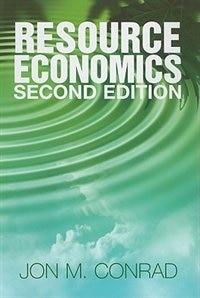
Resource Economics by Jon M. Conrad
By Jon M. Conrad
Current price: $67.37

By Jon M. Conrad
Resource Economics by Jon M. Conrad
Current price: $67.37
Loading Inventory...
Size: 1 x 1 x 1
*Product information may vary - to confirm product availability, pricing, shipping and return information please contact Indigo
Resource Economics is a text for students with a background in calculus and intermediate microeconomics and a familiarity with the spreadsheet software Excel. The book covers basic concepts (Chapter 1), shows how to set up spreadsheets to solve simple dynamic allocation problems (Chapter 2), and presents economic models for fisheries, forestry, nonrenewable resources, and stock pollutants (Chapters 3-6). Chapter 7 examines the maximin utility criterion when the utility of a generation depends on consumption of a manufactured good, harvest from a renewable resource, and extraction from a nonrenewable resource. Within the text, numerical examples are posed and solved using Excel's Solver. Exercises are included at the end of each chapter. These problems help make concepts operational, develop economic intuition, and serve as a bridge to the study of real-world problems in resource management. | Resource Economics by Jon M. Conrad, Paperback | Indigo Chapters
Resource Economics is a text for students with a background in calculus and intermediate microeconomics and a familiarity with the spreadsheet software Excel. The book covers basic concepts (Chapter 1), shows how to set up spreadsheets to solve simple dynamic allocation problems (Chapter 2), and presents economic models for fisheries, forestry, nonrenewable resources, and stock pollutants (Chapters 3-6). Chapter 7 examines the maximin utility criterion when the utility of a generation depends on consumption of a manufactured good, harvest from a renewable resource, and extraction from a nonrenewable resource. Within the text, numerical examples are posed and solved using Excel's Solver. Exercises are included at the end of each chapter. These problems help make concepts operational, develop economic intuition, and serve as a bridge to the study of real-world problems in resource management. | Resource Economics by Jon M. Conrad, Paperback | Indigo Chapters
You May Also Like










More About Indigo at Erin Mills Town Centre
The largest book retailer in Canada also offers toys, music, home décor, gifts and lifestyle products. What's Inside...Books, Magazines, CD’s and DVD’s, Toys and Gifts, Home Accents, Electronics, Baby’s and Children’s Section, Bath and Body, Kitchen and Bedroom, Stationary Located outside in the exterior plaza.
5015 Glen Erin Dr, Mississauga, ON L5M 0R7, Canada
Find Indigo at Erin Mills Town Centre in Mississauga ON
Visit Indigo at Erin Mills Town Centre in Mississauga ON