

GIVE THE PERFECT GIFT
Erin Mills Town Centre Gift Cards are the perfect choice for your gift giving needs.Purchase gift cards at kiosks near the food court or centre court, at Guest Services, or click below to purchase online.PURCHASE HEREHome
The Commerce of Vision by Peter John Brownlee, Paper over Board | Indigo Chapters
Indigo
Loading Inventory...
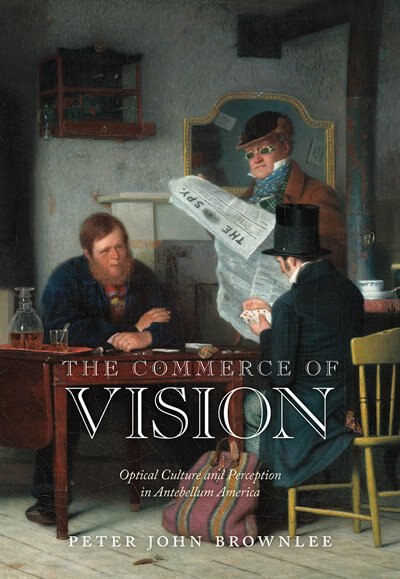
The Commerce of Vision by Peter John Brownlee, Paper over Board | Indigo Chapters
By Peter John Brownlee
Current price: $71.99

By Peter John Brownlee
The Commerce of Vision by Peter John Brownlee, Paper over Board | Indigo Chapters
Current price: $71.99
Loading Inventory...
Size: 1 x 10 x 1
*Product information may vary - to confirm product availability, pricing, shipping and return information please contact Indigo
When Ralph Waldo Emerson wrote in 1837 that Our Age is Ocular, he offered a succinct assessment of antebellum America's cultural, commercial, and physiological preoccupation with sight. In the early nineteenth century, the American city's visual culture was manifest in pamphlets, newspapers, painting exhibitions, and spectacular entertainments; businesses promoted their wares to consumers on the move with broadsides, posters, and signboards; and advances in ophthalmological sciences linked the mechanics of vision to the physiological functions of the human body. Within this crowded visual field, sight circulated as a metaphor, as a physiological process, and as a commercial commodity. Out of the intersection of these various discourses and practices emerged an entirely new understanding of vision. The Commerce of Visionintegrates cultural history, art history, and material culture studies to explore how vision was understood and experienced in the first half of the nineteenth century. Peter John Brownlee examines a wide selection of objects and practices that demonstrate the contemporary preoccupation with ocular culture and accurate vision: from the birth of ophthalmic surgery to the business of opticians, from the typography used by urban sign painters and job printers to the explosion of daguerreotypes and other visual forms, and from the novels of Edgar Allan Poe and Herman Melville to the genre paintings of Richard Caton Woodville and Francis Edmonds. In response to this expanding visual culture, antebellum Americans cultivated new perceptual practices, habits, and aptitudes. At the same time, however, new visual experiences became quickly integrated with the machinery of commodity production and highlighted the physical shortcomings of sight, as well as nascent ethical shortcomings of a surface-based culture. Through its theoretically acute and extensively researched analysis, The Commerce of Visionsynthesizes the broad culturing of vision in antebellum America. | The Commerce of Vision by Peter John Brownlee, Paper over Board | Indigo Chapters
When Ralph Waldo Emerson wrote in 1837 that Our Age is Ocular, he offered a succinct assessment of antebellum America's cultural, commercial, and physiological preoccupation with sight. In the early nineteenth century, the American city's visual culture was manifest in pamphlets, newspapers, painting exhibitions, and spectacular entertainments; businesses promoted their wares to consumers on the move with broadsides, posters, and signboards; and advances in ophthalmological sciences linked the mechanics of vision to the physiological functions of the human body. Within this crowded visual field, sight circulated as a metaphor, as a physiological process, and as a commercial commodity. Out of the intersection of these various discourses and practices emerged an entirely new understanding of vision. The Commerce of Visionintegrates cultural history, art history, and material culture studies to explore how vision was understood and experienced in the first half of the nineteenth century. Peter John Brownlee examines a wide selection of objects and practices that demonstrate the contemporary preoccupation with ocular culture and accurate vision: from the birth of ophthalmic surgery to the business of opticians, from the typography used by urban sign painters and job printers to the explosion of daguerreotypes and other visual forms, and from the novels of Edgar Allan Poe and Herman Melville to the genre paintings of Richard Caton Woodville and Francis Edmonds. In response to this expanding visual culture, antebellum Americans cultivated new perceptual practices, habits, and aptitudes. At the same time, however, new visual experiences became quickly integrated with the machinery of commodity production and highlighted the physical shortcomings of sight, as well as nascent ethical shortcomings of a surface-based culture. Through its theoretically acute and extensively researched analysis, The Commerce of Visionsynthesizes the broad culturing of vision in antebellum America. | The Commerce of Vision by Peter John Brownlee, Paper over Board | Indigo Chapters
You May Also Like














More About Indigo at Erin Mills Town Centre
The largest book retailer in Canada also offers toys, music, home décor, gifts and lifestyle products. What's Inside...Books, Magazines, CD’s and DVD’s, Toys and Gifts, Home Accents, Electronics, Baby’s and Children’s Section, Bath and Body, Kitchen and Bedroom, Stationary Located outside in the exterior plaza.
5015 Glen Erin Dr, Mississauga, ON L5M 0R7, Canada
Find Indigo at Erin Mills Town Centre in Mississauga ON
Visit Indigo at Erin Mills Town Centre in Mississauga ON